
Japanese Prime Minister Sanae Takaichi recently strengthened bilateral cooperation with Italy, emphasizing shared interests in economic security and the development of advanced technology. During a high-level meeting with Italian Prime Minister Giorgia Meloni, Takaichi highlighted the importance of resilient semiconductor supply chains and expressed a personal resonance with Italian linguistic expressions reflecting a strong work ethic. The diplomatic engagement underscores a deepening alignment between Tokyo and Rome on industrial strategy and regional security concerns.
Strengthening Economic Security and Technological Ties
The meeting between Prime Minister Takaichi and Prime Minister Meloni served as a platform for both nations to formalize a commitment to collaboration in critical sectors, specifically targeting the semiconductor industry. According to official statements from the Ministry of Foreign Affairs of Japan, the two leaders agreed to enhance the resilience of their respective supply chains, acknowledging that technological sovereignty is a pillar of national security. This initiative aims to mitigate risks associated with geopolitical instability and ensures a more stable flow of essential components for global manufacturing.

The dialogue also touched upon broader economic security measures. By aligning their policies, Japan and Italy seek to create a framework that encourages investment in cutting-edge research and development. The G7 presidency held by Italy has provided a consistent forum for these discussions, allowing both nations to synchronize their approaches to export controls and the protection of intellectual property in sensitive technological fields.
Cultural Resonance in Diplomatic Discourse
Beyond the technical agenda, Prime Minister Takaichi attracted public attention for her remarks regarding the Italian language. During her visit, she referenced the phrase “lavorare, lavorare” (to work, to work), expressing that the sentiment behind the words resonated with her own professional philosophy. This informal exchange was noted by observers as a gesture of personal connection that complemented the formal diplomatic proceedings.
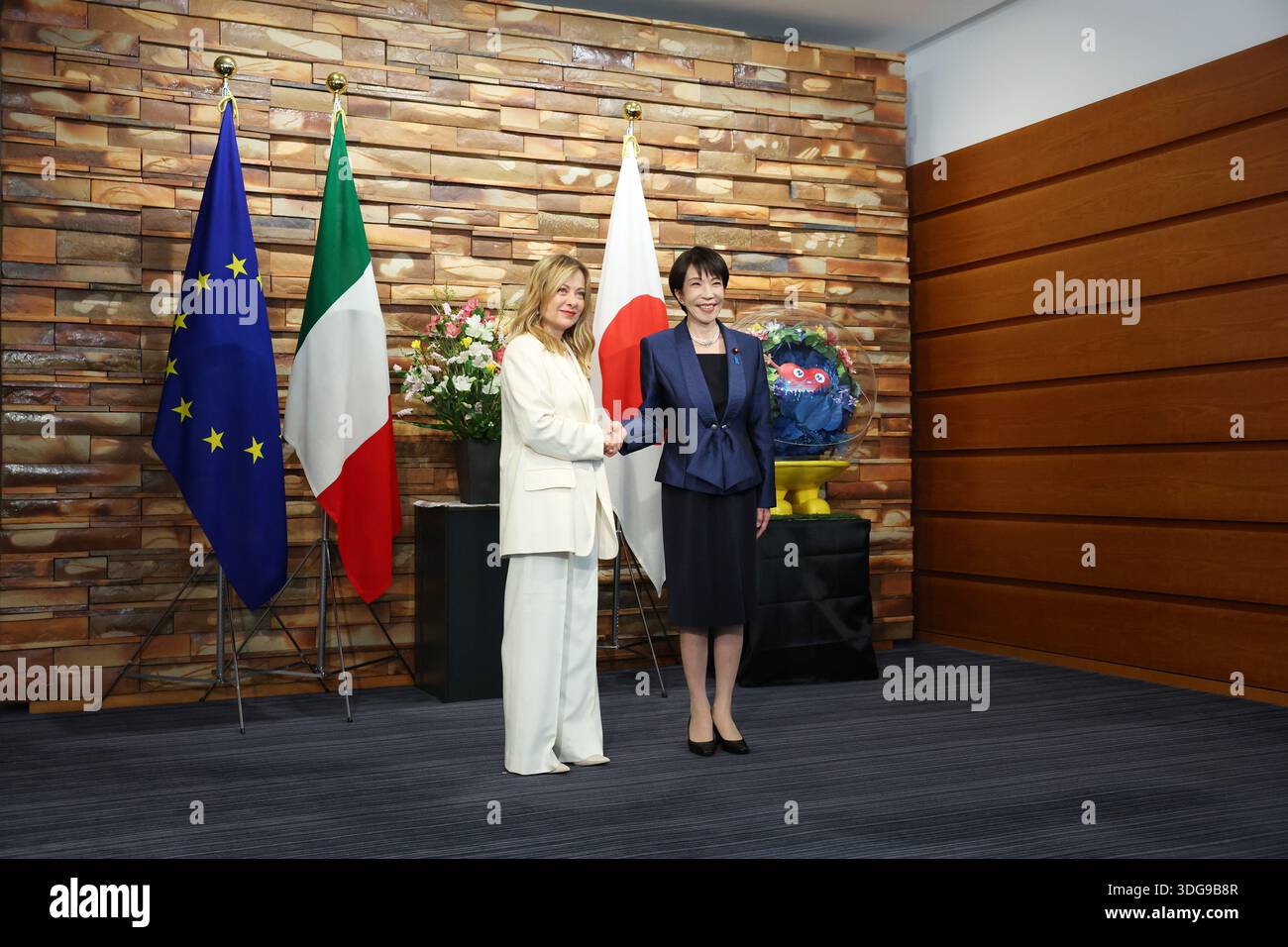
Observers of the Prime Minister’s Office (Kantei) activities often highlight how such cultural bridges are utilized to foster rapport between international leaders. By acknowledging the cultural nuances of her host country, Takaichi signaled a desire to build a relationship that extends beyond transactional economic agreements. This approach is consistent with the broader Japanese strategy of “soft power” diplomacy, which seeks to humanize international relations through shared values and mutual respect.
Strategic Context of the Japan-Italy Partnership
The cooperation between Japan and Italy is not limited to semiconductors. The two countries have significantly increased their security and defense dialogue in recent years. As noted by the North Atlantic Treaty Organization (NATO), Japan’s engagement with Indo-Pacific and European partners has become a cornerstone of its modern security policy. Italy, as a key Mediterranean power, plays a vital role in this network, particularly regarding maritime security and the stability of global trade routes.
The following table summarizes the key areas of the bilateral agenda discussed during the recent summit:
| Focus Area | Objective |
|---|---|
| Semiconductors | Strengthen supply chain resilience and reduce dependency. |
| Advanced Technology | Foster joint research in AI and quantum computing. |
| Economic Security | Coordinate export controls and infrastructure protection. |
Next Steps in Bilateral Cooperation
Following the summit, technical committees from both governments are scheduled to begin drafting frameworks for the implementation of the agreed-upon technological partnerships. According to the Ministry of Economy, Trade and Industry (METI), these working groups will focus on identifying specific research projects that can be fast-tracked through joint funding and academic exchange. The next formal update on these initiatives is expected during the upcoming G7 ministerial meetings, where progress on supply chain diversification will be reviewed.

As the partnership between Tokyo and Rome enters this more practical phase, the focus will remain on translating high-level political commitments into tangible industrial outcomes. Supporters of the initiative argue that this bilateral alignment is essential for maintaining a competitive edge in an increasingly fragmented global market. Readers interested in the latest developments regarding Japan’s international economic policy are encouraged to monitor official announcements from the Prime Minister’s Office for ongoing updates.