
Mailinblack has launched its Protect solution through a native Microsoft 365 API integration, enabling organizations to secure email environments without the need to reroute MX records or implement traditional gateway architectures. This deployment allows the cybersecurity provider to scan communications directly within the Microsoft cloud environment, providing enhanced visibility into both external and internal email traffic.
The transition to an API-based model marks a significant technical shift for Mailinblack, moving away from the Secure Email Gateway (SEG) method toward what the industry defines as Integrated Cloud Email Security (ICES). By connecting directly to the Microsoft 365 backend, the Protect service can intercept threats that often bypass perimeter defenses, specifically targeting sophisticated phishing attempts and lateral movement within a corporate network.
How does the Mailinblack Protect API integration work?
Traditional email security relies on modifying Mail Exchanger (MX) records to route all incoming mail through a third-party gateway before it reaches the final destination. While effective for external threats, this method creates a “blind spot” regarding internal communications. If a single account within a Microsoft 365 tenant is compromised, an attacker can send malicious emails to other employees in the same organization without ever passing through the external gateway.
According to Mailinblack, the new Protect deployment utilizes the native Microsoft 365 API to sit alongside the mailbox environment rather than in front of it. This architecture allows the security software to:
- Scan internal-to-internal emails: The API can inspect messages sent between colleagues, which is critical for detecting compromised accounts.
- Maintain mail flow integrity: Because the integration does not require MX record changes, there is no risk of mail delivery delays or downtime during the initial setup.
- Perform post-delivery remediation: The API can reach into mailboxes to remove or quarantine malicious emails that have already landed, a process known as “clawback.”
This method aligns with current cybersecurity trends where cloud-native applications leverage OAuth permissions to interact with SaaS platforms like Microsoft 365 and Google Workspace. By using these established protocols, the deployment is significantly faster and less intrusive for IT administrators compared to legacy hardware or gateway solutions.
Why is the shift from gateways to native APIs important for cybersecurity?
The move from Secure Email Gateways (SEG) to API-based Integrated Cloud Email Security (ICES) addresses the evolution of modern cyberattacks. As organizations move more of their infrastructure to the cloud, the perimeter has become increasingly porous. Attackers have shifted their focus from “brute force” external entries to identity-based attacks and social engineering.
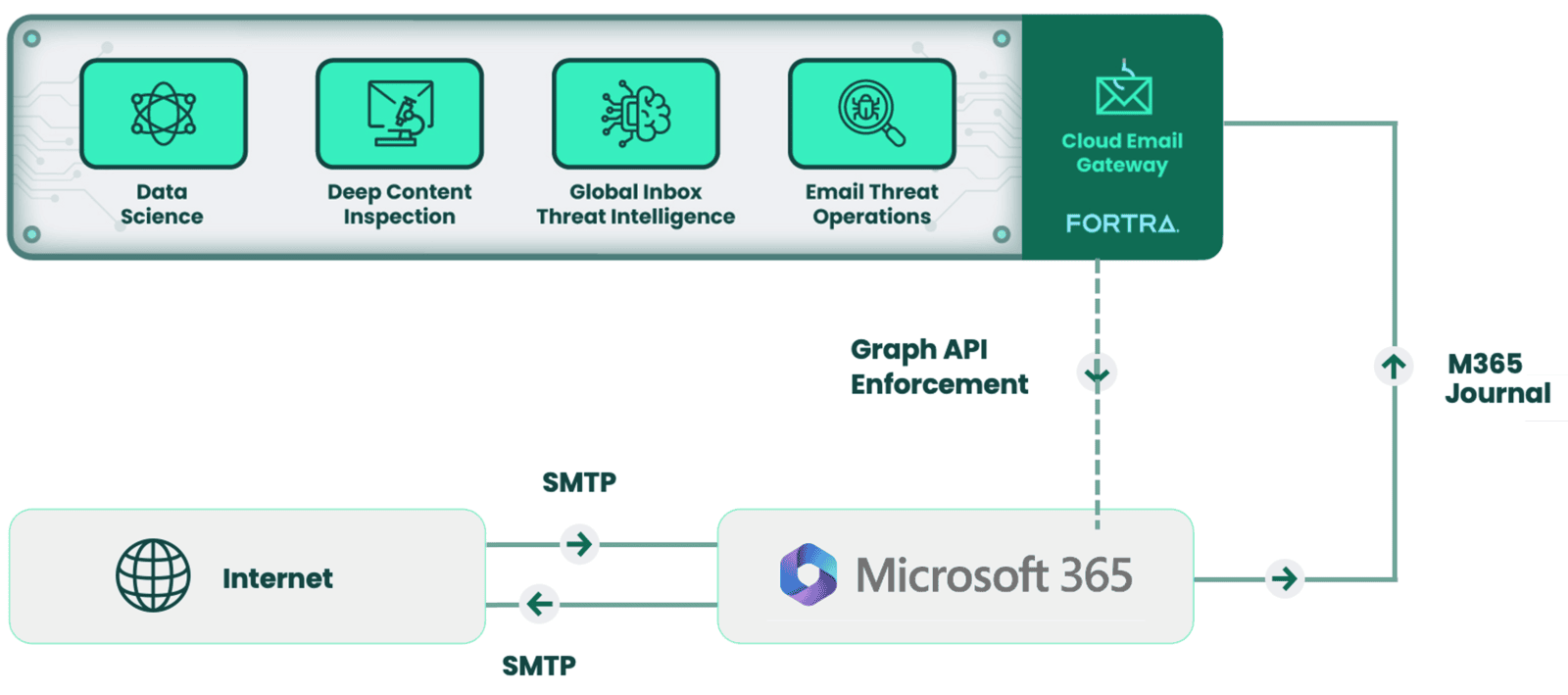
One primary reason for this shift is the rise of Business Email Compromise (BEC). In a BEC attack, a bad actor uses a legitimate, often compromised, internal account to request fraudulent wire transfers or sensitive data. Because these emails originate from within the trusted domain, a traditional gateway—which only looks at traffic crossing the organization’s boundary—will typically ignore them. The Mailinblack Protect API deployment is designed to mitigate this specific risk by analyzing the intent and behavior of internal communications.
Furthermore, the API approach provides better protection against “zero-hour” threats. While gateways often rely on known signatures or reputation-based filtering, API-based solutions can utilize more advanced machine learning models to analyze the context of an email. This allows for the detection of anomalies in communication patterns, such as an unusual request for credentials from a high-level executive’s account.
Comparison: Secure Email Gateway (SEG) vs. API-Based Security (ICES)
The following table outlines the technical and operational differences between the legacy gateway approach and the new Mailinblack Protect API integration.
| Feature | Secure Email Gateway (SEG) | Mailinblack Protect (API) |
|---|---|---|
| Deployment Method | MX Record Redirection | Native API Integration |
| Internal Email Visibility | Minimal to none | Full visibility into internal traffic |
| Implementation Risk | High (potential mail flow disruption) | Low (no change to MX records) |
| Remediation Capability | Pre-delivery only | Pre-delivery and post-delivery (clawback) |
| Setup Complexity | Moderate to High | Low (OAuth-based authentication) |
What are the primary benefits for Microsoft 365 administrators?
For IT departments managing large-scale Microsoft 365 environments, the deployment of Protect via API offers several operational advantages. The most immediate benefit is the reduction in administrative overhead. Configuring MX records and managing DNS changes can be a high-stakes task that requires careful coordination to avoid losing incoming communications.

With the API-native approach, administrators grant permissions via the Microsoft Entra ID (formerly Azure Active Directory) interface. This process is standardized, follows Microsoft’s security best practices, and provides a clear audit trail of what permissions the security tool holds. This level of transparency is often preferred by compliance and security officers who must adhere to strict data governance standards.
Additionally, the Protect solution addresses the “latency” issue often associated with gateways. When mail must travel to an external server, be inspected, and then be sent back to the Microsoft cloud, it can introduce perceptible delays. API-based scanning happens asynchronously or through direct hooks, which minimizes the impact on the user experience and ensures that email delivery remains near-instantaneous.
Finally, the ability to automate responses is a critical component of modern security operations. The API allows the Protect system to take direct action, such as moving a suspicious email from an inbox to a quarantine folder automatically. This reduces the “dwell time” of a threat—the period between when a malicious email arrives and when it is neutralized—thereby lowering the probability of a successful breach.
Mailinblack continues to update its documentation and integration capabilities for various cloud service providers. Organizations interested in transitioning to API-based security should consult the official Mailinblack technical documentation for specific permission requirements and deployment checklists.
For updates on cybersecurity deployments and software integration news, please follow our technology desk or share this article with your IT security team.
Related reading