US-Iran Framework Deal: Could It Ease Global Economic Pressures?
The United States and Iran have reached a preliminary framework agreement aimed at gradually easing sanctions in exchange for nuclear concessions, according to senior administration officials speaking on condition of anonymity. While details remain classified, the deal—announced just days before the G7 summit in France—could significantly alter global oil markets, supply chains, and inflation pressures, particularly for economies already strained by geopolitical tensions and energy costs.
Market reactions have been immediate: Brent crude futures rose by 2.1% within hours of the announcement, reaching $84.30 per barrel, as traders priced in the potential for increased Iranian oil exports. The International Energy Agency (IEA) has warned that any sudden release of Iranian crude—currently estimated at 1.5 million barrels per day—could disrupt regional supply balances, though analysts caution that full implementation could take months.
Economists at Goldman Sachs and the IMF have flagged the deal as a potential “wild card” for 2024 inflation forecasts, with the IMF projecting that sanctions relief could shave 0.2-0.5 percentage points off global inflation rates by mid-2025—though this depends on Iran’s ability to meet nuclear verification benchmarks. Meanwhile, European officials, who have long pushed for diplomatic engagement with Tehran, are monitoring whether the framework will include carve-outs for EU businesses previously sanctioned under U.S. secondary laws.
What the Framework Agreement Actually Covers—and What’s Still Unclear
According to a Reuters report citing U.S. and Iranian sources, the framework outlines a phased approach:
- Nuclear restrictions: Iran would suspend uranium enrichment beyond 60% purity and limit stockpiles to verified levels, with IAEA inspections resuming.
- Sanctions relief: Gradual lifting of restrictions on Iranian oil exports, banking transactions, and access to global financial markets, though full sanctions removal hinges on compliance.
- Regional security: Unverified reports suggest discussions on confidence-building measures, though no concrete commitments have been made public.
Critically, the deal does not yet address the U.S. secondary sanctions that have crippled Iranian trade partners, including EU firms. A European Commission spokesperson told World Today Journal that Brussels is “actively engaged in parallel discussions” to ensure any sanctions relief extends to non-U.S. entities, though no formal guarantees have been issued.
Meanwhile, hardline factions within Iran’s government and the U.S. Congress have signaled resistance. The Iranian parliament’s speaker, Mohammad Bagher Ghalibaf, criticized the deal as “premature,” while U.S. Senator Joe Manchin has threatened to block any executive waivers on sanctions without congressional approval.
How Oil Markets—and Inflation—Could Shift
The immediate market reaction reflects two competing risks: relief from potential supply shortages and uncertainty over Iran’s ability to restore pre-sanctions export levels. The IEA’s June 2024 Oil Market Report projects that even with sanctions relief, Iranian crude would struggle to reach pre-2018 levels of 2.5 million barrels per day due to aging infrastructure and OPEC+ production cuts. “The market is pricing in a slow drip, not a flood,” said Jamie Webb, head of oil research at S&P Global Commodity Insights.

For inflation, the picture is mixed. The IMF’s April 2024 World Economic Outlook estimates that oil prices account for roughly 15% of global inflation, with the largest impacts in emerging markets. A 10% drop in Brent prices—plausible if Iranian exports rise—could reduce inflation by 0.3-0.4 percentage points in countries like India and Turkey, where energy costs remain a political flashpoint. However, the IMF warns that “sanctions relief alone cannot offset broader structural inflation drivers,” citing wage growth and supply chain bottlenecks.
In the U.S., where gasoline prices average $3.45 per gallon, the U.S. Energy Information Administration (EIA) projects that even a modest increase in Iranian supply could ease pump prices by 5-10 cents per gallon by year-end—though this assumes no disruptions from regional conflicts or OPEC+ policy shifts.
Who Stands to Gain—or Lose—From the Deal?
Winners:
- Iran: Potential access to $100 billion+ in frozen assets and a revival of its oil sector, though full benefits depend on sanctions compliance.
- European importers: Germany and Italy, which reduced Iranian oil imports after 2018, could face competitive pressure to re-engage if prices drop.
- Global consumers: Countries like China and India, which have maintained trade ties with Iran despite U.S. sanctions, could see lower energy costs.
Losers:
- U.S. allies in the Gulf: Saudi Arabia and the UAE, which have increased production to offset Iranian supply losses, may face margin pressures.
- Sanctioned Iranian businesses: Firms like Iran Cellular and National Iranian Oil Company (NIOC) could see limited immediate relief without broader sanctions rollbacks.
- Hardline factions: Both in Iran (e.g., the Islamic Revolutionary Guard Corps) and the U.S. (e.g., congressional hawks) could undermine implementation.
One often-overlooked stakeholder: European banks. The European Banking Authority (EBA) has cautioned that any deal could expose EU lenders to secondary U.S. sanctions if they facilitate Iranian transactions. “The legal gray zone remains a major hurdle,” said Andreas Heinemann, a sanctions expert at LSE IDEAS.
What Happens Next: Key Milestones and Risks
The framework is not a final deal—it sets the stage for negotiations over the next 60-90 days. Critical deadlines include:
- June 15: U.S. and Iranian teams to finalize technical parameters for nuclear inspections (IAEA statement).
- July 1: Expected release of a joint U.S.-Iran fact sheet detailing sanctions relief measures.
- September 2024: Potential vote in the U.N. Security Council to lift remaining nuclear-related sanctions, though this requires no vetoes from permanent members.
Risks to watch:
- Congressional pushback: The U.S. Senate could impose new sanctions on Iranian proxies in Lebanon or Yemen, complicating the deal.
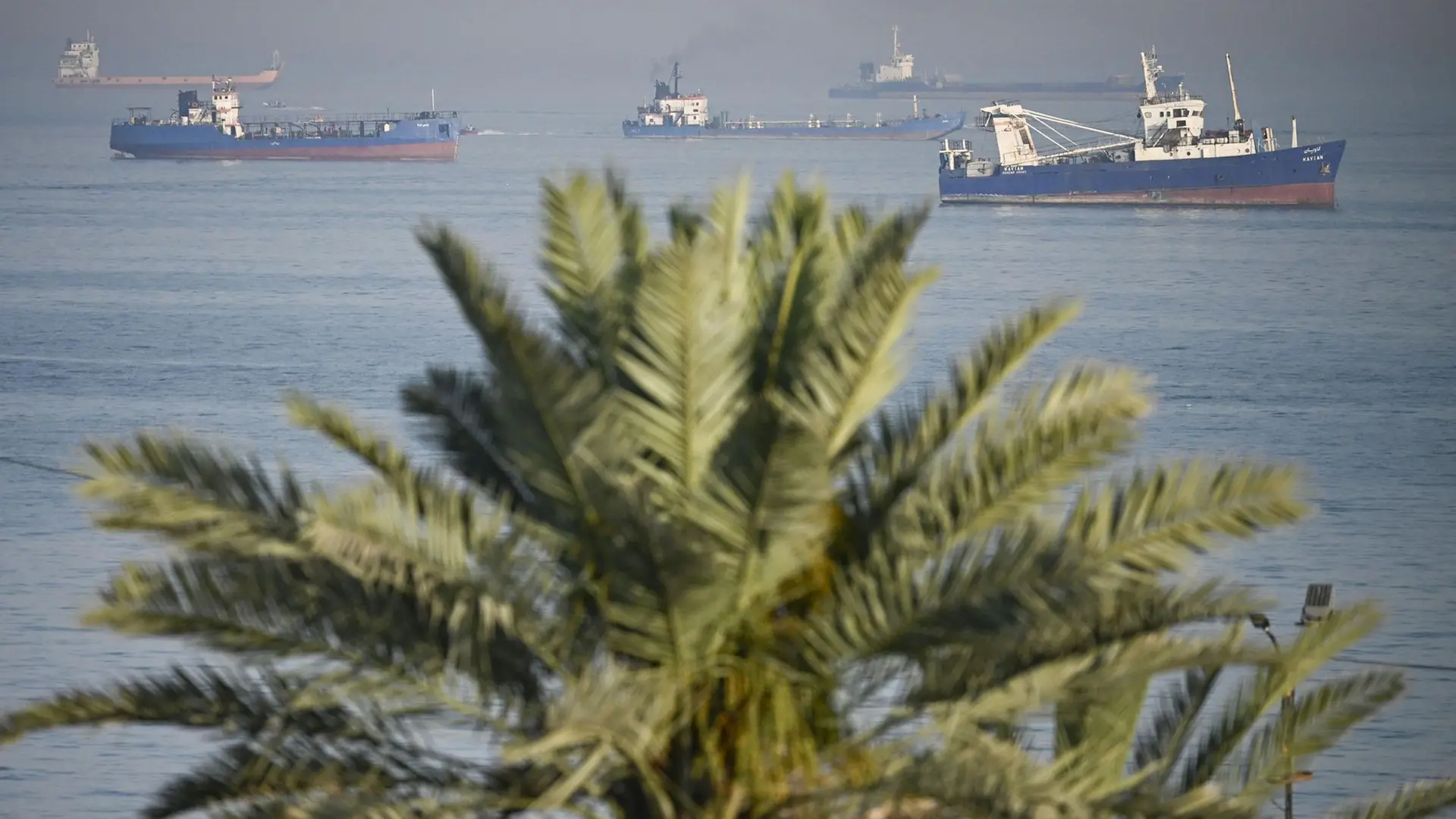
- Regional escalation: Attacks on commercial ships in the Strait of Hormuz—already up 40% year-over-year—could disrupt supply chains regardless of sanctions status (ICC report).
- Iranian domestic politics: Hardliners in the Iranian parliament could block ratification if they perceive the deal as too concessions.
Why This Deal Matters Beyond Oil: Geopolitical and Economic Ripple Effects
The framework’s broader significance lies in its potential to reshape U.S. foreign policy and global energy governance. Historically, sanctions have been a blunt tool: the 2018 reimposition of sanctions by the Trump administration triggered a 1 million barrel/day drop in Iranian exports, pushing oil prices above $80 per barrel. This time, the approach is incremental—a strategy that reflects a growing recognition among policymakers that “maximum pressure” alone cannot resolve nuclear disputes.
For the G7, the deal creates a dilemma: support a diplomatic breakthrough that could ease energy costs, or risk alienating U.S. allies by appearing to undermine sanctions. A G7 communiqué released yesterday stopped short of endorsing the framework, calling for “verifiable compliance” with nuclear obligations—a phrasing that leaves room for both engagement and skepticism.
Economically, the deal underscores a shift toward targeted sanctions over broad-based restrictions. The IMF estimates that sanctions cost the Iranian economy $160 billion annually, but also impose collateral damage on global trade. “The era of sanctions as a first-resort tool is fading,” said Piers Signoret, head of the IMF’s Middle East department. “The question is whether this deal can deliver on its promises—or become another cautionary tale.”
| Scenario | Oil Price Impact | Global Inflation Effect | Sanctions Relief Timeline | Key Risk |
|---|---|---|---|---|
| Full Implementation | Brent drops to $75–$80/bbl | 0.3–0.5% lower inflation by 2025 | 6–12 months | Congressional blockage |
| Partial Rollback | Brent stabilizes at $80–$85/bbl | Minimal inflation relief | 12+ months | Regional conflict escalation |
| Deal Collapses | Brent spikes to $90+/bbl | Inflation rises 0.2–0.4% | N/A | Market panic |
Where to Follow Updates—and What to Watch For
For real-time developments, monitor:
- U.S. Department of State (Iran policy)
- International Atomic Energy Agency (IAEA updates)
- OPEC Monthly Oil Market Report
- IMF World Economic Outlook (inflation projections)
Businesses should also consult:
- U.S. Office of Foreign Assets Control (OFAC) guidance on sanctions compliance.
- European Commission sanctions FAQ for EU firms.
The next major checkpoint is the July 1 release of the joint U.S.-Iran fact sheet, which will outline specific sanctions relief measures. Until then, markets will remain volatile, with traders pricing in both optimism and caution.
What do you think? Could this deal finally ease global economic pressures—or will it expose deeper geopolitical fractures? Share your views in the comments below, and don’t forget to follow World Today Journal for updates as this story develops.
- Palantir Stock Surges After Beating Earnings Expectations and Boosting Revenue
- World Bank Suspends Loans to Caribbean Country After Caracas Default
- BP Q2 Profit Hits $5.7 Billion Amid Trump Criticism of Big Oil Windfalls (time.news)
- Trump Administration Begins Systematic Appropriation of Japanese Manga (newsdirectory3.com)