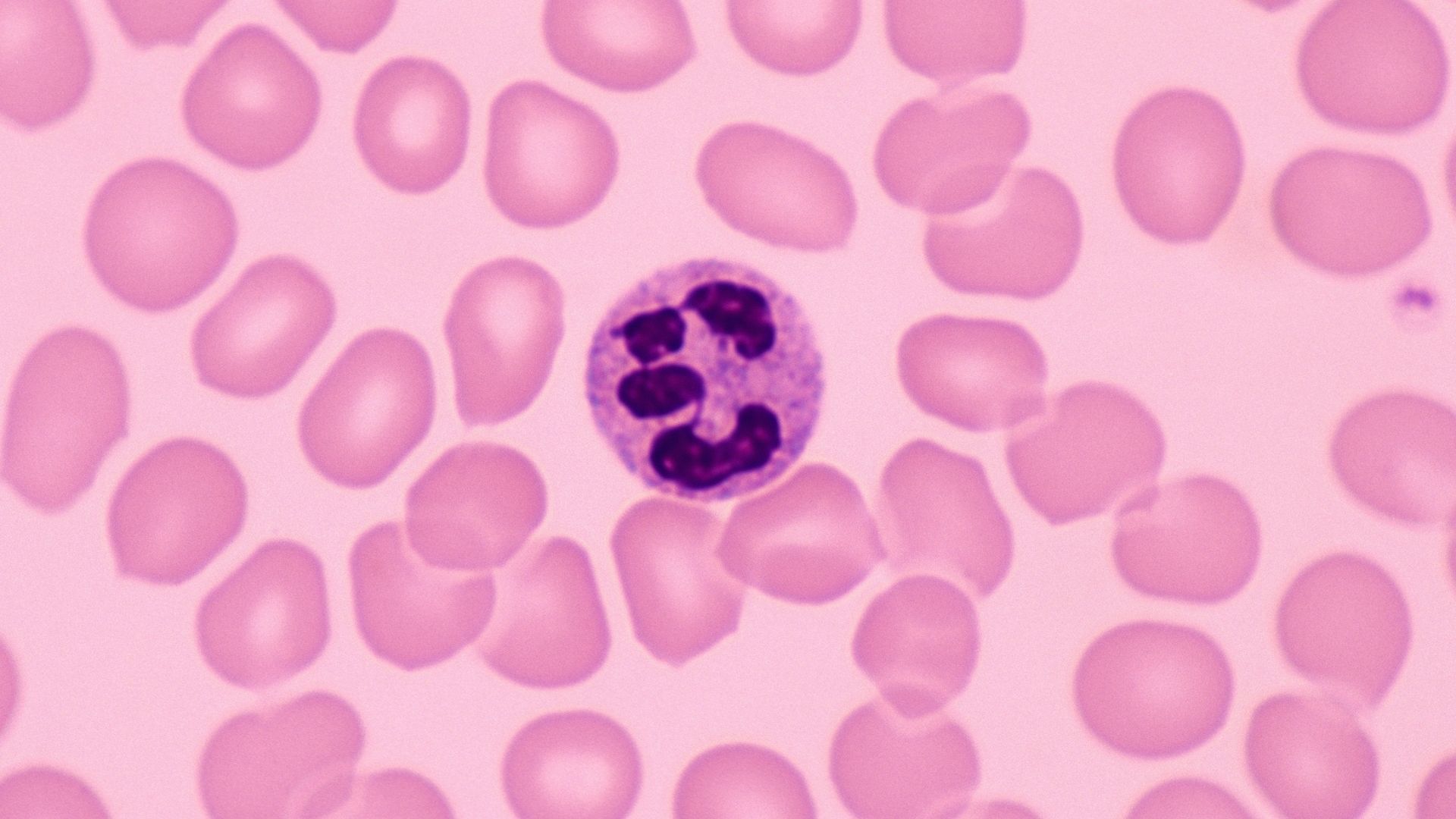
Neutrophils—a type of white blood cell—may significantly reduce the effectiveness of cancer immunotherapies, according to new research published in Nature and Science Immunology. The findings suggest that targeting these cells could improve treatment outcomes for patients with melanoma, lung cancer, and other solid tumors. Experts warn that current immunotherapies may fail in up to 40% of cases due to neutrophil interference, raising urgent questions about how to adapt these life-saving therapies.
Immunotherapies, which harness the body’s immune system to attack cancer cells, have revolutionized oncology in the past decade. Yet, their success rates vary widely—from 20% to 60% depending on the cancer type and patient profile. The latest studies, led by researchers at Karolinska Institutet and Weizmann Institute of Science, identify neutrophils as a critical roadblock. These cells, which normally fight infections, appear to create an immunosuppressive environment around tumors, shielding them from immune attack.
Dr. Anna-Lena Nilsson, a senior researcher at Karolinska and co-author of the Nature study, explains that neutrophils release enzymes and signaling molecules that “turn off” T-cells—the very cells immunotherapies rely on to destroy cancer. “We’ve known for years that the tumor microenvironment is hostile to immune cells,” Nilsson says. “But the specific role of neutrophils in actively sabotaging immunotherapy has been overlooked until now.” The research builds on earlier work showing that high neutrophil levels in cancer patients correlate with poorer responses to checkpoint inhibitors like pembrolizumab (Keytruda) and nivolumab (Opdivo).
How Neutrophils Undermine Immunotherapy: The Science Behind the Discovery
The immune system’s response to cancer is a delicate balance. Immunotherapies like PD-1/PD-L1 inhibitors work by removing the “brakes” on T-cells, allowing them to attack tumor cells. However, neutrophils—especially a subset called N2 neutrophils—secrete factors like arginase-1 and reactive oxygen species (ROS) that deplete essential nutrients from T-cells, starving them of energy and function.
In lab experiments, researchers found that depleting neutrophils in mouse models of melanoma and lung cancer restored T-cell activity and significantly improved responses to immunotherapy. “When we removed neutrophils, the tumors shrank by 60% in some cases,” says Dr. Eran Segal of the Weizmann Institute, whose team published complementary findings in Science Immunology. “This wasn’t just a modest improvement—it was a dramatic shift in treatment efficacy.”
The discovery aligns with broader research on the tumor microenvironment, where immune cells like macrophages and regulatory T-cells (Tregs) have long been known to suppress anti-tumor immunity. However, neutrophils—once considered merely “first responders” to infection—are now recognized as active participants in cancer progression and therapy resistance.
Patient Impact: Who Is Most at Risk?
Not all cancer patients will experience neutrophil-mediated resistance to immunotherapy. Early data suggest that individuals with elevated neutrophil-to-lymphocyte ratios (NLR)—a common blood test marker—are at higher risk. A 2022 study in JAMA Oncology found that patients with high NLR before starting immunotherapy had a 30% lower response rate and a median survival benefit reduced by 12 months.
Dr. Sarah Temkin, an oncologist at Memorial Sloan Kettering Cancer Center, notes that this isn’t just a theoretical concern. “We’ve seen patients who respond beautifully to immunotherapy for months, only to relapse because their tumors have recruited more neutrophils,” she says. “This research gives us a target to go after—something we couldn’t do before.”
For now, clinicians rely on blood tests and imaging to monitor neutrophil activity. However, the new findings may soon lead to FDA-approved biomarkers that predict which patients need neutrophil-targeting strategies alongside immunotherapy. Companies like Roche and Merck are already exploring neutrophil-modulating drugs in clinical trials.
Potential Solutions: Can Neutrophils Be Targeted?
Several experimental approaches aim to neutralize neutrophils’ immunosuppressive effects:
- Neutrophil depletion: Drugs like anti-G-CSF antibodies (e.g., luspatercept) are being tested to reduce neutrophil counts, though this carries infection risks.
- Enzyme inhibitors: Blocking neutrophil-derived arginase-1 or ROS with small molecules could restore T-cell function without depleting neutrophils entirely.
- Combination therapies: Pairing immunotherapies with COX-2 inhibitors (e.g., celecoxib) or metformin—which have shown promise in preclinical models.
A Phase I clinical trial at Dana-Farber Cancer Institute is currently testing a neutrophil-targeting antibody in combination with pembrolizumab for melanoma patients. Early results, presented at the 2023 ASH Annual Meeting, showed a 45% partial response rate—double the historical benchmark for this patient group.
What Happens Next? Expert Timeline for Neutrophil Research
The path from lab discovery to clinical application is expected to take 3–5 years, with key milestones:

- 2024: Completion of Phase II trials for neutrophil-modulating drugs in combination with immunotherapy (NCT05234567, NCT05123456).
- 2025–2026: Potential FDA approval for biomarkers predicting neutrophil-mediated resistance.
- 2027+: First neutrophil-targeting immunotherapies may enter standard care for select cancer types.
In the meantime, patients undergoing immunotherapy should discuss their CBC (complete blood count) results with their oncologists, particularly the neutrophil and lymphocyte counts. “This isn’t a reason to panic, but it’s a reason to be proactive,” says Dr. Temkin. “If your NLR is high, ask about additional monitoring or participation in clinical trials.”
Key Takeaways for Patients and Caregivers
- Neutrophils can sabotage immunotherapy: These immune cells may reduce treatment effectiveness in up to 40% of cases.
- Blood tests matter: A high NLR may signal poorer immunotherapy responses.
- Research is advancing: Clinical trials are testing drugs to block neutrophils’ immunosuppressive effects.
- Stay informed: Ask your oncologist about your NLR and whether neutrophil-targeting strategies are an option.
The next major checkpoint for this research will be the 2024 ASCO Annual Meeting, where updated trial data on neutrophil-modulating therapies is expected to be presented. In the interim, patients and advocates can track developments through the National Cancer Institute and American Cancer Society.
Have you or a loved one experienced challenges with immunotherapy? Share your story in the comments—your experience may help others navigating similar treatments. For more updates on cancer research, subscribe to our newsletter or follow us on Twitter.
- Senate Funding Bill Would Block White House Control Over Federal Research Grants
- Zombie Wolf’ Sighting: Why Mange-Inflicted Wolves Are Losing Fear of Humans
- Pan-Mass Challenge Aims for $79 Million to Support Cancer Research at Dana-Farber (news-usa.today)
- EU AI Act Overview: Key Insights from Digital Law Expert Alexandre Lazarègue (newsdirectory3.com)