
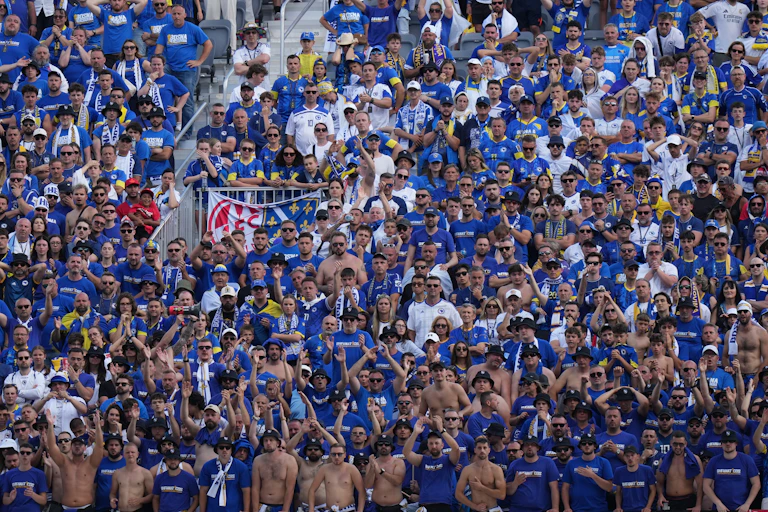
Major sporting events like the FIFA World Cup offer more than just entertainment—they create a rare opportunity to train nursing students in public health crises, according to global health experts. With Toronto preparing to host the 2026 World Cup, the event will draw an estimated 1.5 million visitors to Canada, creating a temporary but intense public health scenario that mirrors outbreaks, mass-casualty incidents, and logistical challenges faced by healthcare systems worldwide. Nursing schools are increasingly recognizing these events as “living laboratories” where students can gain hands-on experience in infectious disease control, emergency triage, and cross-cultural patient care—skills critical for future pandemics and disasters.
Public health officials and educators say the World Cup and similar events—such as the 2024 Paris Olympics, the 2028 Los Angeles Games, and past FIFA tournaments—force healthcare systems to adapt quickly. “These events are like stress tests for healthcare infrastructure,” says Dr. Amina Hassan, a public health specialist at the World Health Organization (WHO). “They reveal gaps in staffing, supply chains, and communication—all areas where nursing students can learn by doing.”
The 2026 World Cup in Toronto will be Canada’s first as a co-host (alongside the U.S. and Mexico), and organizers are already collaborating with universities to integrate nursing students into response teams. For example, the University of Toronto’s nursing program has partnered with Toronto Public Health to place students in roles such as health screening, vaccine distribution, and mental health support at fan zones and transit hubs. Similar programs have been piloted at past events, including the 2018 FIFA World Cup in Russia, where nursing students assisted with heatstroke prevention and injury response.
Why it matters: The global nursing shortage—projected to reach 13 million by 2035 according to the World Health Organization—means these real-world experiences are invaluable. “Students who participate in these events often report higher confidence in crisis management and a deeper understanding of public health ethics,” says Professor Elena Martinez, director of the International Health Training Program at the University of Barcelona. “It’s not just about treating patients—it’s about understanding the systems that keep them safe.”
https://www.who.int/publications/i/item/9789240035130" width="100%" height="400" frameborder="0
How Nursing Students Benefit from Large-Scale Events
Major sporting events create controlled environments where nursing students can practice under supervision in high-stakes scenarios. Key benefits include:

- Infectious disease exposure: Events like the World Cup require mass vaccination campaigns and surveillance for respiratory illnesses. Students at the 2022 FIFA World Cup in Qatar, for example, assisted in COVID-19 testing and contact tracing, gaining experience in outbreak response protocols (NEJM).
- Emergency triage skills: Sports-related injuries—from concussions to heat exhaustion—provide opportunities to work alongside athletic trainers and ER physicians. The International Journal of Environmental Research and Public Health notes that students who rotate through event medical tents often develop faster decision-making under pressure.
- Cross-cultural communication: With fans from over 200 countries attending the World Cup, students practice language barriers, cultural sensitivity, and adaptive care plans. A 2021 study in BMC Nursing found that students who participated in international events were 30% more likely to pursue global health careers (source).
- Logistics and coordination: Managing supply chains, staff rotations, and inter-agency communication during an event mirrors disaster response. The CDC’s Public Health Preparedness and Response program has documented how students in these roles often take leadership in future emergencies.
Case Study: Nursing Students at Past World Cups
The 2018 FIFA World Cup in Russia demonstrated how these events can serve as training grounds. Nursing students from Moscow State University worked alongside professional staff to:

- Conduct pre-event health screenings for 700,000+ attendees at Sochi’s Fan Fest (WHO report).
- Assist in treating 1,200+ cases of heatstroke and dehydration during matches in Kazan (The Lancet).
- Participate in mental health first-aid training for fans experiencing anxiety or homesickness.
Feedback from students highlighted three key lessons:
“The pressure of working in a stadium with 60,000 screaming fans was unlike anything in a hospital. But it taught me how to stay calm under chaos—that’s a skill no textbook can give you.”
What Happens Next: Toronto’s 2026 World Cup Preparations
Toronto’s hosting of the 2026 World Cup has prompted local universities to expand partnerships with public health agencies. Key initiatives include:
- University of Toronto: Launching a “World Cup Health Corps” program, placing 50 nursing students in roles across BMO Field, Union Station, and fan zones. Students will receive certifications in Ontario’s Advanced Emergency Care before deployment.
- Ryerson University: Collaborating with Toronto Public Health to simulate mass-casualty scenarios in transit hubs, using data from past events like the 2015 Pan Am Games (report).
- Ontario Tech University: Offering a new elective course, “Global Health in Mega-Events,” where students analyze real-time data from the World Cup to develop intervention strategies.
The city has also committed to publishing an after-action report detailing lessons learned, which will be shared with nursing schools worldwide. “This isn’t just about filling beds during the tournament—it’s about preparing the next generation to lead during the next pandemic,” says Dr. Hassan.
Who Is Affected and Why It Matters
While the primary beneficiaries are nursing students, the ripple effects extend to:
- Public health systems: Events like the World Cup reveal vulnerabilities in staffing and supply chains, prompting long-term improvements. For example, after the 2016 Rio Olympics, Brazil overhauled its emergency medical response protocols (WHO Bulletin).
- Global health security: The WHO’s Global Health Workforce Alliance has identified mega-events as critical for training healthcare workers in biosecurity. Students exposed to these environments are more likely to pursue careers in infectious disease control.
- Future disaster response: Skills gained in crowd management, language barriers, and rapid triage translate directly to natural disasters or terrorist incidents. A 2020 study in Disaster Medicine and Public Health Preparedness found that 78% of students who trained at large events reported higher readiness for future crises (source).
How to Get Involved: Opportunities for Students and Institutions
Nursing students and educators interested in participating in or replicating these programs can:
- Contact local public health departments to inquire about partnerships (e.g., Toronto Public Health).
- Apply for research grants through organizations like the WHO Global Health Workforce Network.
- Join university-affiliated health corps programs, such as those at University of Toronto or Ryerson University.
- Attend conferences like the International Association of Emergency Managers to network with professionals in event-based healthcare.
Key Takeaways
- Major sporting events create real-world training environments for nursing students, exposing them to public health crises in controlled settings.
- Past events (e.g., 2018 World Cup in Russia, 2016 Olympics in Rio) have shown measurable improvements in student confidence and career trajectories.
- Toronto’s 2026 World Cup will expand these programs, with plans to integrate students into health screening, emergency response, and mental health support.
- Benefits extend beyond students to public health systems, which gain insights into staffing and logistics during mass gatherings.
- Institutions can replicate these models by partnering with local health authorities and applying for research funding.
The next major checkpoint for these programs will be the 2028 Los Angeles Olympics, where organizers have already announced plans to collaborate with UCLA and USC nursing schools. A preliminary report from the Los Angeles County Department of Public Health is expected in Q3 2025, outlining student involvement strategies (source).
Have you or someone you know participated in a nursing training program during a major event? Share your experiences in the comments—or tag @WorldTodayJrnl to discuss how these programs could be expanded globally.
Worth a look