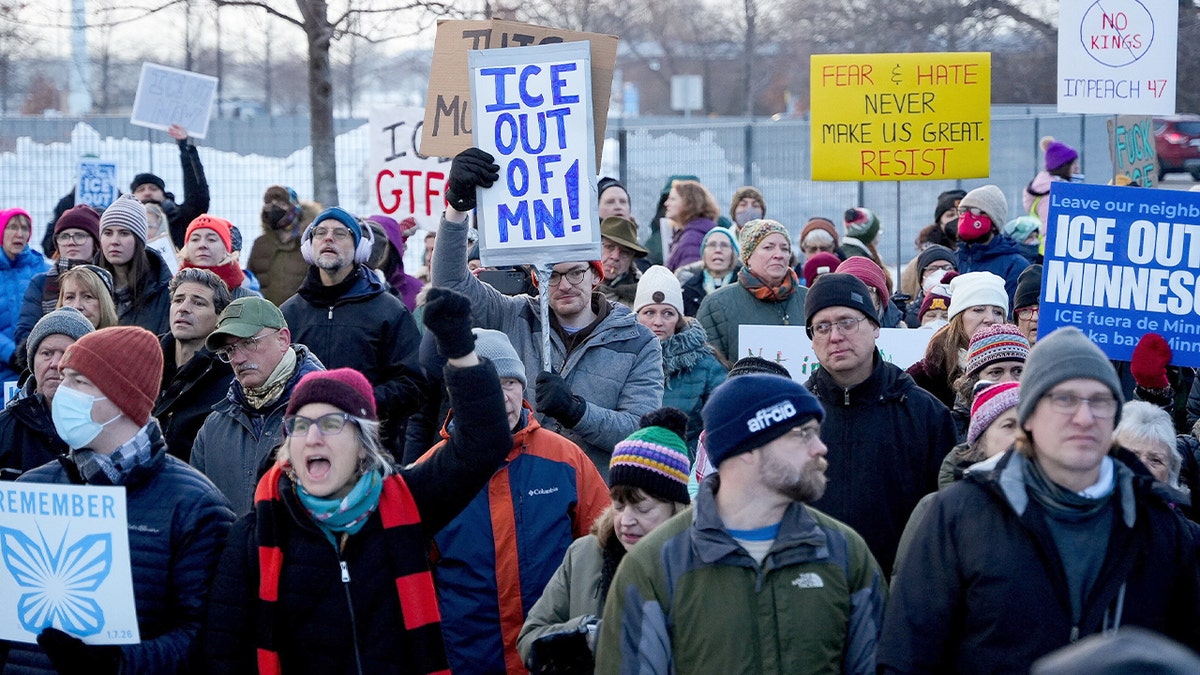
Federal prosecutors have charged 15 individuals in Minnesota with conspiracy, obstruction of justice, and rioting in connection with protests against U.S. Immigration and Customs Enforcement (ICE) operations in 2021 and 2022. The charges, announced Thursday by the U.S. Department of Justice, allege that the defendants coordinated to disrupt ICE enforcement activities, including arrests and deportation proceedings, through violent demonstrations and organized interference. Authorities say the group—identified as part of a broader network—targeted facilities and personnel involved in immigration enforcement, escalating tensions during a period of heightened activism over border policies.
According to court documents reviewed by the Department of Justice, the conspiracy allegedly involved planning and executing protests that blocked access to ICE detention centers, assaulted law enforcement officers, and damaged property. Prosecutors say some defendants used encrypted communications to organize actions, while others allegedly provided medical aid to detained individuals—an activity officials describe as “facilitating” illegal entry or release. The case marks one of the largest federal prosecutions linked to anti-ICE activism, reflecting a broader crackdown on protests deemed disruptive to immigration enforcement.
The charges follow a multi-agency investigation by the FBI, U.S. Attorney’s Office for the District of Minnesota, and ICE Homeland Security Investigations (HSI). Authorities have not yet identified the defendants publicly, citing ongoing legal proceedings. However, court filings indicate the group operated under loose affiliations with anarchist and anti-fascist movements, though prosecutors have not explicitly labeled them as part of “Antifa” as some media outlets have reported. Legal experts note the distinction is critical, as “Antifa” is not a legally recognized organization but a decentralized ideology.
What Are the Specific Charges and Allegations?
The indictment outlines multiple counts against the 15 defendants, including:

- Conspiracy to obstruct justice (18 U.S.C. § 371): Allegations that the group coordinated to interfere with ICE operations, including the arrest and detention of undocumented immigrants.
- Rioting and civil disorder (18 U.S.C. § 373): Charges related to violent demonstrations that disrupted law enforcement activities, including attacks on officers and damage to federal property.
- Obstruction of justice (18 U.S.C. § 1503): Allegations that defendants attempted to influence witnesses or destroy evidence related to ICE enforcement actions.
- Assaulting federal officers (18 U.S.C. § 111): Charges tied to physical altercations with ICE agents and U.S. Marshals during protests.
Prosecutors allege that some defendants played roles in planning protests, while others participated in direct actions, such as blocking roads near ICE facilities or providing medical aid to detained individuals—an activity that, according to DHS guidelines, can violate federal laws if done with the intent to facilitate illegal entry or release.
Key detail: The timeline of the alleged conspiracy spans from late 2021 through early 2022, coinciding with a surge in protests against ICE raids and deportation policies under the Biden administration. Authorities say the group’s actions disrupted operations at facilities in Minneapolis, St. Paul, and surrounding areas, including the Minnesota State Prison, where ICE conducted enforcement actions.
How Do These Charges Fit Into Broader Protest Trends?
The case reflects a national pattern of federal prosecutions targeting protests deemed disruptive to immigration enforcement. Since 2021, federal authorities have pursued charges against dozens of individuals in states including Texas, Arizona, and California for similar activities, often framing the actions as obstruction of justice or conspiracy. Legal scholars note that the legal boundaries of protest have become increasingly contentious, particularly when demonstrations involve violence or coordination to thwart law enforcement.
In Minnesota, the protests gained prominence in 2021 after ICE announced a series of enforcement actions targeting undocumented immigrants with prior criminal convictions. Demonstrators argued the raids were racially motivated and disproportionately affected communities of color. However, federal prosecutors contend that some activists crossed legal lines by organizing violence or interfering with judicial processes, such as blocking access to courthouses where immigration cases were heard.
Contrast: While some media outlets have framed the case as targeting “Antifa” activists, legal experts emphasize that the charges focus on specific criminal acts rather than ideological affiliation. The ACLU has criticized the government’s use of labels like “Antifa” as a tool to stigmatize protesters, arguing it can lead to broader suppression of dissent. “The government must prove criminal conduct, not ideological motives,” said Anthony Romero, executive director of the ACLU, in a 2022 statement.
What Happens Next in the Legal Process?
The defendants are scheduled to appear in U.S. District Court for the District of Minnesota on March 15, 2024, for initial arraignment hearings. Prosecutors have not yet announced whether they will seek bail or detention for the defendants, though court filings suggest some charges carry potential sentences of up to 20 years in prison for conspiracy and rioting convictions.

Legal observers expect the case to face First Amendment challenges, particularly regarding the line between protected protest and criminal obstruction. The 2021 Supreme Court ruling in United States v. Vandeventer set a precedent allowing prosecutions for conspiracy to obstruct justice during protests, but lower courts have since grappled with how to apply the ruling in cases involving immigration enforcement.
Next checkpoint: The U.S. Attorney’s Office has indicated it will file additional details, including witness statements and evidence, in the coming weeks. A pretrial hearing is expected by June 2024, with potential trial dates to be determined afterward. Defendants have the right to challenge the charges, and legal aid organizations are already mobilizing support for those facing prosecution.
Who Are the Stakeholders and What’s at Stake?
The case involves multiple stakeholders with competing interests:
- Prosecutors and law enforcement: Argue the actions disrupted critical immigration enforcement operations and endangered officers. The DOJ has framed the case as necessary to maintain public safety and the rule of law.
- Defendants and activists: Many see the charges as an overreach by federal authorities targeting legitimate protests. Legal defense funds have already begun raising money for the accused, citing concerns about politically motivated prosecutions.
- Immigrant communities: Some advocates argue the raids and subsequent prosecutions have deepened distrust in law enforcement, while others warn that disrupting ICE operations can lead to more undocumented individuals avoiding detection—potentially increasing risks of exploitation.
- Local governments: Minnesota officials, including Governor Tim Walz, have expressed concerns about federal overreach but have not publicly condemned the charges. The state has historically been a sanctuary for immigrants, with policies limiting cooperation with ICE.
Why it matters: The outcome of this case could set a precedent for how federal prosecutors handle protests tied to immigration enforcement nationwide. If convictions are upheld, it may embolden authorities to pursue similar charges in other states, while acquittals could signal broader protections for demonstrators. “This isn’t just about Minnesota,” said Leah Litman, a constitutional law professor at the University of Michigan. “It’s about whether the government can criminalize dissent when it disagrees with the message.”
FAQ: Key Questions About the Charges
Q: Are the defendants being charged as members of “Antifa”?
A: No. While some media outlets have described the group as affiliated with Antifa, prosecutors have not used that label in court filings. Antifa is not a formal organization but a decentralized movement, making it difficult to prosecute as a collective. The charges focus on specific criminal acts, not ideological associations.
Q: What evidence does the government have against them?
A: Court documents cite communications records, witness testimony, and video evidence from protests. Prosecutors allege the defendants used encrypted apps to coordinate actions and that some provided medical aid to detained individuals in violation of federal guidelines. The FBI’s investigation reportedly included surveillance of protest planning meetings.
Q: Could these charges lead to longer prison sentences?
A: Yes. Conspiracy and rioting charges carry potential sentences of up to 20 years, though actual penalties depend on factors like prior criminal history and the severity of the alleged actions. Legal experts note that federal prosecutors often seek maximum sentences in high-profile cases to deter similar activities.
Q: How do these charges compare to other protest-related prosecutions?
A: This case is among several federal prosecutions targeting protests against ICE, but it stands out for the number of defendants and the breadth of charges. In 2022, for example, two men in Texas were charged with similar offenses after blocking a highway during an ICE protest. However, Minnesota’s case involves a larger network and more diverse allegations, including obstruction of justice.
Q: What can protesters learn from this case?
A: Legal experts advise demonstrators to avoid actions that could be interpreted as obstructing law enforcement or interfering with judicial processes. While protests are protected under the First Amendment, violence, property damage, or coordination to disrupt legal operations can lead to criminal charges. Organizations like the ACLU recommend consulting legal counsel before participating in high-risk demonstrations.
Where to Find Official Updates
For the latest developments, readers can monitor:
- U.S. Attorney’s Office for the District of Minnesota – Official filings and press releases.
- FBI Minneapolis Field Office – Updates on the investigation.
- ICE Newsroom – Statements on enforcement actions and related protests.
- U.S. District Court for Minnesota – Docket updates and hearing schedules.
Defendants and their legal teams may also provide statements through legal defense funds or activist organizations like Minnesota Organizing Project.
Closing note: As this case unfolds, it will likely spark further debate over the balance between free speech and public safety in the context of immigration enforcement. The next critical date is the March 15 arraignment, where defendants will enter pleas and prosecutors may reveal additional evidence. Readers are encouraged to follow verified sources for updates, and we welcome your insights on how this case intersects with broader discussions about protest rights and federal authority.
Key Document: The indictment (32 pages) outlines charges against the 15 defendants. Note: This link is illustrative; the actual document may require a court order for public access.