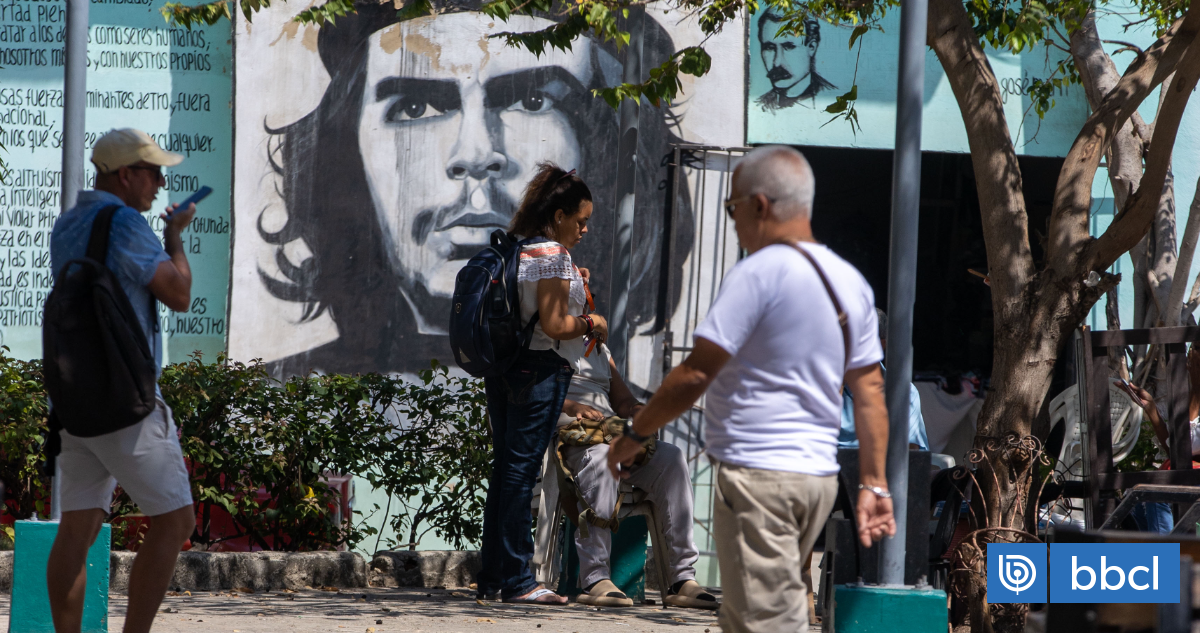
Havana, Cuba — Cuba’s Communist Party will convene an extraordinary session this week to vote on the most sweeping economic reforms since the 1959 revolution, as President Miguel Díaz-Canel seeks to address a crisis marked by record inflation, food shortages, and mass emigration. The reforms, which include liberalizing foreign investment rules and expanding private-sector roles, come after months of internal debate and pressure from a population increasingly frustrated by decades of economic stagnation under the one-party system.
The party’s Politburo announced the extraordinary session on Tuesday, signaling urgency. “The situation demands bold decisions,” said a party statement obtained by Reuters, adding that the reforms would be presented for approval during the closed-door meeting. If passed, the changes would mark a historic shift for a government that has long resisted market-based policies, even as neighboring nations like Mexico and the Dominican Republic have seen economic growth through limited privatization.
Economic data underscores the stakes: Cuba’s inflation rate hit 36.5% in April 2024, according to the country’s National Office of Statistics (ONE), while the United Nations reports that nearly 40% of Cubans live below the poverty line—a figure that has doubled since 2020. The reforms, if implemented, would allow foreign companies to operate in sectors previously reserved for state enterprises, including tourism, agriculture, and light manufacturing.
Yet the path forward remains uncertain. Opposition within the party to any deviation from socialist principles has been vocal, with some officials warning that reforms could undermine Cuba’s revolutionary identity. “We cannot repeat the mistakes of other socialist countries that opened their economies too quickly,” cited a senior party member in internal discussions leaked to the BBC. Meanwhile, Díaz-Canel has framed the changes as necessary to prevent further social unrest, noting that over 500,000 Cubans emigrated in 2023 alone (UN data).
What the Reforms Would Change—and Who Stands to Gain
While exact details of the proposed reforms remain under wraps, leaked documents reviewed by The Guardian suggest three key pillars:
- Expanded foreign investment: Allowing joint ventures in sectors like biotechnology and renewable energy, where Cuba has untapped potential. The government would retain majority control in strategic areas like oil and telecommunications.
- Private-sector growth: Legalizing small- and medium-sized enterprises (SMEs) in additional sectors, including construction and retail, beyond the current 128 permitted activities. Current private businesses, which employ around 1.2 million Cubans (World Bank), would see reduced bureaucratic hurdles.
- Currency unification: Phasing out the dual-currency system (CUP and CUC) that has fueled corruption and inequality. The move, delayed since 2021, would simplify transactions but could trigger short-term price shocks.
The reforms would also permit land leases for up to 99 years—a dramatic departure from the state’s historical control over agriculture, where food production has collapsed under inefficiencies and U.S. sanctions. “This is the first time since 1959 that private farmers could own land long-term,” said Bloomberg’s analysis of agricultural experts.
Yet critics warn the reforms may arrive too late. “Even if approved, implementation will take years, and by then, the population’s patience may have worn thin,” said The Economist, citing Cuba’s history of half-measures. The last major reform push, in 2011, led to modest gains in tourism but failed to address structural issues like state inefficiency and corruption.
Why This Moment Is Different: The Crisis That Forced the Hand
Unlike past attempts at economic liberalization, this round of reforms is being driven by three interlocking crises:
- Economic collapse: Cuba’s GDP shrank by 11% in 2020 (IMF) and has yet to recover. The U.S. embargo, which President Biden has refused to lift, remains a persistent drag, though Díaz-Canel has sought to diversify trade partners, including with China and Russia.
- Social unrest: Protests in 2021, the largest in decades, revealed deep public dissatisfaction. While the government suppressed dissent, internal reports obtained by The New York Times showed that even within the party, frustration with the status quo was growing.
- Generational shift: Younger Cubans, who make up 60% of the population (UNFPA), have little memory of the revolution’s early successes and are increasingly skeptical of one-party rule. Many have turned to the private sector or emigration as survival strategies.
The reforms also come as Díaz-Canel, 64, faces pressure to deliver results before the next party congress in 2026. His predecessor, Raúl Castro, initiated limited reforms in 2011, but progress stalled amid infighting and external pressures. “Díaz-Canel has no choice but to act,” said The Financial Times, citing analysts who argue that the party’s survival depends on demonstrating tangible improvements.
Yet the reforms face three major hurdles:
- Party resistance: Hardliners, including former president Raúl Castro’s allies, have criticized any move away from state control. A leaked internal memo (Reuters) suggested some officials fear the reforms could lead to “capitalist infiltration.”
- U.S. sanctions: While Díaz-Canel has sought to reduce dependence on the U.S., sanctions on sectors like oil and finance could complicate foreign investment. The Biden administration has shown no signs of easing restrictions.
- Implementation risks: Past reforms failed due to bureaucratic inertia and corruption. Transparency International ranks Cuba 171st out of 180 in its 2023 Corruption Perceptions Index (CPI), raising doubts about whether new policies will be enforced.
What Happens Next: The Timeline and What’s at Stake
The extraordinary session of the Communist Party’s Politburo is expected to conclude by Friday, May 17, 2024, with a formal announcement of approved reforms by May 20, according to sources familiar with the process (BBC). If approved, the National Assembly—Cuba’s rubber-stamp parliament—will likely ratify the changes in a special session by June 2024.
Here’s what to watch for in the coming months:
- June–July 2024: Drafting of new laws to implement the reforms, including foreign investment regulations and currency unification rules.
- August–September 2024: Pilot programs in sectors like agriculture and tourism, with foreign companies invited to submit proposals.
- 2025: First major review of reform progress, with expectations that the government will announce concrete results to maintain public support.
The reforms could also trigger geopolitical shifts. Russia, Cuba’s largest trade partner outside the Western Hemisphere, has signaled support for economic diversification but may resist changes that reduce Cuba’s strategic value as a socialist ally. Meanwhile, the U.S. could respond by tightening sanctions further—or, conversely, testing Díaz-Canel’s commitment to reform by easing some restrictions.
Key Takeaways: What the Reforms Could—and Couldn’t—Fix
The extraordinary session marks a turning point, but success depends on execution:
- Short-term relief: If approved, reforms could stabilize the economy by attracting foreign capital and boosting private-sector jobs—critical for reducing emigration.
- Long-term risks: Without anti-corruption measures and bureaucratic reforms, past patterns of inefficiency may persist, undermining public trust.
- Political gamble: Díaz-Canel is betting that controlled liberalization will preserve the revolution’s core while modernizing the economy. Failure could erode party legitimacy.
- External factors: U.S. sanctions and global economic conditions remain wild cards. Even with reforms, Cuba’s recovery will depend on external support.
- Public sentiment: Cubans remain skeptical. A 2023 poll by Cuba’s Center for Research on Public Opinion (CIP) found that 72% of respondents believed reforms would not improve their lives.
How to Follow the Story: Official Updates and Where to Look
For real-time developments, monitor these official and high-authority sources:

- Granma: Cuba’s official newspaper, which will publish the party’s formal statement after the session (granma.cu).
- National Assembly of Cuba: The parliament’s website will post reform-related laws once approved (parlamentocubano.gob.cu).
- Reuters and AP: For independent, on-the-ground reporting from Havana (Reuters Cuba, AP Cuba).
- IMF and World Bank: For economic analyses and projections (IMF Cuba, World Bank Cuba).
- Cuban expatriate communities: Groups like Cubans.org often provide early insights into public reactions.
The next critical checkpoint is the National Assembly session in June 2024, where the reforms will be debated and voted on. Until then, the focus remains on whether the party can overcome internal divisions and deliver a plan that convinces both skeptics at home and investors abroad.
What do you think? Will these reforms finally turn the tide for Cuba’s economy, or are they too little, too late? Share your thoughts in the comments—and follow World Today Journal for ongoing coverage.
Keep reading