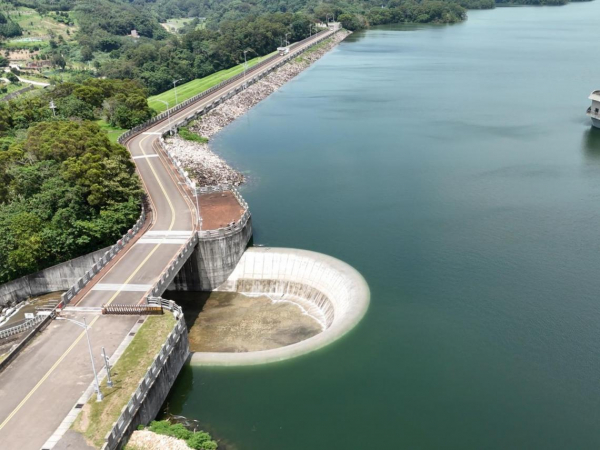
Taiwan is securing its water future through the “Pearl String Project,” a strategic infrastructure initiative designed to link reservoirs and dams to allow for island-wide water sharing. This plan, supported by President Lai Ching-te and Premier Cho Jung-tai, aims to mitigate the risks of drought for both the semiconductor industry and the agricultural sector by creating a unified water management network.
The initiative comes as Taiwan faces increasingly unpredictable weather patterns, including record-low winter rainfall and delayed plum rain seasons. By connecting various water sources, the government intends to move water from areas of surplus to regions facing critical shortages, ensuring that the island’s 23 million residents and its vital economic sectors remain insulated from sudden environmental shifts.
How does the Pearl String Project secure Taiwan’s water supply?
The core mechanism of the Pearl String Project involves the physical and operational connectivity of Taiwan’s existing reservoir and dam network. Rather than treating each reservoir as an isolated storage unit, the project seeks to “string” them together, allowing water to be transferred across different administrative and geographical zones.
According to Premier Cho Jung-tai, the completion of this project will allow for a more flexible distribution of resources. In a traditional setup, a single reservoir’s depletion can lead to localized water crises even if other reservoirs on the island remain at high capacity. The Pearl String Project aims to eliminate these localized vulnerabilities by enabling a coordinated response to drought.

This connectivity relies on several key components:
- Inter-reservoir pipelines: Constructing or upgrading pipelines that can transport water between different catchment areas.
- Pumping station upgrades: Increasing the capacity of stations to move water across varying elevations and distances.
- Smart monitoring: Implementing real-time data systems to track reservoir levels and predict transfer needs before shortages occur.
By creating this “string” of connected sources, the government can manage the island’s water budget as a single, cohesive entity. This approach is designed to maximize the utility of every drop of rainfall, regardless of where it falls on the island.
Securing the “Silicon Shield”: Water for the semiconductor industry
A primary driver behind the Pearl String Project is the protection of Taiwan’s semiconductor industry. The production of advanced microchips requires massive, consistent volumes of ultra-pure water. Any disruption in the water supply can lead to immediate production halts, causing cascading effects in the global electronics supply chain.
Industry leaders have expressed that the era of discussing “water shortages” must evolve into an era of “water security.” Wei Zhe-jia, a prominent figure in the semiconductor sector, has indicated that the focus is no longer just on the presence of water, but on the reliability and stability of its delivery. The Pearl String Project addresses this by providing a buffer against the volatility of seasonal rainfall.

For companies like TSMC, which operate massive fabrication plants (fabs), water security is synonymous with economic security. The semiconductor industry is a cornerstone of Taiwan’s economy, and its ability to maintain high-yield production depends on a stable hydrological environment. The government’s move to prioritize water connectivity is seen as a direct investment in the stability of the “silicon shield” that protects Taiwan’s economic interests.
The project seeks to ensure that even during periods of low rainfall, the high-tech industrial zones in northern and central Taiwan can receive the necessary water volumes through transfers from more stable or northern reservoirs, reducing the risk of industrial downtime.
Balancing the needs of agriculture and high-tech manufacturing
One of the most significant challenges in Taiwan’s water management is the inherent competition between the agricultural sector and the industrial sector. Farmers require large volumes of water for irrigation, particularly during critical growing seasons, while semiconductor fabs require high-purity water for manufacturing processes.
During past droughts, tensions have risen as the government was forced to make difficult decisions regarding water allocation. Premier Cho Jung-tai has emphasized that the Pearl String Project is specifically designed to prevent these zero-sum scenarios. By increasing the overall efficiency and mobility of the water supply, the government aims to ensure that both “agriculture and chips” receive the resources they need.
The project facilitates this balance through:
1. Strategic Redistribution: During periods of high demand in agricultural zones, water can be redirected from reservoirs that are less critical to industrial hubs, and vice versa.
2. Buffer Capacity: The connectivity allows for the creation of a larger “virtual reservoir” across the island, providing a greater buffer for all users.
3. Conflict Mitigation: By providing a more predictable supply, the government reduces the political and social friction caused by emergency water rationing.
This dual-track approach is essential for maintaining social stability. Agriculture is not only a vital economic sector but also a cornerstone of Taiwan’s food security and rural livelihoods. Ensuring that technological advancement does not come at the expense of the farming community is a central goal of the current administration’s water policy.
Regional development and the Tainan connection
The Pearl String Project also plays a role in Taiwan’s broader goal of regional development and geographic balance. Water scarcity has historically been a factor that complicates industrial expansion in southern Taiwan, where water resources can be more volatile than in the north.
Premier Cho Jung-tai recently highlighted the importance of regional equilibrium, specifically mentioning efforts to revitalize areas like the Tainan Xinying Sugar Factory. The revitalization of such cultural and industrial assets is part of a larger strategy to “balance Taiwan and balance Tainan.”
A key component of this regional balance is ensuring that southern Taiwan has the infrastructure necessary to support both its traditional agricultural roots and its growing industrial capabilities. By integrating southern water resources into the national “Pearl String” network, the government can ensure that the south is not left vulnerable during drought cycles. This connectivity makes the southern regions more attractive for long-term investment, contributing to a more even distribution of economic growth across the island.
Climate volatility: The challenge of shifting rain patterns
The urgency of the Pearl String Project is underscored by the increasing frequency of extreme weather events. Taiwan’s traditional water cycle has long relied on two primary events: the winter rains and the “Meiyu” (plum rain) season. Historically, these periods provided the necessary replenishment for the island’s reservoirs.
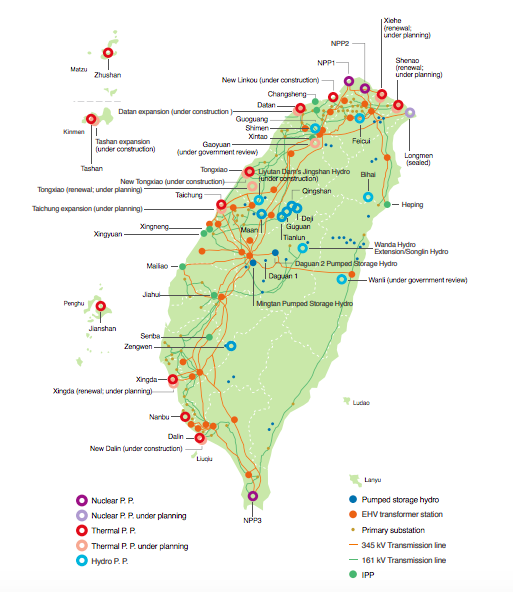
However, recent years have seen a departure from these predictable patterns. Meteorologists and government officials have noted a trend of “the least winter rain in history” and significantly delayed plum rain seasons. This shift creates a “dry gap” where reservoir levels can drop to critical thresholds before the major rainy seasons arrive.
The Pearl String Project is a direct response to this climate-driven volatility. Because the timing and volume of rainfall are becoming harder to predict, the government can no longer rely solely on seasonal patterns. Instead, it must build a system that is resilient to unpredictability. The ability to move water across the island allows the management authorities to respond to “flash droughts” or delayed seasons with greater agility.
As climate change continues to alter the hydrological landscape of East Asia, the transition from static water management to a dynamic, connected network like the Pearl String Project is becoming a necessity for Taiwan’s long-term survival and prosperity.
Key Takeaways: Taiwan’s Water Security Strategy
- The Pearl String Project: A plan to connect Taiwan’s reservoirs and dams into a single, interconnected network for efficient water sharing.
- Economic Protection: The project is critical for safeguarding the semiconductor industry, which requires stable, high-volume water supplies.
- Agricultural Stability: By improving water mobility, the government aims to reduce competition between high-tech industries and the farming sector.
- Climate Resilience: The initiative addresses the risks posed by unpredictable weather, such as low winter rainfall and delayed plum rain seasons.
- Regional Balance: Infrastructure connectivity supports the development of southern Taiwan, helping to balance economic growth across the island.
The next phase of this initiative will involve detailed engineering assessments and the commencement of specific pipeline construction projects. Further updates on the implementation timeline and the specific reservoirs to be prioritized are expected in upcoming government infrastructure reports.
What do you think about Taiwan’s approach to water management? Should more focus be placed on industrial or agricultural needs? Share your thoughts in the comments below and share this article to spread the word.
Keep reading