
Hung Hung General Hospital in Vietnam has officially achieved ISO 15189:2022 accreditation for its medical laboratory, marking a significant advancement in the facility’s diagnostic reliability and patient safety standards. This international recognition confirms that the hospital’s laboratory services meet rigorous technical requirements and maintain a high-quality management system for clinical testing, according to the International Organization for Standardization (ISO) guidelines for medical laboratories.
The achievement of ISO 15189:2022 is a critical milestone for healthcare providers in Vietnam, as it demonstrates compliance with the most current global benchmark for medical laboratory competence. By adhering to these standards, the laboratory ensures that its test results are accurate, reproducible, and delivered within a timeframe that supports effective clinical decision-making. Accreditation is not merely a formality; it requires a comprehensive audit of laboratory personnel competence, equipment calibration, and the handling of biological specimens, as outlined in the Bureau of Accreditation (BoA) framework in Vietnam.
Why International Accreditation Matters for Diagnostic Accuracy
Medical laboratory accreditation provides a framework for healthcare facilities to minimize errors and enhance patient outcomes. The ISO 15189:2022 standard specifically addresses the unique challenges of clinical environments, emphasizing both technical competence and management performance. According to the World Health Organization, laboratories that operate under international quality management systems are better equipped to provide clinicians with reliable data, which is essential for diagnosing cardiovascular diseases, metabolic disorders, and infectious conditions.
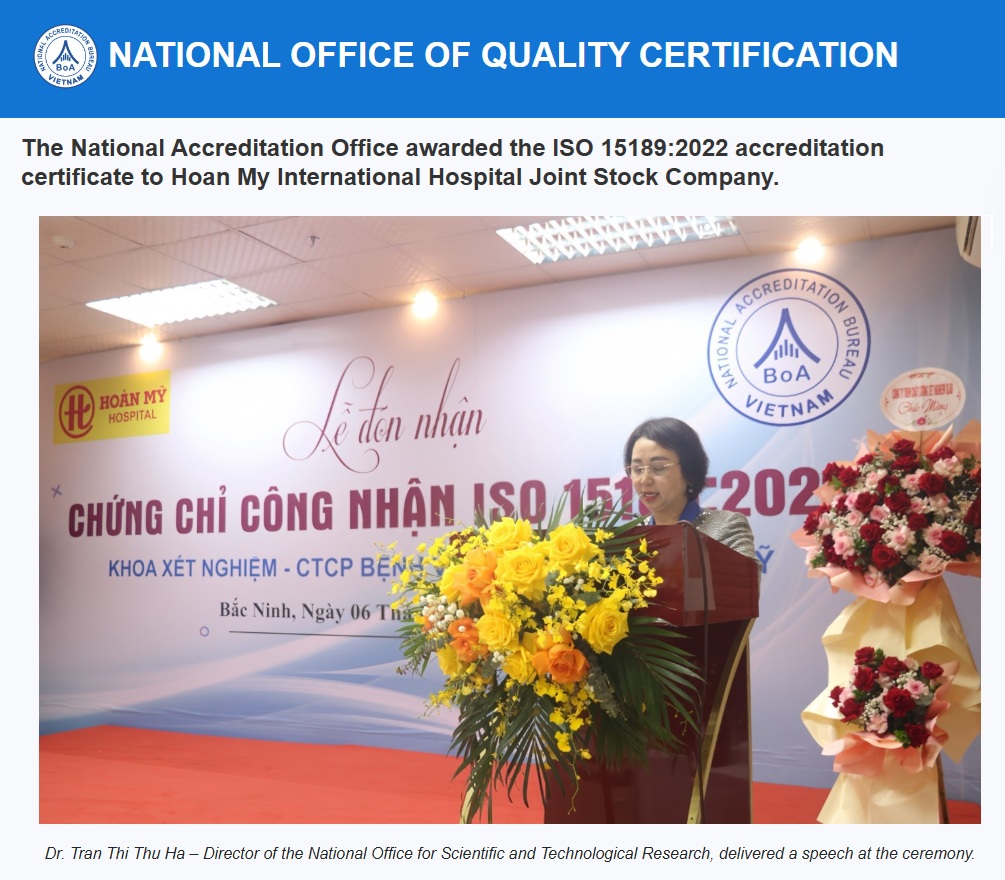
For patients at Hung Hung General Hospital, this certification means that the blood work, pathology, and diagnostic imaging processes are subject to regular, independent oversight. The accreditation process involves a multi-step evaluation, including on-site assessments by technical experts who review the laboratory’s standard operating procedures. This rigorous process ensures that the facility maintains the highest level of integrity in its diagnostic reporting, which is the cornerstone of effective disease management and preventative care.
Impact on Chronic Disease Management
The diagnostic precision enabled by the ISO 15189:2022 accreditation is particularly relevant for the management of cardiovascular disease, which remains a leading cause of morbidity globally. Accurate lipid panels, cardiac enzyme testing, and glucose monitoring are vital for early intervention. When a laboratory adheres to international standards, the variability in test results is significantly reduced, allowing physicians to make informed decisions regarding medication adjustments and lifestyle interventions.

Public health experts often emphasize that diagnostic errors can lead to delayed treatments or unnecessary medical procedures. By aligning its laboratory operations with international standards, Hung Hung General Hospital is reducing the likelihood of such diagnostic discrepancies. This transition is part of a broader trend in the Vietnamese healthcare sector, where hospitals are increasingly seeking international validation to improve the quality of care and align with global medical practices. The focus on standardized testing is also essential for patients managing chronic conditions, as consistent tracking over time is necessary to assess the effectiveness of long-term health strategies.
Maintaining Compliance and Future Standards
Achieving ISO 15189:2022 is an ongoing commitment rather than a one-time event. The hospital is now required to participate in periodic surveillance audits to ensure that its laboratory continues to meet the necessary criteria. These audits focus on the laboratory’s commitment to continuous improvement, including the training of staff and the maintenance of sophisticated diagnostic equipment. According to the International Laboratory Accreditation Cooperation (ILAC), accredited facilities must demonstrate that they can consistently produce valid results while managing risks effectively.

Looking forward, the integration of these high-standard diagnostic services is expected to bolster the hospital’s reputation and contribute to the overall elevation of diagnostic quality in the region. Patients and stakeholders can expect future updates regarding the laboratory’s performance metrics and any additional accreditation expansions as the facility continues its quality improvement journey. For those interested in the latest clinical guidelines or laboratory updates, the hospital typically provides information through its official communications channels, and further details on national laboratory quality standards are available via the Vietnam Ministry of Health.
As the healthcare landscape continues to evolve, the emphasis on evidence-based diagnostics remains paramount. Readers are encouraged to monitor future announcements from the hospital regarding new testing capabilities or expansions in their diagnostic departments. We welcome your thoughts on how international standards influence your confidence in local healthcare services—please share your comments below.
Worth a look