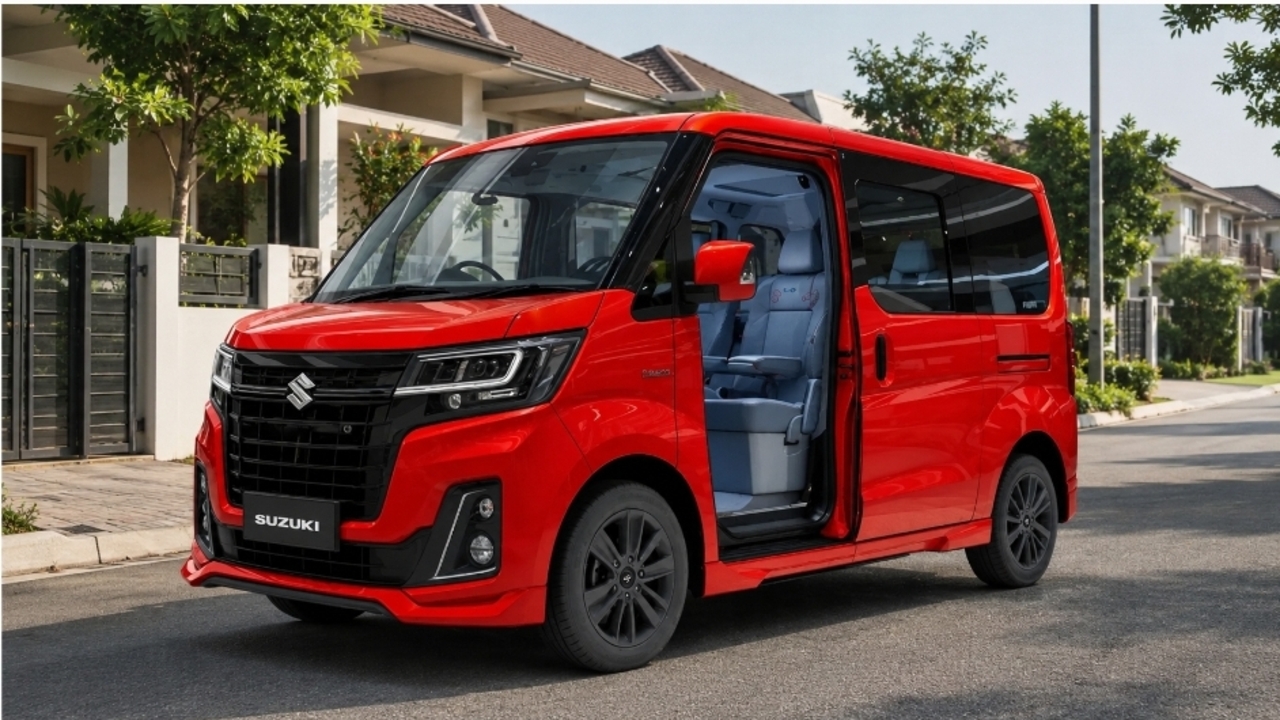
The Suzuki Karimun 2026 remains a subject of significant industry speculation as automotive analysts monitor potential updates to the storied city car line. While enthusiasts continue to discuss the prospect of a modernized, futuristic iteration of the vehicle, Suzuki Motor Corporation has not issued an official confirmation regarding a 2026 model release or specific design overhaul. As of mid-2024, the company’s global production strategy remains focused on its current lineup of compact vehicles and the ongoing transition toward electrified powertrains, according to reports from the Suzuki Motor Corporation Investor Relations portal.
For decades, the Karimun has served as a cornerstone of Suzuki’s small-car strategy, particularly in Southeast Asian markets where space efficiency and fuel economy are primary consumer drivers. The vehicle’s history, rooted in the Japanese Kei car philosophy, emphasizes maximizing interior volume within a compact footprint. Despite persistent online rumors suggesting a radical redesign for 2026, market observers note that any evolution of the brand must balance its heritage of affordability with increasingly stringent global safety and emissions regulations, as outlined in the International Energy Agency’s Global EV Outlook 2024.
Market Positioning and Competitive Landscape
The persistent interest in a new Suzuki Karimun stems from its legacy as a practical entry-level vehicle. In the current automotive climate, the city car segment faces intense competition from established rivals such as the Honda Brio, Toyota Agya, and Daihatsu Sirion. These competitors have successfully captured the youth and small-family demographics by integrating modern infotainment systems and improved safety suites, such as advanced driver-assistance systems (ADAS), which are becoming standard expectations for new car buyers, as noted by the ASEAN New Car Assessment Program (ASEAN NCAP).

Analysts suggest that if Suzuki were to reintroduce or refresh the Karimun, the vehicle would likely need to incorporate hybrid-electric technology to remain relevant. Suzuki’s current regional strategy, particularly in India and Southeast Asia, has prioritized mild-hybrid systems to enhance fuel efficiency without the prohibitive cost of full-battery electric vehicles. The company’s commitment to this “multi-pathway” approach to carbon neutrality, which includes hybrids and biofuels, is documented in the Suzuki Environmental Vision 2050.
Design Expectations vs. Engineering Reality
Speculation regarding a “futuristic” aesthetic for a potential 2026 model often focuses on sharper body lines and LED lighting signatures, common trends in contemporary urban mobility design. However, the engineering reality for a vehicle in this price bracket is dictated by manufacturing costs. Maintaining the Karimun’s reputation for being “irit” (fuel-efficient) while meeting modern crash-test standards requires a significant investment in lightweight high-tensile steel and aerodynamic optimization.
When evaluating the feasibility of such a project, industry experts point to the success of the Suzuki Swift and the Jimny as benchmarks for how the brand maintains its design identity while modernizing its technology. Any future iteration of a city-focused model would likely leverage the Heartect platform, which Suzuki utilizes across its global compact range to reduce weight and improve structural rigidity, a standard practice verified in the company’s corporate technology archives.
Consumer Considerations for Future Models
For prospective buyers waiting for news, the most reliable source for information remains the official manufacturer press releases. Consumers should be wary of unverified renders or “leaked” specifications circulating on social media, as these often reflect independent artistic concepts rather than actual product development plans. As of this writing, Suzuki has not announced a launch timeline or technical specifications for a 2026 city car.
The automotive industry generally follows a 5-to-7-year product lifecycle for mass-market vehicles. Interested parties can monitor official updates through the Suzuki Indonesia official website or other regional corporate portals, which serve as the primary channels for vehicle announcements. Future developments will depend on shifting market demand, regulatory changes in key regions, and the company’s internal capacity to scale production for new segments.
As the industry moves toward 2026, the potential for a renewed focus on affordable, high-efficiency urban transport remains high. Whether this takes the form of an updated Karimun or an entirely new nameplate, the core requirements for success—space, reliability, and price—remain unchanged. Readers are encouraged to keep an eye on upcoming industry trade shows and quarterly investor briefings for the most accurate, verified information regarding Suzuki’s future product roadmap.