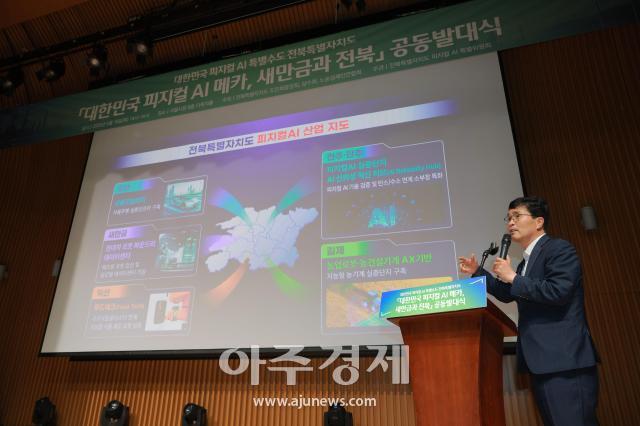
Lee Won-taek, the newly elected governor of Jeonbuk State, has recently centered his administrative focus on the integration of physical AI and advanced robotics as a primary driver for the region’s industrial revitalization. Following his election, Lee has been actively engaging with industry stakeholders to outline a strategic investment environment designed to transform the Saemangeum area into a hub for cutting-edge autonomous technology.
The push for a physical AI-driven economy comes at a time of significant political transition in the region. As the local government shifts its focus toward high-tech infrastructure, the administration is emphasizing the necessity of private-sector partnerships to secure long-term growth. According to official reports from the Jeonbuk State Government, the initiative aims to leverage the vast, reclaimed land of Saemangeum to host large-scale testing facilities for robotics, which require significant spatial footprints that are otherwise difficult to secure in urban centers.
The Strategic Focus on Physical AI in Jeonbuk
Physical AI refers to the integration of artificial intelligence into robotic systems that interact directly with the physical world, moving beyond traditional software-based automation. Lee’s administration is positioning this sector as a cornerstone of the regional development plan. By fostering an environment that lowers barriers for startups and established tech firms, the governor intends to create a specialized cluster that bridges the gap between research and commercial application.
The Saemangeum Development and Investment Agency has previously identified the region as a strategic location for secondary batteries and renewable energy, providing a ready-made power infrastructure that is essential for energy-intensive robotics manufacturing. Lee’s proposal expands this mandate by calling for specific tax incentives and regulatory “sandboxes”—controlled environments where companies can test new robotic technologies with fewer administrative hurdles. This approach is modeled after successful technology hubs elsewhere in South Korea, where government-led infrastructure support has historically preceded private investment.
Navigating the Political Landscape and Public Sentiment
The transition period for the new leadership has not been without scrutiny. Local political discourse has intensified regarding the direction of the Jeonbuk administration and the comparative standing of its key figures. While the focus remains on economic policy, observers note that the debate over regional leadership often intersects with broader concerns about how the state manages its relationship with the central government and local industrial interests.
Discussions regarding polling data and political performance have been a point of contention among local political parties. Critics have questioned the efficacy of the current administrative transition, suggesting that the focus should remain on consistent policy execution. However, supporters of the new administration argue that the emphasis on physical AI represents a necessary pivot toward future-oriented industries that can provide sustainable employment for the region’s youth. The National Election Commission of South Korea maintains records of regional election outcomes and campaign spending, which provide the formal context for the current political climate in Jeonbuk.
Future Outlook and Next Steps
The success of the physical AI project will likely hinge on the upcoming provincial budget deliberations and the ability of the administration to finalize memorandums of understanding with major tech corporations. The next major checkpoint for these initiatives is the scheduled legislative session, where the proposed budget for the “Saemangeum Robotics Innovation Center” will be reviewed by the provincial council.
For residents and investors looking to track the progress of these initiatives, official updates are regularly published through the Jeonbuk State Government’s press portal. As the administration moves into its formal term, the clarity of its industrial policy will remain a key indicator of its long-term stability and its ability to attract the necessary capital to compete on a national scale. We encourage our readers to share their thoughts on the potential for robotics in the region in the comments section below.
Keep reading