
Absci Corporation, a generative AI-powered drug discovery company, has seen its stock price climb significantly since the start of 2024, reflecting investor interest in its expanding clinical pipeline. As of recent market observations, the company’s valuation has experienced a notable upward trajectory, driven largely by its efforts to leverage artificial intelligence in the identification and validation of new therapeutic candidates. According to data tracked by the Nasdaq Stock Market, Absci continues to focus on its proprietary Integrated Drug Creation platform to streamline the transition from target discovery to clinical trial readiness.
The company, headquartered in Vancouver, Washington, has recently signaled a strategic pivot toward addressing high-need indications, including developments in dermatology and reproductive health. While market performance remains volatile, the firm’s ability to secure partnerships—most notably with pharmaceutical giants—serves as a primary metric for analysts assessing its long-term viability. Investors and stakeholders remain focused on the company’s ability to move from preclinical research to human trials, a transition that remains the most significant hurdle for biotechnology firms in the current fiscal environment.
Expanding the Clinical Pipeline: Hair Loss and Endometriosis
Absci is currently advancing research into novel biological solutions for androgenetic alopecia, commonly known as hereditary hair loss, and endometriosis, a chronic condition affecting millions globally. The company’s approach involves using its generative AI models to design antibodies that can specifically target the biological pathways implicated in these conditions. According to the company’s official investor relations portal, these programs are designed to address limitations in existing standard-of-care treatments, which often carry significant side effects or limited efficacy for specific patient populations.
In the context of endometriosis, which involves the growth of tissue similar to the lining of the uterus outside the uterine cavity, Absci is exploring therapeutic avenues that could potentially offer a non-hormonal alternative to current pain-management strategies. Public health data from the World Health Organization indicates that endometriosis affects approximately 10% of reproductive-age women and girls globally, creating a substantial market demand for innovative, targeted therapies. Absci’s strategy hinges on the speed of its AI-driven protein design, which the company claims can reduce the time required for lead optimization from years to months.
The Role of Generative AI in Drug Discovery
The primary value proposition for Absci rests on its “Integrated Drug Creation” platform. Unlike traditional pharmaceutical research, which often relies on screening existing libraries of molecules, Absci’s AI identifies potential drug candidates by simulating protein interactions at a molecular level. This computational approach is intended to predict the efficacy and safety profile of a drug before it is synthesized in a laboratory. As noted in industry filings submitted to the U.S. Securities and Exchange Commission, the company aims to reduce the high failure rates typically associated with the early stages of drug development.
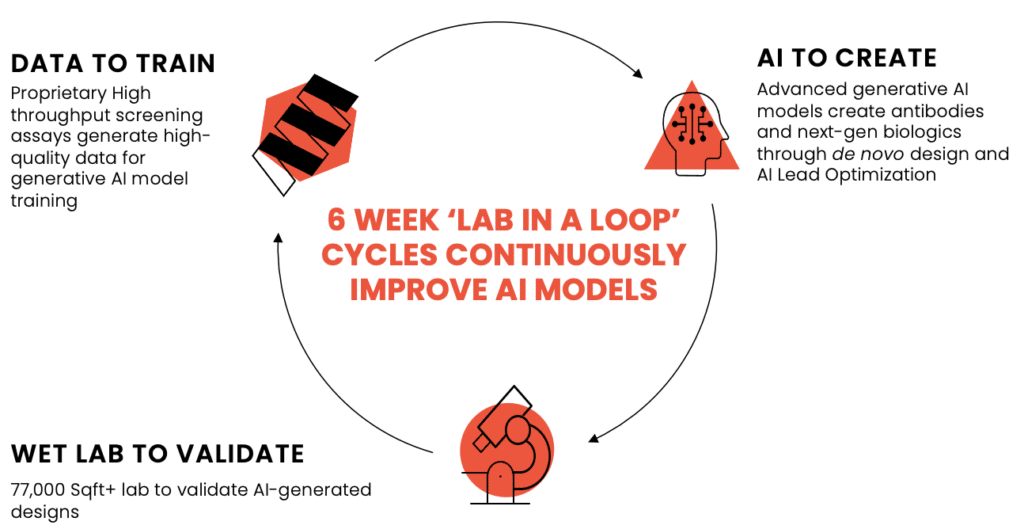
For investors, the distinction between a software-based AI company and a biotechnology firm is critical. Absci functions as a hybrid: it provides the computational engine for drug design while simultaneously moving its own proprietary assets into the clinic. This dual-track business model—partnering with other firms while developing its own pipeline—is a common strategy for biotech startups, though it requires significant capital expenditure. The stock’s performance since the beginning of the year suggests that shareholders are responding positively to the company’s progress in validating this platform through its recent clinical milestones.
Market Sentiment and Financial Performance
Market analysts often point to the “AI-in-biotech” sector as a high-growth, high-risk area. Since January 2024, Absci’s share price has fluctuated alongside broader market trends in the biotechnology sector, which is highly sensitive to interest rate changes and clinical trial outcomes. According to historical price data provided by Yahoo Finance, the stock has experienced periods of rapid growth followed by corrections, a pattern consistent with smaller-cap biotech firms that have yet to achieve commercial revenue from approved drug products.
Investors frequently monitor the company’s “burn rate”—the speed at which it spends its cash reserves—as a primary indicator of how long the firm can continue research without needing to dilute shareholder value through secondary stock offerings. The company’s ability to maintain its current pace of development depends heavily on its ability to meet specific milestones outlined in its public disclosures. Any delay in the Phase 1/2a trials for its lead candidates could impact market confidence, as the biotechnology sector is notoriously unforgiving of clinical setbacks.
Understanding Clinical Trial Phases
For those tracking Absci’s progress, understanding the significance of a “Phase 1/2a” study is essential. Phase 1 trials are primarily focused on safety and dosage, typically involving a small group of healthy volunteers or patients. If the drug shows a favorable safety profile, it moves into Phase 2a, which begins to evaluate whether the treatment actually produces the intended biological effect in patients with the target condition. This stage is a critical proof-of-concept phase.

The progression of these studies is governed by strict regulatory oversight. In the United States, the Food and Drug Administration (FDA) requires that all clinical trials undergo rigorous review to ensure the protection of human subjects. For Absci, the successful completion of these early-stage trials is the necessary prerequisite for larger, more expensive Phase 3 trials, which are required for final regulatory approval. The company’s communication regarding its clinical timeline will be the primary driver of investor interest in the coming quarters.
The next major checkpoint for the company will be the release of data from these ongoing clinical trials, which will provide the first real-world evidence of whether the AI-designed candidates function as predicted in human subjects. Interested readers can monitor the company’s progress and upcoming financial disclosures through the Absci Investor Relations website. We encourage readers to share their thoughts on the role of AI in medical innovation in the comments section below.
Keep reading