
European leaders are currently engaged in intense negotiations over the European Union’s long-term budget, with a coalition of 17 member states, including Italy, calling for a framework that protects Cohesion Policy while addressing emerging geopolitical and economic demands. The debate centers on the Multiannual Financial Framework (MFF), the EU’s primary financial planning tool, which dictates spending priorities for the coming years.
Italian Prime Minister Giorgia Meloni has emerged as a vocal advocate for maintaining robust funding for regional development. According to reports from official government briefings during recent European Council summits, the Italian delegation maintains that the EU must not sacrifice established regional support mechanisms to finance new, high-priority initiatives. This position is shared by a significant bloc of nations—often referred to as the “Friends of Cohesion”—who argue that regional investment remains the bedrock of European integration and economic convergence, as detailed in the European Commission’s official MFF documentation.
The Debate Over EU Budget Priorities
The core tension within the European Council lies in the competition for limited resources. As the bloc faces pressure to increase defense spending, support Ukraine, and accelerate the green and digital transitions, traditional funding envelopes face potential reallocation. The European Parliament has consistently pushed for the introduction of new “own resources”—revenue streams that go directly to the EU budget rather than relying solely on national contributions—to alleviate this pressure, a move supported by European Parliament President Roberta Metsola, as noted in recent official European Parliament press releases.
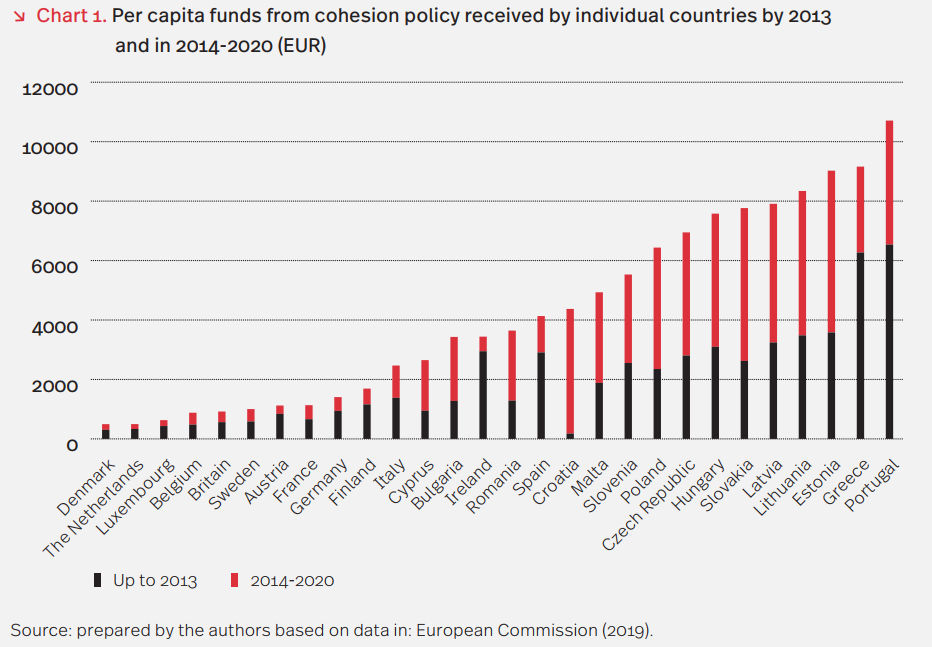
For countries like Italy, Spain, and several Central and Eastern European member states, any reduction in Cohesion funds would disproportionately affect less-developed regions. These funds are designed to bridge the economic gap between member states, fostering infrastructure, research, and employment. The coalition of 17 leaders argues that “new challenges” should not be treated as a justification for weakening the structural integrity of the Union’s regional policy, which is legally enshrined in the Treaty on the Functioning of the European Union.
Strategic Alignment and Diplomatic Efforts
Diplomatic efforts to build consensus are ongoing, with bilateral meetings taking place on the sidelines of major summits. Prime Minister Meloni has held discussions with various counterparts, including Spanish Prime Minister Pedro Sánchez, to harmonize their approach to the upcoming budget cycle. These discussions reflect a broader effort to ensure that the “Friends of Cohesion” bloc speaks with a unified voice when the European Council moves toward formal negotiations on the next MFF, which are expected to intensify in the coming months.

The European Commission, led by Ursula von der Leyen, is tasked with balancing these competing interests while drafting proposals that satisfy both the net contributors—who often demand stricter spending discipline—and the beneficiaries of cohesion funding. The complexity of these negotiations is compounded by the current inflationary environment and the fiscal rules agreed upon under the revised EU economic governance framework, which places new constraints on national debt and deficit levels.
What Happens Next in Budget Negotiations
The timeline for the next MFF is critical. While the current 2021-2027 budget remains in force, preliminary discussions for the post-2027 period are already shaping the political landscape. Member states are expected to present their formal positions during upcoming European Council sessions, where the debate over the balance between “traditional” policies and “new” strategic priorities will reach a definitive stage.
Observers point to the next scheduled summit as a key checkpoint for assessing whether a compromise on the structure of the budget is achievable. The outcome will likely determine the EU’s financial trajectory for the next decade, impacting everything from national infrastructure projects to the bloc’s collective defense capabilities. For now, the “Friends of Cohesion” remain committed to their stance, ensuring that regional development remains a central pillar of the European project.
We welcome your perspectives on how the European Union should balance its long-term financial commitments. Please share your thoughts in the comments section below or join the conversation on our social media channels.
Related reading