
The U.S. government has raised concerns that ASML, the Dutch semiconductor equipment manufacturer, may have inadvertently supplied advanced chip-making technology to customers in China in violation of current export controls. While U.S. officials are investigating whether specific high-end lithography tools reached restricted facilities, ASML has publicly maintained that it has strictly adhered to all international and domestic export regulations.
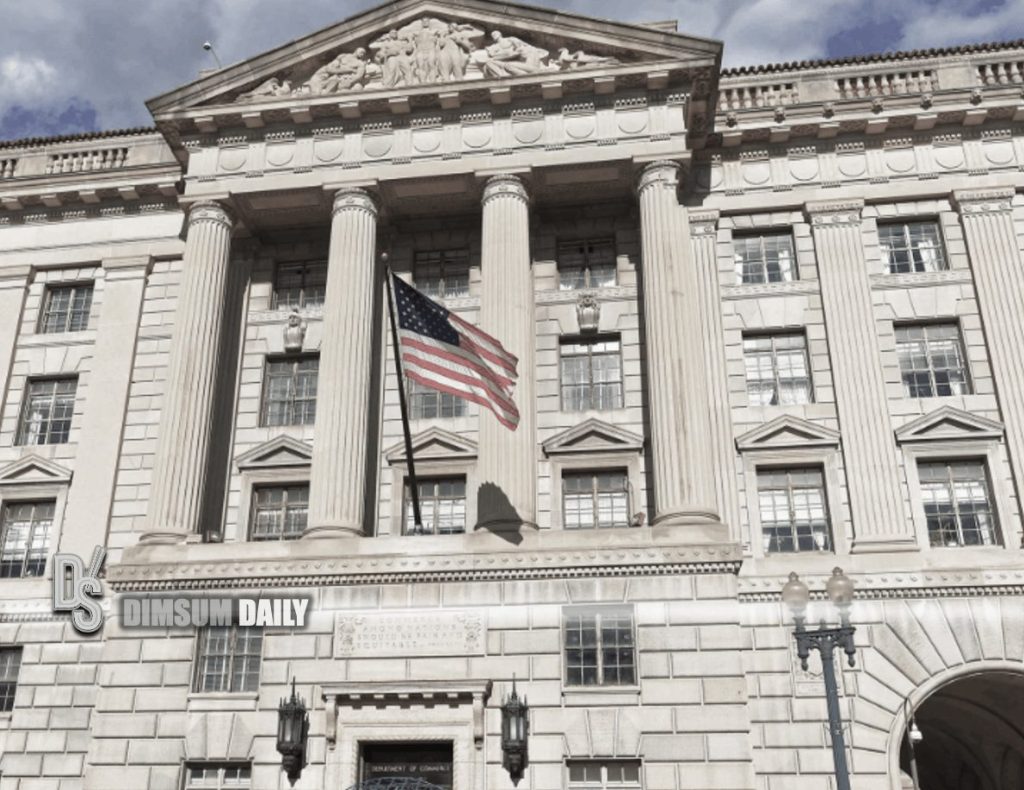
At the center of the dispute is the complex regulatory landscape governing the sale of extreme ultraviolet (EUV) and advanced deep ultraviolet (DUV) lithography systems. According to ASML’s latest financial disclosures, the company operates under a rigorous compliance framework necessitated by the ongoing U.S.-led restrictions on technology transfers to China. The U.S. Department of Commerce, through the Bureau of Industry and Security (BIS), continues to tighten oversight on the sale of equipment capable of producing sub-7nm chips, citing national security interests in preventing the advancement of China’s domestic military and artificial intelligence capabilities.
The Regulatory Conflict Over Lithography Exports
Tension between Washington and Veldhoven-based ASML stems from the interpretation of what constitutes an “advanced” tool. Under the Export Administration Regulations (EAR), U.S. authorities have expanded their jurisdiction to include foreign-made products that utilize U.S.-origin technology. This extraterritorial reach has forced ASML to navigate a dual-compliance burden: satisfying the Dutch government’s export licensing process while simultaneously ensuring that their hardware does not trigger U.S. sanctions.
ASML has consistently stated that its commercial strategy is designed to minimize risk. In its official statements regarding export controls, the company emphasizes that it has never shipped its most advanced EUV machines to China. The current friction involves the mid-range DUV immersion systems, which are essential for chip manufacturing but fall into a contested category. Industry analysts note that because these machines are modular and can be serviced or upgraded over time, tracking their final destination—and their specific configuration—presents a significant logistical challenge for both the manufacturer and international regulators.
Commercial Logic and Corporate Risk
From a business perspective, the suggestion that ASML would knowingly circumvent export controls appears to contradict the company’s long-term commercial interests. ASML holds a near-monopoly on the lithography market, and its primary revenue streams are heavily dependent on maintaining its global license to operate. A breach of U.S. export law would not only result in severe financial penalties but could also lead to a total loss of access to the U.S. intellectual property and components that are critical to the assembly of its systems.
According to reports from the Financial Times, the company maintains that its internal auditing processes are robust enough to prevent unauthorized use of its tools. The commercial logic is clear: the risk of losing access to the global market far outweighs the revenue gains from a single Chinese account. However, U.S. policymakers remain skeptical, arguing that the rapid development of China’s SMIC (Semiconductor Manufacturing International Corporation) suggests that foreign equipment is being pushed beyond its intended capabilities.
What Happens Next in the Export Investigation
The situation remains fluid as both parties engage in ongoing dialogue. The U.S. government is expected to continue its review of export license applications on a case-by-case basis, a process governed by the October 2022 semiconductor export rules. These rules effectively restricted the supply of items that could be used for advanced node production in China.
For the semiconductor industry, the outcome of this investigation will serve as a bellwether for future trade relations. If the U.S. determines that ASML’s systems were used in restricted processes, it could lead to even tighter restrictions on the types of tools that can be exported, effectively decoupling the chip supply chain further. ASML is scheduled to provide its next set of quarterly updates during its upcoming earnings call, where investors expect more clarity on the impact of these geopolitical pressures on their 2025 outlook.
Readers interested in tracking the official status of these regulations can consult the Bureau of Industry and Security website for periodic updates on entity lists and policy changes. We invite our readers to share their thoughts on the implications of these trade policies in the comments section below.