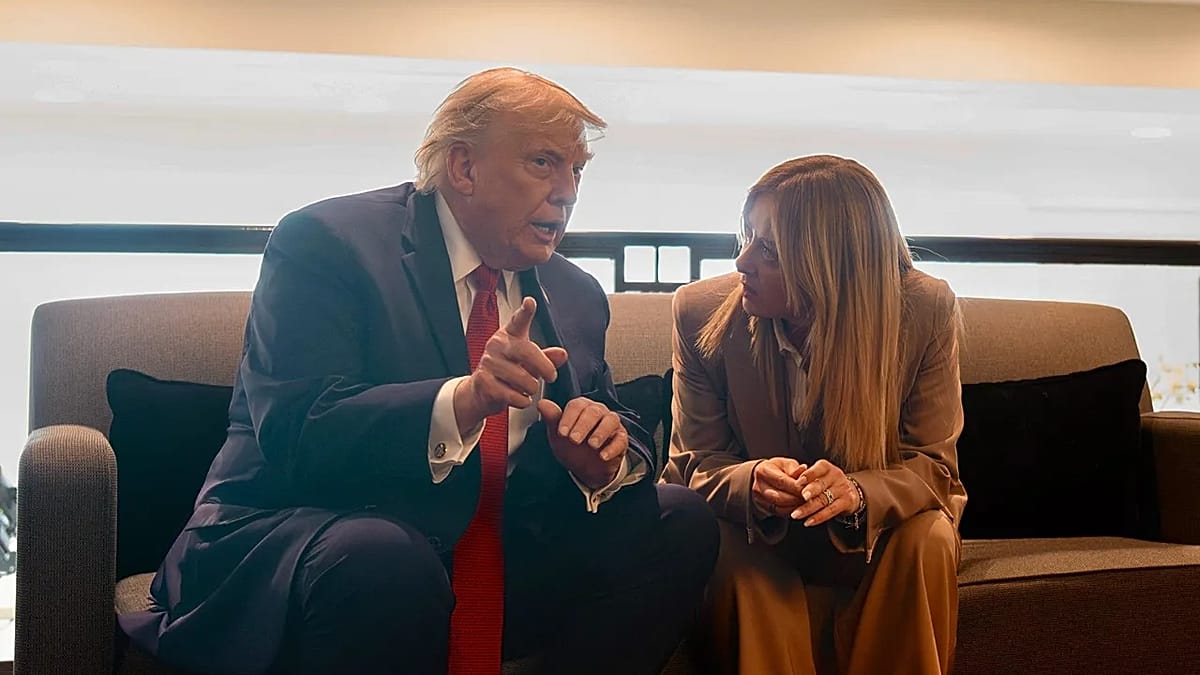
Italian Prime Minister Giorgia Meloni has formally rejected recent comments attributed to former U.S. President Donald Trump, who claimed the leader had “begged” him for a photograph during a past encounter. The dispute, which has gained significant attention in international political circles, centers on remarks reportedly made by the former president regarding his interactions with the Italian head of government. Prime Minister Meloni’s office has characterized these claims as entirely unfounded, marking a sharp public disagreement between the two figures.
The incident surfaced following media reports detailing Donald Trump’s account of his meetings with various world leaders. According to accounts verified by outlets such as Reuters, the former president suggested that his interactions with Giorgia Meloni involved a request for a photo, a claim that the Italian administration has explicitly denied. This exchange has prompted questions regarding the nature of diplomatic relations between the current Italian government and the potential future trajectory of U.S.-Italy ties.
Origins of the Diplomatic Disagreement
The friction began when reports emerged citing Donald Trump’s descriptions of his past meetings with Giorgia Meloni. The former president alleged that the Italian Prime Minister requested a photograph with him, asserting that he felt a sense of “pity” regarding the interaction. These comments were widely circulated, leading to immediate pushback from Rome.
Prime Minister Meloni’s administration responded to these allegations by labeling them as completely fabricated. The Italian government, through its official channels, emphasized that no such request occurred and that the characterization of the interaction by the former president did not align with the reality of their professional meetings. The rapid denial reflects the high level of scrutiny currently surrounding international diplomatic protocols and the public rhetoric used by prominent political figures ahead of global election cycles, as analyzed by the Council on Foreign Relations.
Impact on Transatlantic Relations
The public spat has led to speculation about the stability of the relationship between the Italian government and the Republican wing of U.S. politics. While Giorgia Meloni has maintained a pragmatic stance in her dealings with the current U.S. administration, the fallout from these comments has introduced a layer of complexity to future diplomatic planning. Reports have noted that some Italian officials have expressed concern over how such narratives could influence the perception of Italy’s international standing.

In response to the escalating rhetoric, there have been reports of adjustments to diplomatic schedules. While official confirmation of specific travel cancellations remains sparse, the broader context of the tension suggests that both sides are navigating a delicate period of communication. Maintaining clear channels is a priority for the Italian Ministry of Foreign Affairs, which works to ensure that bilateral agreements remain unaffected by domestic political commentary in the United States, according to guidelines published by the Italian Ministry of Foreign Affairs and International Cooperation.
Contextualizing Political Rhetoric
Political analysts have noted that the use of personal anecdotes—whether verified or not—has become a recurring feature in the current geopolitical landscape. By framing international meetings through the lens of personal favors or requests, political actors often attempt to solidify their domestic support base. However, for leaders like Giorgia Meloni, who represent a G7 nation, such narratives present challenges to the professional decorum expected in high-level state visits.
The divergence in the accounts provided by Donald Trump and the Italian government highlights the importance of official records in verifying diplomatic history. As noted by experts in international relations, the reliance on unverified anecdotes can obscure the substance of policy discussions, which are the primary focus of meetings between heads of state. The Italian government continues to emphasize that its focus remains on the strategic partnership with the United States, regardless of the rhetoric circulating in the media.
Looking Ahead
As the political calendar progresses, the focus for the Italian government remains on upcoming summits and the maintenance of established diplomatic ties. There are no immediate, high-level meetings scheduled that would suggest an imminent resolution to this specific verbal disagreement. The administration in Rome is expected to continue its policy of addressing individual claims as they arise while prioritizing long-term state interests.

For those tracking the evolution of this story, official statements from the Palazzo Chigi remain the most reliable source for the Italian position. Readers interested in the official record of diplomatic engagements can monitor the official website of the Italian Government for future updates. We invite our readers to share their perspectives on the role of personal narrative in modern diplomacy in the comments section below.
Related reading