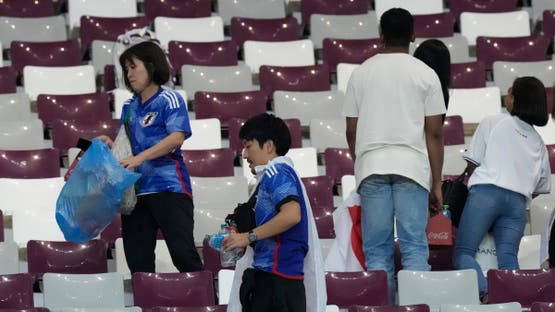
Japanese football fans have garnered international attention during recent FIFA World Cup tournaments for their consistent practice of cleaning stadium seating areas after matches. While the behavior is widely recognized as a cultural expression of respect and social responsibility, it has sparked a distinct domestic conversation within Japan regarding gender roles and household labor, according to reports in major regional media outlets.
The act of cleaning up trash—often involving the collection of discarded bottles and food containers—has been documented by international media since the 2014 World Cup in Brazil. Observers note that this behavior stems from Japanese educational principles, specifically the concept of soji, or the practice of students cleaning their own schools to instill humility and communal responsibility. However, the contrast between the public behavior of Japanese men at global sporting events and their perceived contributions to domestic chores at home has become a frequent subject of commentary on social media and in lifestyle news segments across Japan.
Cultural Roots of Stadium Cleaning
The habit of cleaning stadium stands is not a spontaneous act but a reflection of deep-seated social norms. In Japanese culture, maintaining cleanliness in public spaces is a collective duty rather than an individual preference. Sports sociologists often point to the Japanese education system, where children are responsible for maintaining their classrooms, as the primary driver for this behavior. This civic discipline is carried into adulthood and becomes highly visible during international gatherings like the FIFA World Cup.
During the 2022 World Cup in Qatar, the Japanese national team and their supporters received widespread praise from FIFA and international observers for leaving their locker rooms and stadium sections in pristine condition. According to reports from FIFA’s official news coverage, this gesture was widely interpreted as a sign of respect toward the host nation and the tournament itself. Yet, this public display of tidiness has created a cognitive dissonance for some observers, who contrast these efforts with the realities of domestic life in Japan.
The Domestic Labor Debate
The viral nature of the stadium cleaning videos has prompted a specific reaction from Japanese women on social media platforms. Many have questioned why the same men who display meticulous attention to public hygiene appear less inclined to perform similar tasks within their own homes. This debate highlights a broader cultural tension regarding the gendered division of labor in Japanese households.
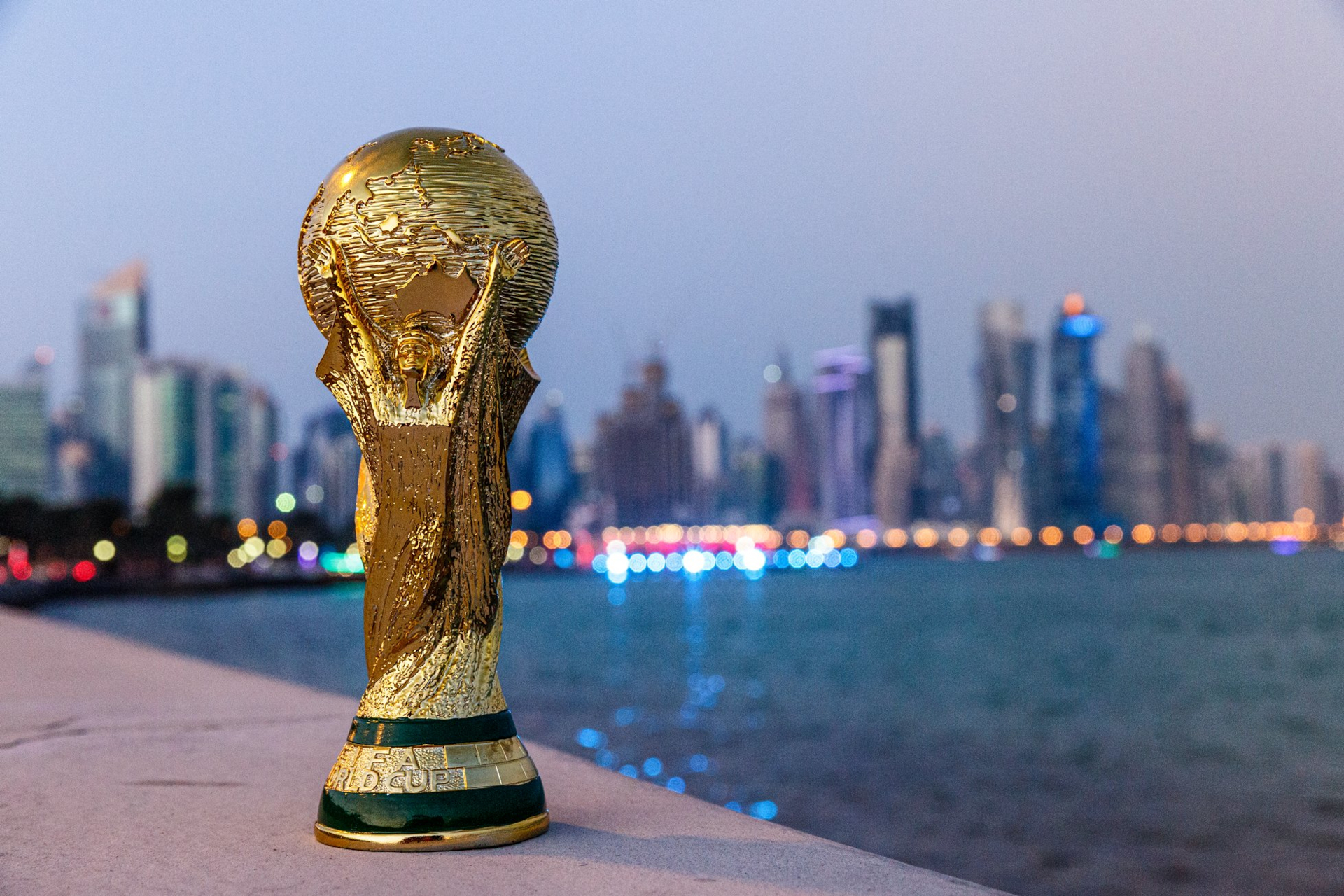
According to data from the Organization for Economic Cooperation and Development (OECD), Japanese men spend significantly less time on unpaid domestic labor compared to women, despite shifting societal expectations. The irony noted by critics is that the “World Cup cleanup” serves as a performative act of cleanliness that does not necessarily translate into a more equitable distribution of household chores. This discourse has moved from social media threads into mainstream Japanese media, where lifestyle commentators have begun using the stadium behavior as a springboard to discuss the need for increased male participation in daily domestic routines.
Societal Impact and Public Perception
The juxtaposition of these two realities—public civic duty versus private domestic labor—has forced a public reflection on what constitutes “respect” in Japanese society. While the international community views the stadium cleaning as a positive cultural export, the domestic reaction suggests a more complex internal struggle. The primary tension lies in the definition of public versus private responsibility.
For many Japanese citizens, the cleanup is an extension of national pride. However, the criticism voiced by women suggests that true social responsibility should begin at home. This sentiment reflects a growing demand for modernization in gender roles, even as the country continues to celebrate traditional values of civic duty and communal care. The debate remains ongoing, appearing frequently in Japanese talk shows and digital publications whenever the national team competes on the global stage.
Addressing the Disparity
The conversation regarding domestic labor in Japan is supported by long-term government initiatives aimed at fostering a more balanced work-life environment. The Japanese government has implemented various policies under the “Work-Style Reform” legislation to encourage shorter working hours and increased parental leave for fathers, as detailed in reports by the Ministry of Health, Labour and Welfare. These efforts are designed to create more time for men to participate in family life, theoretically addressing the very gap highlighted by the criticism surrounding stadium cleaning.

While the stadium cleaning remains a point of pride for many, the push for parity in the home continues to evolve. Whether the visibility of these World Cup moments will eventually influence domestic habits remains a subject of debate among cultural commentators and sociologists in Tokyo. For the time being, the global applause for Japanese fans serves as a reminder of the difference between public performance and the quiet, often invisible work required within a household.
As the international sporting calendar progresses, observers expect this topic to resurface during future Olympic Games and international tournaments. The intersection of cultural pride and domestic social reform remains a sensitive but necessary conversation for a society balancing its traditional values with modern aspirations for gender equality. Readers are encouraged to follow official updates from the Cabinet Office of Japan regarding ongoing efforts to promote gender-equal participation in all sectors of society.
Keep reading