
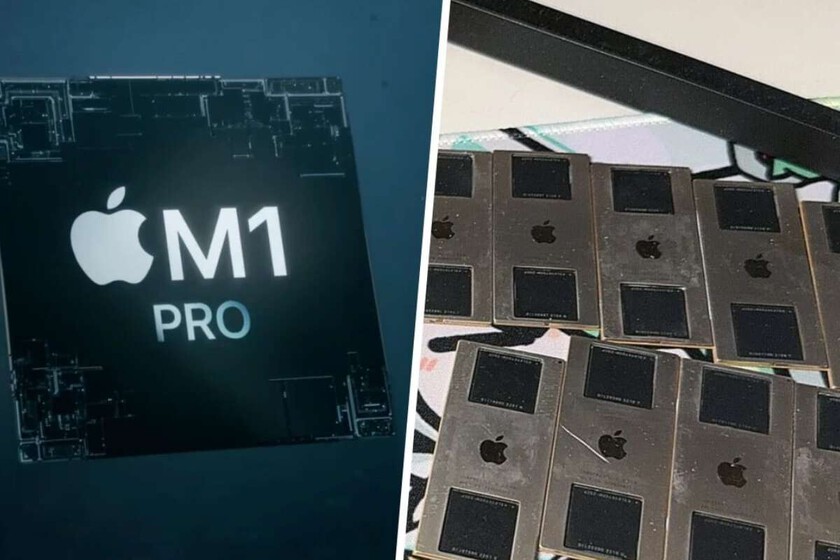
Apple’s M1 Pro chip, once the high-performance engine powering the MacBook Pro lineup, has surfaced in an unconventional form: a decorative hair accessory. While the processor was engineered by Apple to handle professional-grade creative workflows and complex software tasks, a recent viral social media trend has reimagined the discarded silicon as a fashion statement, with some users repurposing salvaged components into hair clips retailing for approximately ten euros.
The M1 Pro, first introduced by Apple in October 2021, represented a significant shift in mobile computing architecture, utilizing a 5-nanometer process to integrate CPU, GPU, and Neural Engine cores into a single system-on-a-chip (SoC). According to official specifications provided by Apple’s product archives, the chip was designed to deliver up to 70% faster CPU performance than the original M1, supporting up to 32GB of unified memory. The transition to these custom silicon chips allowed Apple to move away from Intel processors, a move that the company stated was essential for optimizing thermal efficiency and battery life across its professional Mac hardware.
The Path from High-Performance Computing to Upcycling
The repurposing of high-tech components is not a new phenomenon in the electronics industry, but the trend of turning proprietary hardware into jewelry highlights a growing interest in “tech-core” aesthetics. While the M1 Pro chips found in these accessories are often described as non-functional “dummy” units or salvaged scrap from manufacturing defects, they retain the distinct physical appearance of Apple’s custom silicon. The transformation involves mounting the metallic, square-shaped processor housing onto a standard hair clip mechanism, effectively masking a piece of advanced engineering as a novelty item.
This upcycling trend reflects a broader cultural conversation regarding electronic waste and the lifecycle of consumer technology. According to the U.S. Environmental Protection Agency (EPA), responsible electronics stewardship is critical as the volume of discarded tech hardware continues to rise globally. While the hair clips represent a minor instance of repurposing, they underscore the disconnect between the immense research and development costs involved in creating a 5nm chip and the eventual obsolescence of the hardware once its primary function is exhausted.
The Technical Legacy of the M1 Pro
To understand why a piece of silicon would become a sought-after accessory, one must consider the impact the M1 Pro had on the industry upon its 2021 release. The chip featured 33.7 billion transistors and was designed specifically for heavy-duty tasks like 8K video editing and complex 3D rendering. As reported by Reuters, the launch of the M1 Pro and the accompanying M1 Max solidified Apple’s competitive position against traditional x86 chip manufacturers like Intel and AMD. By integrating the memory directly into the chip architecture, Apple achieved bandwidth speeds of up to 200GB/s, a feat that set a new benchmark for laptop performance at the time.
The aesthetic appeal of the chip—a polished, metallic square with precise laser-etched branding—fits into the broader “tech-aesthetic” movement, which celebrates the visual language of internal computer components. Unlike older processors that were often hidden beneath heat sinks and cooling fans, the Apple silicon is designed to be visually distinct, contributing to its popularity as a collector’s item or a statement piece in the fashion world.
The Implications of Tech-Core Fashion
The conversion of electronic components into fashion accessories raises questions about how consumers view the value of hardware. While the M1 Pro remains a powerful tool for professional computing, the market for discarded or defective silicon suggests that the “prestige” of the Apple brand extends beyond the utility of the device itself. For many, the M1 Pro represents a turning point in personal computing, making the chip a symbolic artifact of that transition.
Industry observers note that as Apple continues to iterate on its silicon—moving toward the M3 and M4 generations—the earlier M-series chips may increasingly appear in secondary markets, both for legitimate repair purposes and for creative, non-functional uses like jewelry. For users interested in the history of Apple’s transition to custom silicon, the company maintains documentation of its hardware evolution through its official support and product portals, which provide detailed specifications for every Mac model released since the 2020 shift to Apple Silicon.
As the trend continues to circulate on social media platforms, it remains to be seen whether this will lead to a more formal market for “tech-salvage” jewelry or if it will remain a niche interest within the broader technology community. Readers interested in the latest developments in Apple’s hardware roadmap can monitor upcoming product announcements through the company’s official newsroom channels.
What do you think about the repurposing of high-end hardware into fashion items? Is it a creative way to extend the lifecycle of tech, or does it diminish the engineering achievement of the silicon itself? Share your thoughts in the comments section below.