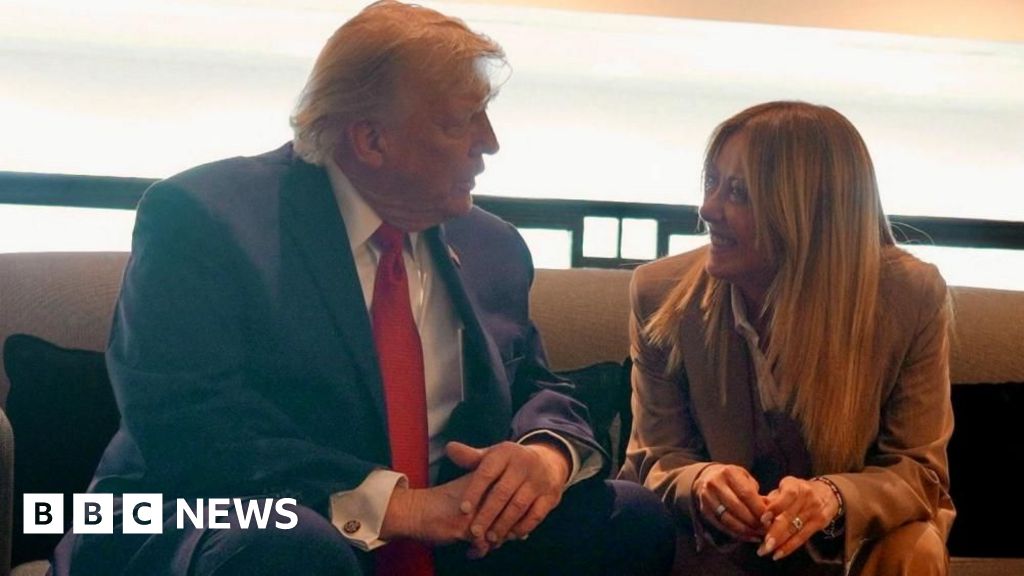
Italian Prime Minister Giorgia Meloni has pushed back against recent public comments from President-elect Donald Trump regarding her domestic political standing and the circumstances of their interactions at the G7 summit. The exchange follows reports that the incoming U.S. administration questioned the Italian leader’s popularity, prompting a sharp response from Rome centered on the autonomy of Italian political affairs.
The diplomatic friction underscores the complexities of the trans-Atlantic relationship as the Trump transition team prepares to take office in January 2025. According to Reuters, the tension stems from claims surrounding a photo opportunity during the 2024 G7 summit in Puglia, where the Italian government hosted world leaders. While the White House and the Meloni administration maintain formal diplomatic channels, these public remarks have introduced an unexpected layer of personal scrutiny into the bilateral partnership.
The Origins of the G7 Photo Controversy
The dispute centers on allegations that Meloni sought excessive attention during the G7 summit, an event that serves as a cornerstone of Italy’s international diplomatic calendar. President-elect Trump reportedly suggested that the Prime Minister’s efforts to secure a photograph were indicative of a broader struggle for domestic approval. This narrative has been met with firm rebuttal from Italian officials, who characterize the summit as a successful display of Italian leadership on the global stage.
The G7 summit, held in June 2024, brought together the heads of state of Canada, France, Germany, Italy, Japan, the United Kingdom, and the United States, along with the European Union. Documentation from the official G7 Italy 2024 presidency website confirms that the event focused on critical issues including support for Ukraine, artificial intelligence, and Mediterranean migration policies. Proponents of the Prime Minister argue that the focus on a photo opportunity distracts from the substantive policy agreements reached during the three-day summit.
Domestic Political Standing and Public Perception
Giorgia Meloni’s Brothers of Italy (Fratelli d’Italia) party has maintained a consistent lead in national polling since her victory in the 2022 general election. According to data tracked by Politico’s Poll of Polls, her administration continues to command significant support compared to opposition coalitions. This stability is often cited by her cabinet as evidence that domestic popularity remains robust, contrary to any claims suggesting a decline in public mandate.
The Prime Minister’s office has emphasized that Italian domestic policy is the sole purview of the Italian electorate. By suggesting that international figures should focus on their own domestic agendas, Meloni has sought to frame the narrative as a defense of national sovereignty. This approach is consistent with her established political brand, which prioritizes a “nation-first” stance while simultaneously working to maintain Italy’s role as a reliable partner within NATO and the European Union.
Impact on Future US-Italy Relations
The diplomatic fallout of this exchange remains to be seen as the U.S. prepares for the presidential inauguration on January 20, 2025, as noted by the National Archives and Records Administration. Historically, relations between the U.S. and Italy are characterized by deep institutional ties that often transcend the personal rapport of individual leaders. Analysts suggest that while public rhetoric may fluctuate, the strategic necessity of cooperation on issues such as security in the Mediterranean and energy policy will likely stabilize the partnership.
Observers are looking toward the first formal meetings between the two administrations to gauge the long-term impact of this dispute. The Italian government has not issued a formal diplomatic protest, choosing instead to address the comments through media channels. The next confirmed checkpoint for these relations will be the formal transition of power in Washington, after which the new administration is expected to outline its specific European foreign policy priorities.
As the situation develops, further statements from both the Italian Ministry of Foreign Affairs and the incoming U.S. transition team are expected. Readers are encouraged to monitor official government press releases for verified updates on the status of the U.S.-Italy bilateral agenda. We welcome your thoughts on how these diplomatic exchanges influence international perceptions of European leadership; feel free to share your perspectives in the comments section below.
Related reading