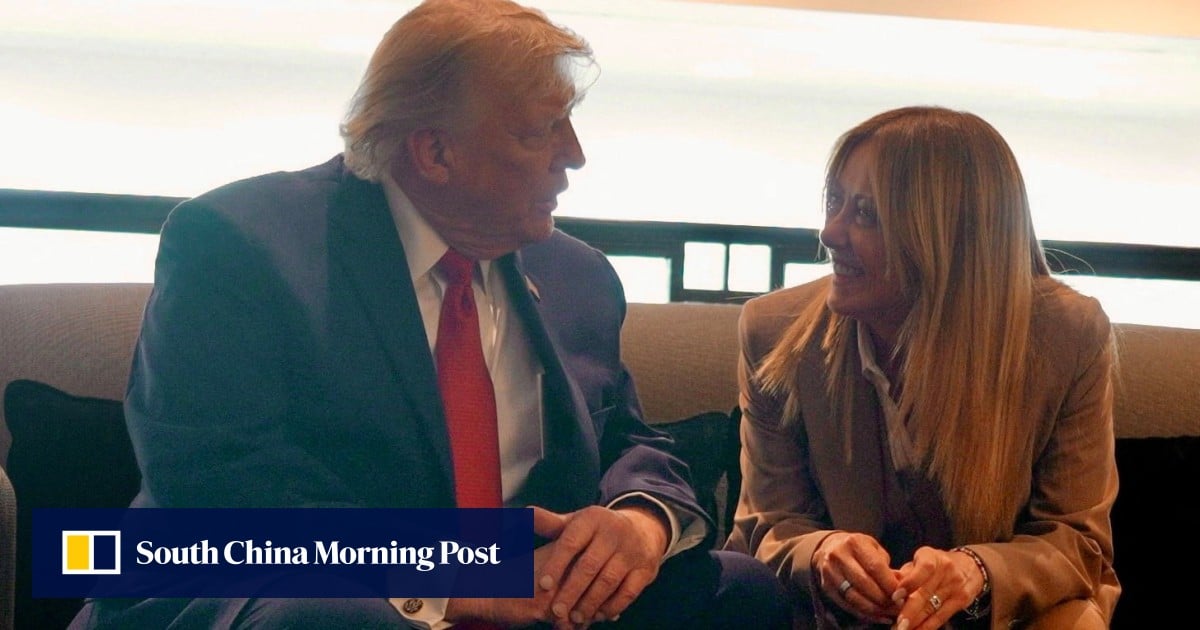
Italian Prime Minister Giorgia Meloni has publicly challenged Donald Trump to focus on his own political standing rather than criticizing her administration, marking a notable shift in the diplomatic tone between the two leaders. The exchange, which unfolded following a series of online jibes regarding a G7 summit photograph, signals a departure from Meloni’s previously cautious approach toward the former U.S. president, according to reports from the BBC.
The tension surfaced after Trump shared images on social media that drew comparisons between his own political trajectory and that of the Italian leader. Meloni, who has historically maintained a pragmatic stance toward various international figures, opted to address the rhetoric directly. This confrontation highlights the increasing difficulty for European leaders to navigate the unpredictable nature of American political discourse as the 2024 U.S. election cycle progresses, as noted by the CBS News coverage of the event.
Origins of the Diplomatic Friction
The latest spat began when Trump circulated a photograph from the 2024 G7 summit held in Apulia, Italy. The image, which depicted various world leaders, became the subject of commentary on Trump’s social media platforms. Meloni’s administration, which had hosted the summit to showcase Italy’s role in the G7, viewed the commentary as an unwarranted distraction from the summit’s substantive discussions on global security and economic policy. According to ABC News, the Italian prime minister characterized these remarks as part of a pattern of unprovoked criticism.
This incident is not an isolated event but rather part of a broader, often strained, relationship between the two figures. While Meloni and Trump have previously found common ground on specific ideological issues, the current friction suggests that Meloni is increasingly willing to prioritize her domestic authority and international reputation over maintaining a silent, cooperative posture toward the former president. The NDTV analysis suggests that this readiness to engage in a public dispute indicates a strategic calculation by the Italian government to distance itself from the volatility associated with Trump’s rhetoric.
The Evolution of Meloni’s Response
For months, the Italian government maintained a policy of relative silence regarding critiques originating from the United States. Observers note that Meloni’s strategy was likely designed to preserve Italy’s strategic interests, regardless of which candidate occupies the White House. However, the decision to respond directly suggests that this policy of restraint has reached its limit. By advising Trump to focus on his own popularity, Meloni is asserting a sense of political autonomy that resonates with her base in Italy while signaling to the international community that her government will not serve as a passive target for foreign political messaging.
The shift also reflects a broader concern among European leaders regarding the potential for renewed instability in transatlantic relations. As Europe grapples with ongoing security challenges, including the conflict in Ukraine, the need for stable, predictable communication between Rome and Washington becomes paramount. The BBC reports that Meloni’s team has emphasized the importance of professional diplomatic conduct, even as the personal nature of the recent digital exchanges continues to command media attention.
Strategic Implications for Italy-U.S. Relations
The impact of this public disagreement on long-term bilateral relations remains to be seen. Historically, Italy has maintained a steadfast alliance with the United States, anchored by shared commitments within NATO and the G7. Despite the current friction, there is no evidence of a formal shift in Italy’s foreign policy toward the U.S. or its political candidates. Instead, the current situation serves as a case study in how modern political figures manage the intersection of personal branding and state-level diplomacy.
For the Italian electorate, Meloni’s move is viewed by many political analysts as a display of strength. By refusing to be drawn into a subordinate position, she reinforces her image as a leader capable of defending Italy’s sovereignty on the global stage. As the global community monitors the upcoming U.S. election, this exchange serves as a reminder that the dynamics of international diplomacy are increasingly subject to the pressures of digital media and the personality-driven nature of contemporary politics.
What Happens Next
There are currently no scheduled official meetings between Prime Minister Meloni and Donald Trump. The next significant checkpoint for Italian diplomatic engagement will be the upcoming series of international summits where European leaders are expected to coordinate their stances on global trade and regional security. Observers will be looking for any further statements from either side, though the administration in Rome has not indicated that further comment on the social media exchange is forthcoming.
Readers interested in official updates regarding Italy’s foreign policy and government statements can monitor the official website of the Italian Prime Minister’s office. Given the evolving nature of the current U.S. political landscape, developments in this relationship will likely continue to draw significant attention from international policy experts and the public alike.
What are your thoughts on how leaders should handle social media criticism? Join the conversation by sharing this article or posting your comments below.
Keep reading
- House Democrats Demand Answers From Trump’s VA on Vets Struggling to Access Mental Healthcare
- Fake Doctor Arrested in Rio After Treating Child with Brain Cancer
- Blanche Confirmation Complicated by Trump IRS Lawsuit Settlement Scrutiny (newsdirectory3.com)
- Tariff vs. Price Floor: What Trump's New Solar Rule Does (daybreakwire.com)