
Google has released an open-source design for data center cooling, aiming to standardize liquid cooling technology for high-density artificial intelligence (AI) infrastructure. This move, centered on the company’s Advanced Modular Liquid Cooling (AMLC) architecture, signals a broader industry shift toward retrofitting existing facilities to handle the intense thermal output of modern AI hardware, according to technical documentation published by the company.
The initiative, detailed in the official Google Cloud blog, provides specifications for a rear-door heat exchanger and coolant distribution unit. By moving to an open-source model, Google intends to accelerate the adoption of liquid cooling, a requirement for next-generation AI chips that consume significantly more power—and generate more heat—than traditional server CPUs.
Addressing the Thermal Wall in AI Infrastructure
The primary driver for this initiative is the increasing thermal design power (TDP) of AI accelerators. As chip manufacturers like Nvidia and AMD push the limits of silicon performance, server racks are reaching power densities that air-cooled systems can no longer effectively manage. According to International Energy Agency (IEA) data, global data center electricity consumption is projected to potentially double by 2026, with cooling systems accounting for a significant portion of that energy draw.

Google’s open-source design focuses on “retrofitting,” which is the process of modifying existing data centers to accommodate liquid cooling without requiring a complete teardown of the facility. This approach addresses a critical bottleneck for data center operators who need to upgrade their infrastructure to support AI workloads but face the logistical and financial constraints of building new, purpose-built facilities from the ground up.
Market Implications for Data Center Equipment
The decision to open-source these specifications may disrupt the current market for proprietary cooling solutions. Industry analysts suggest that by providing a standardized blueprint, Google is effectively commoditizing the hardware components required for rack-level cooling. This shift allows third-party vendors to manufacture compatible parts at scale, potentially lowering the entry barrier for smaller data center operators.
Financial analysts at Bernstein recently noted that the standardization of cooling hardware could lead to a more fragmented but efficient supply chain. As reported by Reuters, the demand for specialized AI infrastructure has created a surge in capital expenditure for data center operators. The ability to utilize standardized, open-source cooling designs could shift the competitive landscape from proprietary, closed-loop systems toward more modular, interoperable components.
Technical Components of the Open-Source Design
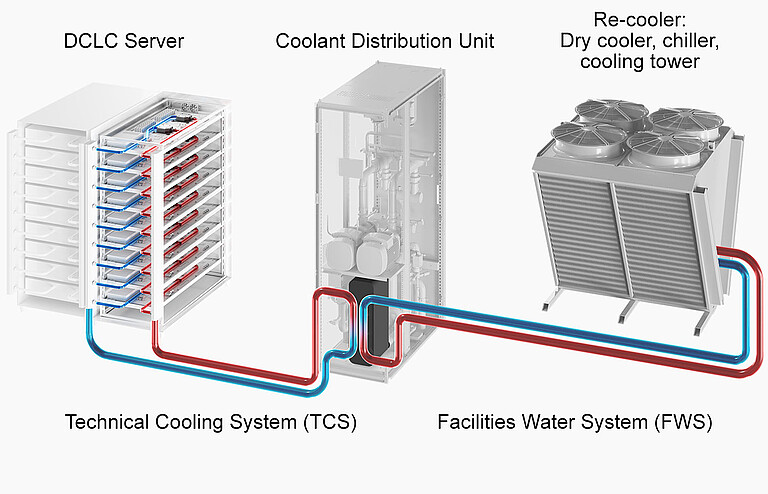
The Google-led initiative centers on several key pieces of hardware designed for interoperability. The specifications include:
- Coolant Distribution Units (CDUs): Systems designed to manage the flow of coolant between the facility’s primary water loop and the server racks.
- Rear-Door Heat Exchangers (RDHx): Passive or active cooling doors that replace standard server cabinet doors to dissipate heat directly from the exhaust.
- Manifold Designs: Standardized piping configurations to ensure consistent coolant delivery across diverse server architectures.
These components are intended to integrate with existing infrastructure, minimizing the need for major structural changes. By releasing these designs under an open-source license, Google aligns itself with the Open Compute Project (OCP), a collaborative community focused on sharing hardware designs to improve data center efficiency and scalability.
What Comes Next for Data Center Operators
The next phase for this technology will be the adoption rate among hyperscalers and co-location providers. While the blueprints are publicly available, the transition to liquid cooling remains a complex engineering task involving plumbing, leak detection, and power management upgrades.

Industry stakeholders are expected to provide feedback and potential design iterations through the OCP community over the coming months. Operators looking to implement these designs are advised to monitor the Open Compute Project server project for technical updates and compliance standards. Future milestones will likely involve the release of validation reports from early adopters who have successfully integrated these open-source designs into production environments.
The shift toward standardized liquid cooling is an ongoing process. As AI models continue to scale, the industry’s reliance on these cooling standards will likely become a focal point in quarterly capital expenditure reports and sustainability disclosures. We invite our readers to share their insights on the impact of open-source hardware standards in the comments below.
Keep reading