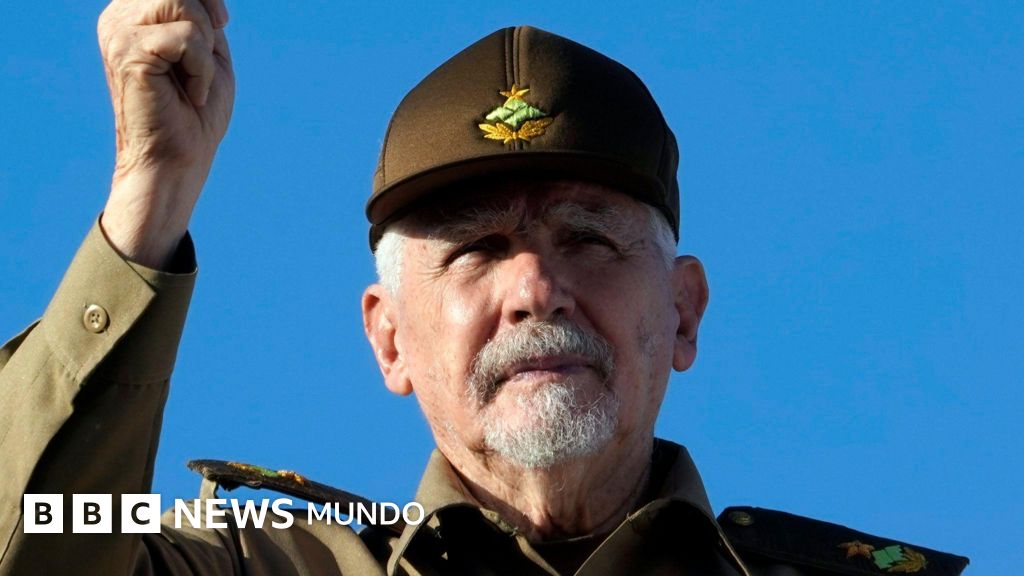
Ramiro Valdés Menéndez, a foundational figure of the Cuban Revolution and a long-serving official within the island’s government, has died at the age of 92. His passing marks the end of an era for the generation that seized power in 1959, as he remained one of the final members of the “historic” leadership circle that surrounded Fidel Castro for decades. State media in Havana confirmed the death, noting his extensive tenure as a commander and his roles in shaping the country’s security and industrial apparatus.
Valdés was born on August 12, 1932, in Artemisa, Cuba, and became a central architect of the revolutionary movement that ousted Fulgencio Batista. According to official government records, he participated in the 1953 assault on the Moncada Barracks alongside Fidel and Raúl Castro, an event widely cited as the opening salvo of the insurrection. His death leaves a significant vacancy in the aging leadership structure of the Communist Party of Cuba, which has faced a period of generational transition and severe economic crisis.
Early Revolutionary Path and Security Roles
The trajectory of Ramiro Valdés was defined by his early and sustained proximity to the Castro brothers. Following the success of the revolution, he was appointed to lead the Ministry of the Interior, where he oversaw the development of the national intelligence and internal security services. Historical accounts from the National Archives and Records Administration underscore his influence during the early 1960s, a period marked by the consolidation of the socialist state and the establishment of the Committees for the Defense of the Revolution.

Throughout his career, Valdés earned a reputation for ideological orthodoxy and strict adherence to the party line. He served multiple terms as a member of the Politburo and held various cabinet positions, including Minister of Informatics and Communications. Despite his influence, his public image remained divisive. Critics and human rights organizations, such as Human Rights Watch, have long pointed to his tenure as security chief as a period defined by the suppression of political dissent and the establishment of a rigorous surveillance state.
Political Longevity and State Influence
Valdés’s survival within the upper echelons of the Cuban government for over six decades is often attributed to his unwavering loyalty to the Castro family. Unlike other revolutionary leaders who were purged or sidelined during internal power shifts, Valdés maintained a consistent presence in the executive branch. This longevity provided a sense of continuity for the government, even as the country grappled with the collapse of its primary economic sectors and increasing migration pressures.
In his later years, Valdés was tasked with overseeing sensitive infrastructure and energy projects, including the management of the national electrical grid. His performance in these roles was frequently criticized by the Cuban public, particularly during periods of frequent blackouts and infrastructure failure. Reports from international observers note that the public’s frustration with the state of the economy often coalesced around the figures of the “historic” leadership, including Valdés, who were viewed as symbols of a rigid and unresponsive administrative style.
Transition and Public Perception
The death of a figure so closely tied to the inception of the current Cuban state presents a symbolic challenge for the administration of President Miguel Díaz-Canel. As the original revolutionary cohort fades, the government has attempted to project a narrative of stability and institutional continuity. However, the disconnect between the aging leadership and a younger population facing systemic economic hardship remains a primary point of friction within Cuban society.
Historical analysis provided by the Wilson Center’s Latin American Program suggests that the departure of such figures facilitates the final transition of power to a post-revolutionary generation. While the state-controlled media continues to emphasize the legacy of the “Commander of the Revolution,” independent voices and the diaspora often highlight the human cost associated with the policies implemented under his supervision. The government has yet to announce details regarding state funeral arrangements, though it is expected that his burial will be marked by official ceremonies consistent with his rank.
As Cuba enters this period of mourning for one of its last remaining revolutionary icons, the focus of the international community remains on the internal stability of the island and the potential for shifts in policy following the loss of such a senior ideological guardian. Updates regarding the formal proceedings and any potential government reshuffling are expected to be released through official state channels in the coming days. We invite readers to share their perspectives on the legacy of the revolutionary era in the comments section below.