US markets and global investors are increasingly pricing in a “political risk premium” as the legal and political conflicts surrounding former President Donald Trump intensify. This ongoing volatility is driven by uncertainty regarding the predictability of US economic policy, the stability of institutional frameworks, and the potential for sudden shifts in trade and fiscal direction, all of which influence long-term investment strategies and market sentiment.
The intersection of high-stakes legal proceedings and the 2024 US election cycle has created a unique environment for global capital. While markets often absorb political shifts, the current landscape is characterized by a high degree of legal complexity that extends beyond traditional policy debates. Financial analysts are closely monitoring how these developments might impact the US dollar, interest rate trajectories, and international trade relations.
How do legal proceedings influence market stability?
The primary driver of current political-economic uncertainty is the series of legal challenges facing Donald Trump, which have moved from theoretical risks to active courtroom realities. These proceedings are not merely political events; they represent potential shifts in the regulatory and legal landscape that businesses must account for in their risk assessments.
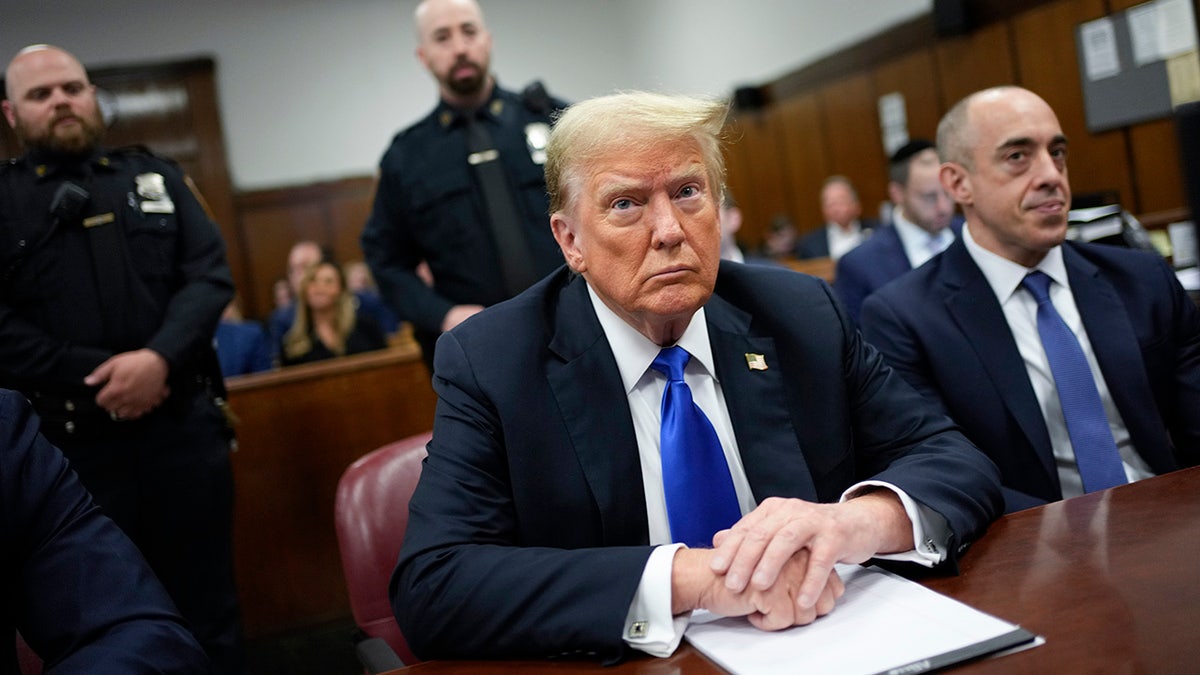
The legal dimension of this “war” of narratives is most clearly articulated in the prosecutorial focus on the integrity of financial and election-related records. In the Manhattan criminal case, which centers on the falsification of business records, the prosecution has framed the matter as a fundamental issue of legal compliance. “This is a case about the falsification of business records to influence an election,” stated Manhattan District Attorney Alvin Bragg during the commencement of the proceedings. This distinction is critical for the business community, as it moves the conversation from political rhetoric to the specific application of state laws regarding corporate record-keeping and transparency.
For institutional investors, the legal timeline creates a “wait-and-see” atmosphere. According to data from the CBOE Volatility Index (VIX), which measures market expectations of near-term volatility, spikes often correlate with major legal milestones or election-related developments. When legal outcomes appear unpredictable, the cost of hedging against market swings typically rises, effectively acting as a tax on market liquidity.
What is the economic impact of political polarization?
Beyond the courtroom, the broader political “war” of rhetoric is impacting economic sentiment through heightened polarization. Economic stability relies heavily on the predictability of the rule of law and the continuity of institutional functions. When political discourse shifts toward questioning the legitimacy of these institutions, it can create a “credibility gap” that affects consumer and business confidence.
The second defining dimension of this conflict is the economic reality of uncertainty. Economists often point to the “uncertainty effect,” where businesses delay capital expenditures (CapEx) due to an inability to forecast future regulatory environments. A prominent theme among market strategists is the difficulty of modeling a “post-election” economy when the political landscape is so deeply fractured.

Financial institutions have noted that the current climate differs from previous cycles due to the sheer scale of the legal and political overlap. One senior strategist at a major global investment bank noted that “markets generally dislike uncertainty, particularly when it concerns the stability of the rule of law or the predictability of future policy.” This sentiment reflects a broader concern that political volatility could lead to more radical shifts in US fiscal policy, particularly regarding taxation, tariffs, and the national debt, compared to the incremental changes seen in previous administrations.
This uncertainty also touches upon the independence of the Federal Reserve. As political debates intensify around interest rate decisions and inflation management, the perceived autonomy of the central bank becomes a focal point for global currency markets. Any perceived threat to this independence can lead to increased volatility in the US Treasury market, which serves as the bedrock for global finance.
How are investors responding to political risk?
The third dimension of this landscape is the tactical response of the global investment community. Rather than withdrawing from the market, investors are increasingly utilizing sophisticated tools to manage “political risk premiums.” This involves a shift in asset allocation and a heightened focus on sectors that are traditionally more resilient to political shifts.
A significant portion of the market response can be seen in the “Trump trade”—a term used by analysts to describe the market’s anticipation of specific policy shifts, such as deregulation and increased protectionism, should Donald Trump return to office. This trade often manifests in the performance of specific sectors, including domestic energy, traditional banking, and manufacturing, as well as in the fluctuations of the US dollar against major currencies like the Euro and the Yen.
However, this response is not uniform. The third quote that defines this economic “war” comes from the perspective of institutional risk management: “Political uncertainty can act as a drag on investment and consumer spending,” a principle frequently cited by organizations such as the International Monetary Fund (IMF) when analyzing the impact of governance stability on emerging and developed markets alike. This drag is not always immediate; it often manifests as a slow erosion of growth potential as long-term planning becomes more difficult for multinational corporations.
To manage these risks, many firms are adopting the following strategies:
- Increased Hedging: Utilizing derivatives to protect against sudden market corrections driven by political news cycles.
- Scenario Modeling: Developing rigorous “what-if” models for various political outcomes, specifically focusing on trade tariff changes and corporate tax adjustments.
- Geographic Diversification: Reducing over-exposure to US-centric assets during periods of heightened domestic political volatility.
- Focus on Defensive Sectors: Reallocating capital toward utilities, consumer staples, and healthcare, which historically show lower sensitivity to political shifts.
Comparing current volatility to historical precedents
To understand the magnitude of the current situation, it is useful to compare the present political-economic environment with previous eras of US volatility. While the 2016 and 2020 election cycles were characterized by significant polarization, the current period is distinguished by the integration of the judicial system into the primary political battleground.
| Feature | 2016/2020 Cycles | Current 2024 Environment |
|---|---|---|
| Primary Conflict Driver | Policy and Trade Rhetoric | Legal Proceedings and Institutional Integrity |
| Market Reaction Focus | Tariffs and Tax Reform | Rule of Law and Policy Predictability |
| Institutional Risk | Regulatory Shifts | Central Bank and Judicial Independence |
| Investor Strategy | Sector-Specific Betting | Broad-Based Political Risk Hedging |
This comparison suggests that the “war” currently being waged is not just about which party holds power, but about the very mechanisms through which power is exercised and checked. For the business world, this represents a transition from “policy risk” (what the government will do) to “structural risk” (how the government will function).
The implications for the global economy are profound. As the US remains the world’s largest economy and the provider of the primary reserve currency, any sustained period of domestic instability or institutional questioning has a multiplier effect. This can lead to increased capital flight from other markets into US “safe-haven” assets, or conversely, a loss of confidence in the US dollar if the stability of its underlying institutions is perceived to be at risk.
What happens next for the economy and the markets?
The immediate future of market volatility will be dictated by the calendar of upcoming legal and political milestones. Investors should closely monitor the following confirmed checkpoints:
- Upcoming Court Dates: The progression of the Manhattan trial and subsequent federal hearings will serve as immediate triggers for market volatility.
- Federal Reserve Meetings: The central bank’s ability to maintain its inflation-fighting mandate amidst political pressure will be a key indicator of institutional stability.
- The 2024 Election Cycle: As the election approaches, the frequency and intensity of policy announcements and legal developments are expected to increase.
For businesses and investors, the priority remains the integration of political risk into all facets of financial planning. While the “war” of quotes and rhetoric continues, the underlying economic reality will be determined by the resilience of the institutions that underpin the global financial system.
How do you see political volatility impacting your investment strategy this year? Share your thoughts in the comments below and share this article with your network to join the discussion.
Related reading