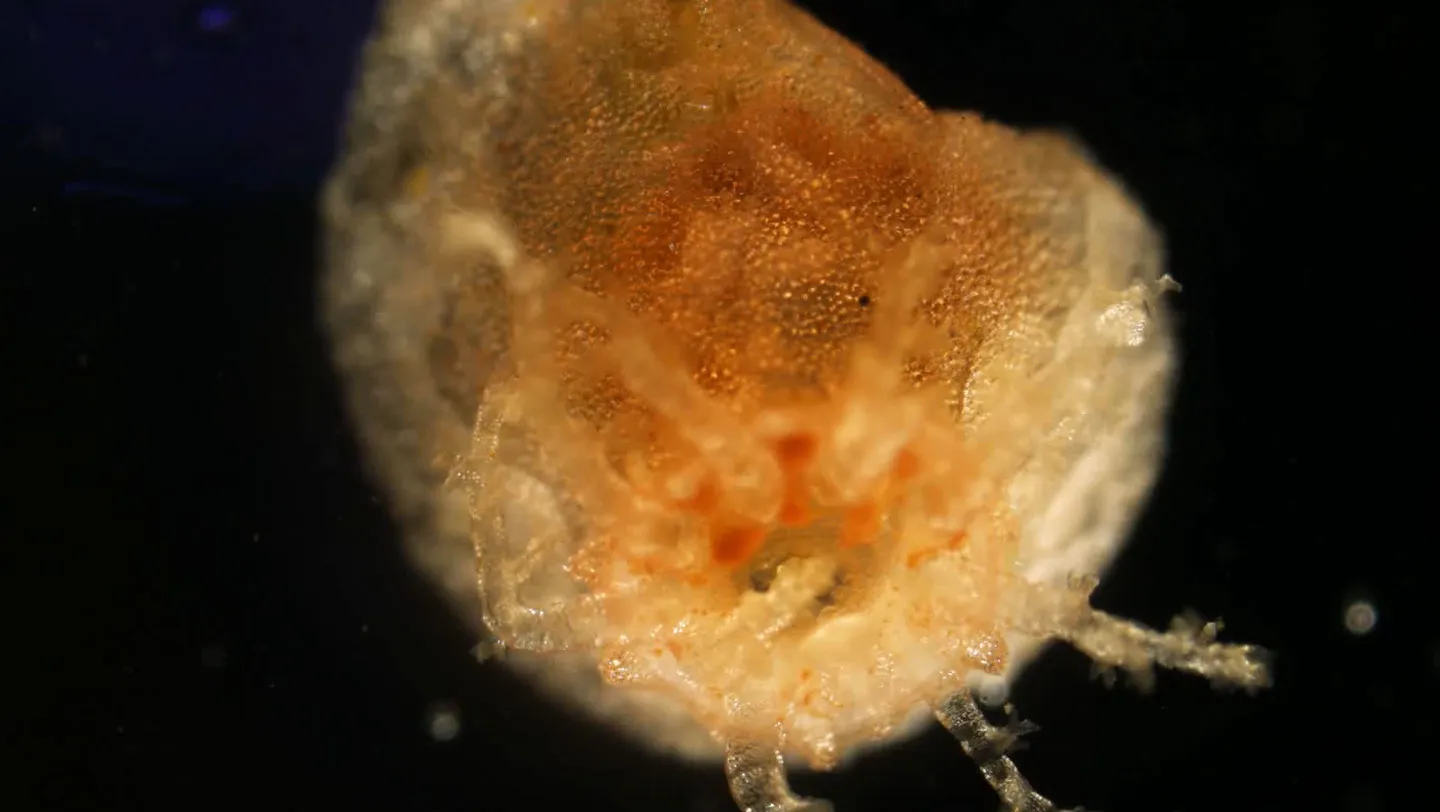
Detached tissues from sea cucumbers’ tube feet and feeding tentacles have survived for more than three years without a blood supply, according to a study published in Nature Communications in 2023. The discovery challenges fundamental assumptions about tissue viability and could redefine research into aging, wound healing, and regenerative medicine. Scientists describe these tissues as “zombie-like,” capable of maintaining basic cellular functions long after they would normally die in other organisms.
Sea cucumbers (Holothuroidea) are marine invertebrates known for their remarkable regenerative abilities. While many animals rely on a continuous blood supply to sustain tissues, these creatures appear to bypass that requirement entirely. The findings suggest their tissues enter a dormant, low-metabolism state—similar to hibernation—that preserves cellular integrity without energy-intensive processes like circulation.
Researchers at the Friedrich Schiller University Jena and the U.S. National Science Foundation-funded team conducted the study by surgically removing tissues from sea cucumbers and observing their survival in controlled lab conditions. The tissues not only persisted but retained structural integrity and basic metabolic activity for over 1,000 days—far exceeding the survival limits of mammalian tissues under similar conditions.
This phenomenon raises critical questions for biologists and medical researchers. If sea cucumbers can sustain tissues without blood, what mechanisms are at play? Could these insights lead to breakthroughs in human tissue preservation, organ transplantation, or even anti-aging therapies? The study’s lead author, Dr. Thomas Bollchen, a marine biologist at Jena, emphasized the potential implications: “This challenges everything we thought we knew about tissue survival. It’s not just about longevity—it’s about rethinking how life itself can persist under extreme conditions.”
Why Do Sea Cucumber Tissues Survive So Long Without Blood?
The key lies in the sea cucumber’s unique physiological adaptations. Unlike vertebrates, which depend on a circulatory system to deliver oxygen and nutrients, sea cucumbers have evolved alternative strategies. Their tissues contain high concentrations of trehalose, a sugar that acts as a natural preservative, stabilizing proteins and membranes during periods of stress or detachment.
Additionally, their cells exhibit senescence-like states—a reversible form of dormancy that halts aging processes without triggering cell death. This “zombie tissue” state allows cells to pause metabolic activity, conserving energy while remaining viable. The discovery aligns with broader research into extreme longevity in marine organisms, such as the Turritopsis dohrnii jellyfish, which can revert to a juvenile state after reaching adulthood.
Dr. Margaret McFall-Ngai, a marine microbiologist at the University of California, San Francisco, noted that these findings could bridge gaps between regenerative biology and aging research. “If we can understand how sea cucumbers maintain tissue viability without blood, we might unlock new pathways for human applications—from preserving donated organs to developing treatments for degenerative diseases.”
How Could This Research Impact Human Medicine?
The implications for human health are profound. Currently, tissues and organs for transplantation must be kept viable through cold storage or perfusion systems, which have strict time limits (typically 24–72 hours for most organs). If sea cucumber mechanisms could be replicated, the window for tissue preservation could extend dramatically, reducing organ shortages and improving transplant success rates.
Beyond transplantation, the study offers clues about aging and cellular senescence. By studying how sea cucumber tissues avoid decay, researchers may identify targets for anti-aging therapies. For example, the trehalose pathway could inspire new drug candidates to slow age-related tissue deterioration in humans.
Dr. Laura Demaria, a stem cell biologist at the Salk Institute, highlighted another angle: “This research suggests that dormancy isn’t just a survival tactic—it’s a regulated biological process. If we can harness it, we might develop ways to ‘pause’ tissue aging in humans, even temporarily.”
What Are the Next Steps for This Research?
Several research teams are now exploring the molecular pathways behind sea cucumber tissue survival. A follow-up study published in Current Biology in 2024 identified specific gene expression patterns that suppress apoptosis (programmed cell death) in detached tissues. Scientists are also investigating whether these mechanisms can be induced in mammalian cells.
Challenges remain, however. Sea cucumbers’ unique biology makes it difficult to directly translate their adaptations to humans. For instance, their low metabolic rates and high trehalose levels are not naturally present in vertebrate tissues. Researchers are now using CRISPR and gene editing to test whether introducing sea cucumber-like pathways into human cells could extend their survival.
The National Institutes of Health (NIH) has allocated $5 million in funding for a multi-institutional consortium to study these mechanisms, with preliminary results expected by 2026. Meanwhile, biotech startups like Altos Labs are exploring commercial applications, including potential uses in organ preservation and wound healing.
Key Takeaways: What This Means for Science and Medicine
- Challenge to Biological Assumptions: Sea cucumbers prove that tissues don’t always require blood to survive, upending decades of research on tissue viability.
- Potential for Longer Organ Storage: If replicated, these mechanisms could extend the shelf life of donated organs, saving thousands of lives annually.
- Anti-Aging Insights: Understanding dormancy pathways may lead to therapies that slow cellular aging in humans.
- Regenerative Medicine: The study could inspire new approaches to tissue engineering and wound repair.
- Ethical and Practical Hurdles: Translating sea cucumber biology to humans will require overcoming significant biological and ethical barriers.
What Happens Next? Watch for These Developments
The field is moving rapidly. Key milestones to watch include:

- 2025: Publication of gene-editing studies testing sea cucumber pathways in mammalian cells (Science and Nature are tracking multiple submissions).
- 2026: First clinical trials for trehalose-based tissue preservation (if safety studies in animals succeed).
- 2027: Potential FDA approval for experimental organ storage methods using sea cucumber-inspired techniques.
For now, the sea cucumber remains a humbling reminder of how much we still have to learn about life itself. As Dr. Bollchen put it, “We’re not just studying an animal—we’re uncovering a completely new way that biology can work.”
Have questions about this research or its potential applications? Share your thoughts in the comments below—or explore our coverage of breakthroughs in tissue engineering for more insights.