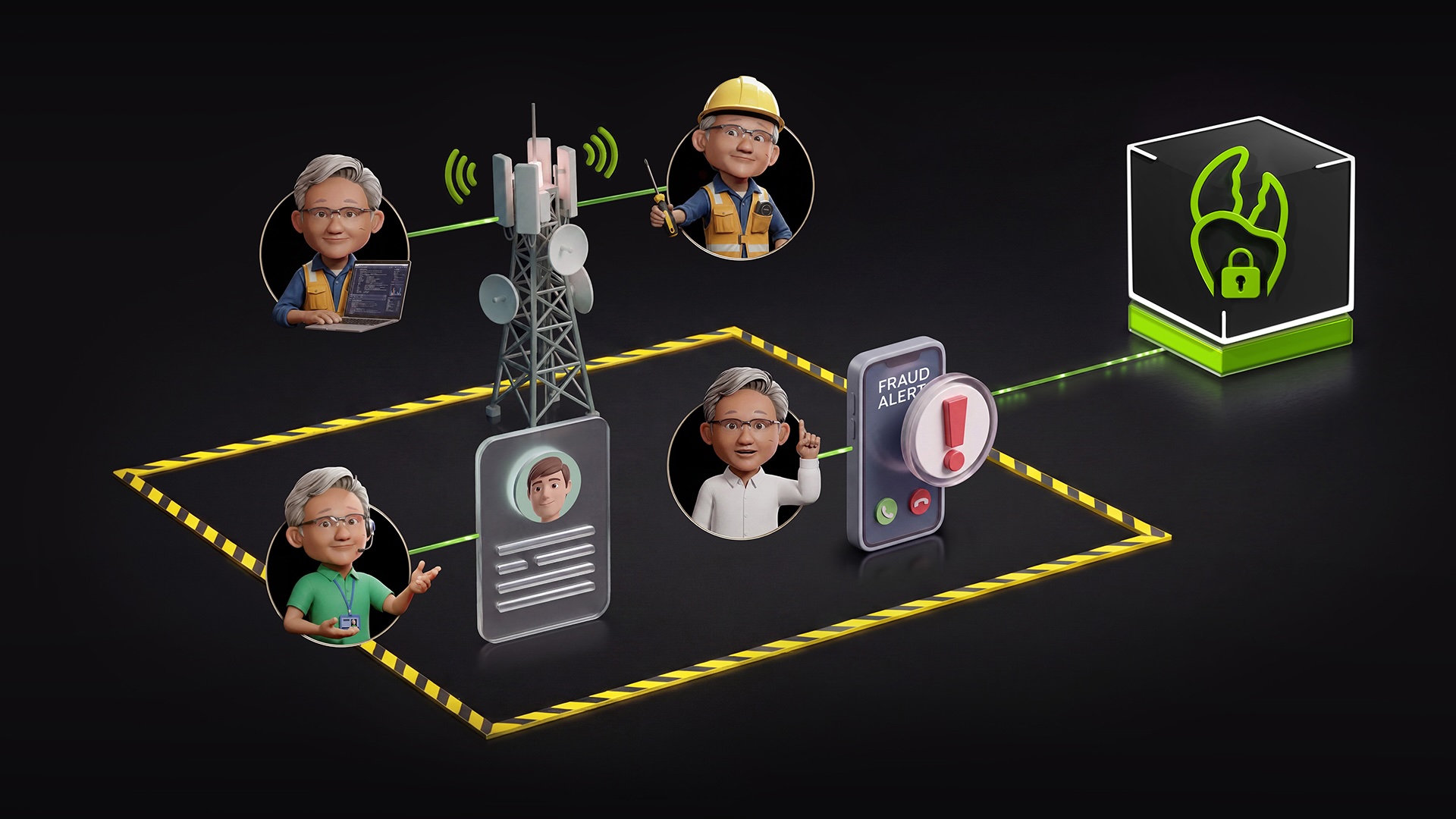
NVIDIA is shifting the focus of telecommunications infrastructure from task-based automation to autonomous network operations, introducing a suite of tools designed to enable 24/7 AI-driven management. Announced at the TM Forum’s DTW Ignite 2026 conference in Copenhagen, the initiative leverages synthetic data, specialized telecom-domain models, and secure runtime environments to allow AI agents to proactively monitor network health and execute policy-governed changes across complex business and IT systems.
The transition toward network autonomy marks a significant evolution in the industry. While previous generative AI deployments primarily accelerated manual workflows, the current industry push targets end-to-end autonomy where systems manage their own lifecycles. According to industry data, 54% of telecom operators identify data-related challenges—specifically the sensitivity of network and customer information—as the primary barrier to broader AI adoption. By utilizing synthetic data, operators can now generate privacy-safe datasets that mirror real-world performance, allowing for the training of specialized models without exposing raw customer records.
Establishing Privacy-Safe Data Foundations
The foundation of these autonomous systems lies in reasoning models fine-tuned on high-quality, telecom-specific data. To overcome the privacy hurdles that have historically slowed development, companies are increasingly turning to synthetic data generation. SoftBank Corp. is currently utilizing the NVIDIA NeMo Safe Synthesizer and NeMo Anonymizer to create privacy-preserving datasets. These synthetic versions reflect the statistical structure and distribution of actual network configurations, providing a secure method for fine-tuning large-scale telecom models and developing specialized agents that operate within strict regulatory frameworks.
This approach allows operators to democratize access to production-like datasets across internal teams and external developer partners. Because the synthetic data does not contain identifiable customer information, it mitigates risk while maintaining the fidelity required for effective model training. This methodology is essential for operators looking to scale their AI operations while remaining compliant with global data protection standards.
Secure Deployment of Autonomous AI Agents
Achieving autonomy requires AI agents capable of managing complex, long-running workflows rather than executing isolated tasks. To ensure these agents remain predictable and auditable, NVIDIA has introduced the NemoClaw blueprints and the OpenShell secure runtime. These tools provide policy-based guardrails and sandboxed access to network infrastructure, ensuring that agent behavior aligns with defined service-level agreements and corporate governance policies.
Several major industry players are currently piloting these technologies to enhance operational efficiency:
- AdaptKey: Working with operators to test security-hardened agents for 5G self-healing networks. These agents detect connectivity issues and submit remediation requests to the KeySmith platform, which then executes auditable fixes across core and billing systems.
- Amdocs: Leveraging OpenShell to deploy proactive customer-care agents. These agents can identify roaming packages near depletion and execute approved customer-facing actions based on predefined business policies.
- ServiceNow: Integrating Project Arc into telecom environments to enable autonomous Network Operations Center (NOC) agents. Project Arc orchestrates the incident response lifecycle by pulling context from logs and emails to automatically assign work orders.
- NTT DATA: Utilizing NVIDIA Nemotron open models to build anomaly detection agents that track long-term performance degradation and escalate issues for detailed telemetry analysis.
- Tata Consultancy Services (TCS): Developing a multi-fidelity “AI sensor” architecture that uses NemoClaw to orchestrate agents that scan for network issues and selectively trigger deeper diagnostics.
Accelerating Decision Support Through Simulation
As AI agents assume greater control over network operations, the ability to validate recommendations before they are implemented is critical. Accelerated simulation on GPU-based platforms provides a “what-if” environment where agents can test the impact of proposed changes on a digital twin of the network. This capability is becoming a standard feature for de-risking network updates and optimizing performance in real time.
Forsk has integrated AI-based radio propagation models into its Naos RAN planning platform, utilizing NVIDIA RTX PRO 6000 Blackwell Server Edition GPUs to achieve ray-tracing accuracy up to 200 times faster than traditional CPU-only methods. Similarly, VIAVI Solutions is moving large-scale RAN simulations to the same GPU architecture, reporting an order-of-magnitude improvement in simulation throughput. This allows operators to validate routing, traffic engineering, and resilience changes in a high-fidelity environment before they are deployed to live networks.
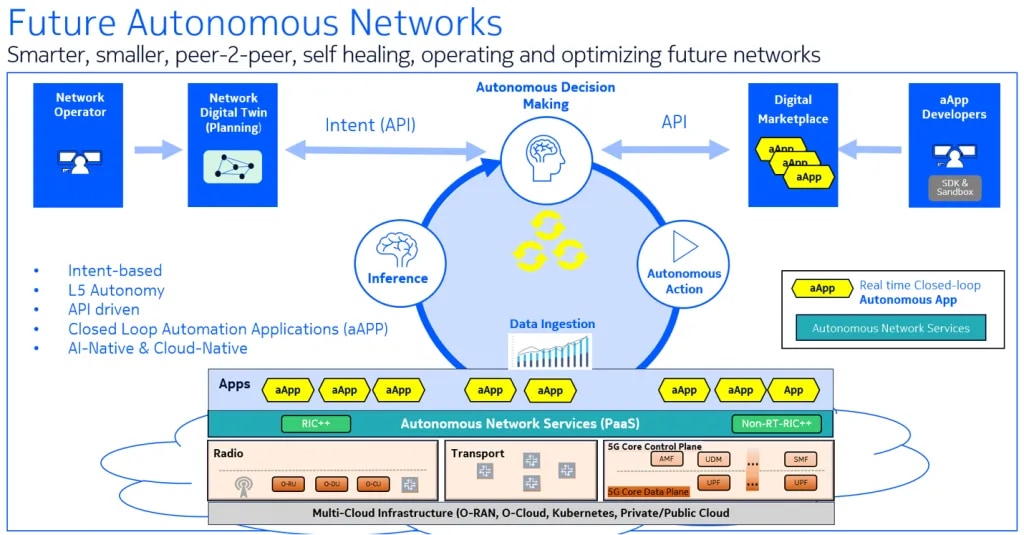
Looking toward the 6G era, KDDI and KDDI Research are collaborating with NVIDIA, Keysight, and Samsung Research America to build a high-fidelity RAN digital twin. By running NVIDIA Aerial Omniverse Digital Twin on KDDI’s AI data centers, the project aims to enable multiple autonomous agents to simulate and validate complex scenarios, such as traffic shifts and new AI air-interface functions, in a secure, virtualized environment.
The industry will continue to monitor these developments as operators move from pilot programs to full-scale deployments. Further technical documentation and updates on the telecom autonomous networks stack are available through official NVIDIA technical resources. Readers interested in the evolution of AI-driven network management are encouraged to follow upcoming sessions at future industry forums for updates on these deployment paths.