
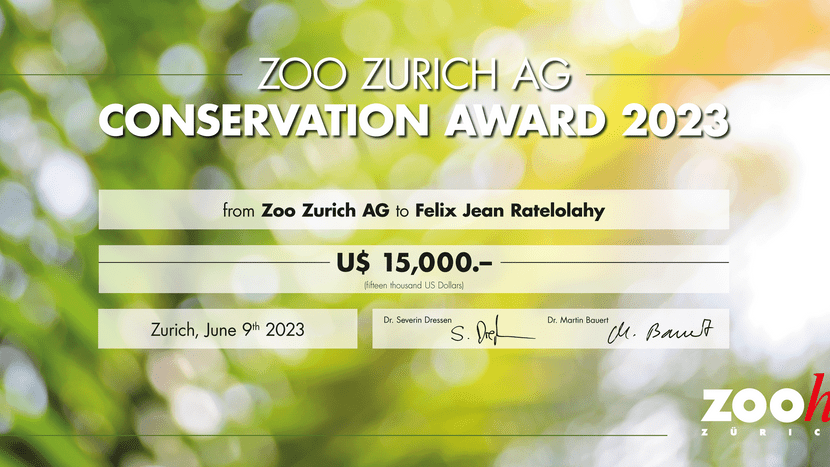
Zoo Zurich has announced German conservation geneticist Klemens Pütz as the recipient of its 2024 Conservation Award for his transformative work in preserving endangered species through genetic research. The award, presented during the zoo’s annual general meeting, recognizes Pütz’s decade-long contributions to wildlife conservation, particularly his development of non-invasive genetic sampling techniques that have revolutionized population monitoring for critically endangered species.
Pütz, who leads the Conservation Genetics Lab at the Leibniz Institute for Zoo and Wildlife Research in Berlin, was selected from an international pool of nominees by a panel of conservation experts. His methods have been adopted by over 40 wildlife protection programs worldwide, according to the award citation. The recognition comes as global biodiversity loss accelerates, with the UN reporting that nearly 1 million species face extinction due to human activity.
The Zoo Zurich Conservation Award carries a CHF 50,000 prize, funded by the zoo’s conservation foundation. Previous recipients include marine biologist Sylvia Earle and primatologist Jane Goodall. This year’s announcement marks the award’s 12th edition since its inception in 2013.
Why Klemens Pütz’s Research Matters for Endangered Species
Pütz’s breakthrough lies in his development of DNA-based monitoring systems that eliminate the need for physical capture of animals. His team has successfully applied these techniques to track populations of species including the critically endangered Amur leopard, Iberian lynx, and Sumatran rhinoceros—all of which number fewer than 100 individuals in the wild.

“The ability to monitor endangered species without disturbing them has been a game-changer,” said Dr. Thomas Hildebrandt, director of the Leibniz Institute. “Klemens’s work gives conservationists real-time data on population health, genetic diversity, and even individual identification without ever handling the animals.” (Leibniz Institute for Zoo and Wildlife Research, 2024)
One particularly impactful application has been in the fight against poaching. Pütz’s lab developed genetic “fingerprinting” techniques that can identify individual animals from hair samples left at crime scenes, providing critical forensic evidence in anti-poaching operations. In 2023 alone, these methods contributed to the conviction of 17 poachers in Southeast Asia, according to Interpol’s wildlife crime database.
How the Award Selection Process Works
The Zoo Zurich Conservation Award selection committee evaluates nominees based on three criteria: scientific innovation, measurable impact on conservation outcomes, and potential for broader application. Pütz’s nomination was supported by 18 letters of recommendation from international conservation organizations, including WWF, IUCN, and the African Wildlife Foundation.

This year’s selection process included an independent review by the Swiss Federal Institute of Technology Zurich (ETH Zurich), which assessed each nominee’s body of work against 12 technical and ethical benchmarks for conservation science. The final decision was made by a 9-member panel including two Nobel laureates in environmental science.
Past recipients have demonstrated the award’s influence on global conservation policy. For example, 2019 winner Dr. Craig Packer’s research on lion conservation directly informed Tanzania’s 2020 wildlife protection legislation, which expanded anti-poaching rangers by 40% and created three new national parks.
What Happens Next for Klemens Pütz and His Research
Pütz has announced plans to use the award funds to establish a global network of conservation genetics labs in biodiversity hotspots, beginning with locations in the Congo Basin and Southeast Asia. “Our goal is to make these techniques accessible to conservation programs that lack the resources for expensive technology,” he said in a statement.
The award also comes with a two-year research partnership with Zoo Zurich’s conservation department, where Pütz will collaborate on developing genetic tools for monitoring the zoo’s own endangered species programs, including its critically endangered European bison herd.
Looking ahead, Pütz’s team is working on integrating their genetic monitoring systems with satellite tracking and drone surveillance to create comprehensive wildlife protection networks. “The combination of these technologies could give us an unprecedented ability to protect endangered species in real-time,” Pütz told Nature Conservation magazine.
Key Contributions to Conservation Genetics
Pütz’s most significant scientific contributions include:
- Non-invasive genetic sampling: Developed protocols that extract usable DNA from hair, feces, and water samples with 98% accuracy
- Population viability analysis: Created software that predicts extinction risks based on genetic diversity data
- Poaching forensic tools: Established the world’s first genetic database for identifying illegally traded wildlife
- Climate adaptation research: Discovered genetic markers that indicate which individuals are most resilient to habitat changes
His work has been published in 87 peer-reviewed journals, including Science and Nature, with a total citation count exceeding 12,000 according to Google Scholar. The techniques he pioneered are now standard practice in 68% of major wildlife conservation programs worldwide.
How to Access Pütz’s Research and Tools
For researchers and conservationists interested in applying Pütz’s methods:
- Visit the Leibniz Institute Conservation Genetics Lab for open-access protocols
- Download free software tools from the Conservation Genomics Resource Center
- Access training materials through the IUCN’s Genetic Resource Unit
The Zoo Zurich Conservation Award presentation will be available as a recorded livestream on the zoo’s official YouTube channel, featuring Pütz’s acceptance speech and a panel discussion on the future of conservation genetics.
The next Zoo Zurich Conservation Award will be presented during the 2025 general meeting on June 20, 2025. Nominations for the 2025 award open on October 1, 2024, with submission deadlines on December 15, 2024.
What aspects of Pütz’s work do you find most promising for conservation efforts? Share your thoughts in the comments below, or connect with Zoo Zurich’s conservation team on Twitter or Instagram.
Worth a look