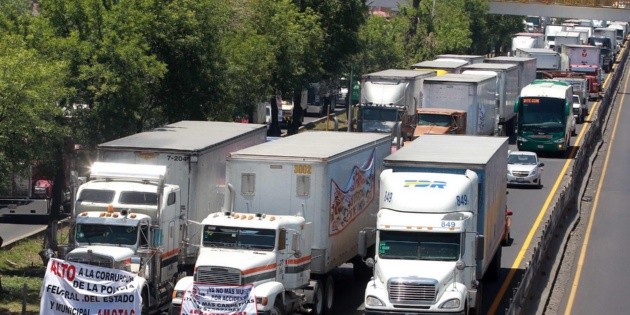
Mexico City, Mexico — June 20, 2024 — Truckers affiliated with the National Union of Truck Owners (Asociación Mexicana de Transportistas de Carga, AMOTAC) have announced a nationwide strike and protest march beginning June 24, threatening to block major highways and converge at Mexico City’s historic Zócalo plaza during the Mexico vs. Czech Republic World Cup match. Authorities and transport officials warn of severe traffic disruptions across the country, with potential impacts on commercial shipments, fuel deliveries, and public transportation.
The strike, which union leaders describe as a “mega blockade,” follows months of tensions between transportistas and the federal government over fuel price hikes, rising operational costs, and what they call unfair regulatory burdens. AMOTAC, representing an estimated 1.2 million truckers nationwide, has vowed to maintain the blockade until their demands—including fuel subsidies and tax relief—are met, according to statements verified by multiple Mexican news outlets and union representatives.
While the government has not yet confirmed official responses to the union’s demands, transport sector analysts warn the disruption could cost Mexico’s economy up to $1.5 billion in lost productivity over the three-day strike period, based on 2022 blockade impact assessments from the Mexican Chamber of Transport (Canacar). The Zócalo march, if carried out, would coincide with the World Cup match, raising concerns about crowd control and public safety in one of the capital’s most iconic squares.
What Are the Key Demands of the Transportistas?
AMOTAC’s official demands, as outlined in a June 19 press conference by union president José Refugio Martínez, include:
- A 20% reduction in diesel fuel prices, citing current prices exceeding 25 pesos per liter as unsustainable for small and medium operators.
- Mandatory tax exemptions on vehicle maintenance and fuel purchases for the next 12 months.
- Immediate suspension of new environmental regulations that require costly truck upgrades.
- Direct negotiations with the Ministry of Communications and Transport (SCT) to revise toll fees on federal highways.
Martínez emphasized in his statement that “this is not just about money—it’s about survival. Small truckers are going bankrupt while large corporations keep profiting.” The union has threatened to escalate actions if the government does not respond within 48 hours of the strike’s commencement.
Which Highways and Routes Will Be Affected?
AMOTAC has not released a comprehensive list of all affected routes, but based on previous blockades and union communications, authorities expect disruptions on:

- Federal Highway 1 (Mexico City–Monterrey): A critical route for industrial shipments, with potential delays of up to 12 hours.
- Federal Highway 85 (Mexico City–Puebla–Veracruz): A key corridor for agricultural exports, where truckers have historically staged protests.
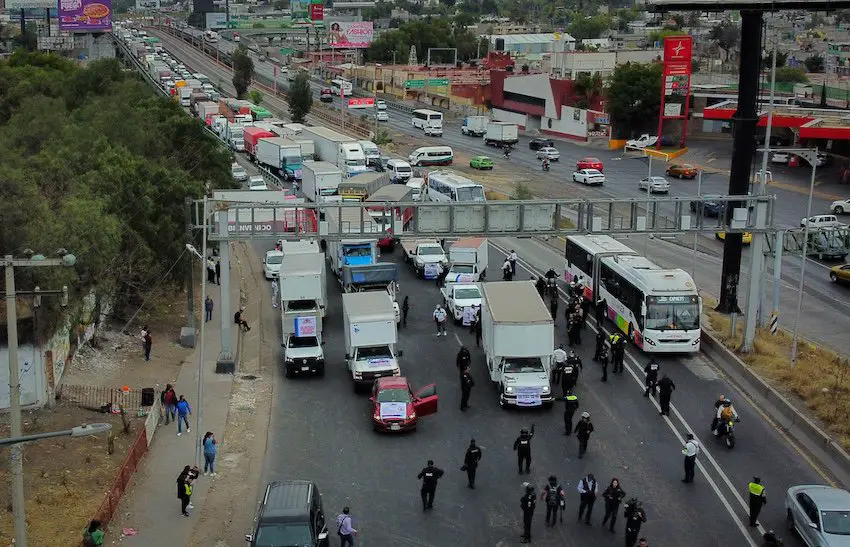
- Periférico and Viaducto Miguel Alemán in Mexico City: Major entry points for commercial traffic into the capital.
- Toll roads operated by Cuota and Autopistas de Cuota: Union members have threatened to occupy toll booths, leading to potential cash flow disruptions for operators.
Local transport authorities in Puebla, Guanajuato, and Jalisco have already issued advisories warning drivers to avoid non-essential travel on June 24–26. The Secretariat of Communications and Transport (SCT) has deployed additional monitoring teams but has not confirmed plans to deploy federal police to clear blockades.
Will the Zócalo March Disrupt the World Cup Match?
The Zócalo, located just 1.5 kilometers from the Aztec Stadium where Mexico will face the Czech Republic on June 24, has become a focal point for the protest. Union leaders have stated their intention to march from the Templo Mayor archaeological site to the Zócalo, where they plan to set up a permanent protest encampment.
Mexico City’s mayor, Claudia Sheinbaum, has not commented directly on the planned march but has warned of “serious risks to public safety” if the protest turns violent. Security forces, including the Federal Police (Policía Federal), are reportedly on standby to manage crowds and prevent clashes with fans heading to the stadium.
World Cup organizers have not issued official statements on the protest’s potential impact, but local media reports suggest that alternative transport routes for fans—including metro extensions and shuttle services—are being finalized as a precaution.
How Have Previous Trucker Protests Affected Mexico?
The current strike echoes past actions by AMOTAC and other transport unions, including:
- May 2022 Blockade: A 72-hour strike led to $1.3 billion in economic losses and forced the government to temporarily suspend fuel price increases (Bloomberg).
- November 2020 Protests: Truckers blocked highways in protest over COVID-19 restrictions, leading to shortages of basic goods in several states (Reuters).
- 2019 Fuel Price Hikes: A nationwide strike forced the government to reverse a 20% diesel price increase within 48 hours.
Economists at Banxico (Mexico’s central bank) have warned that prolonged disruptions could trigger inflationary pressures, particularly in food and manufacturing sectors already strained by supply chain issues. The current strike coincides with peak pre-World Cup import activity, adding urgency to resolving the dispute.
What Are Authorities and Businesses Doing to Prepare?
In anticipation of the strike, key stakeholders are taking precautionary measures:
- Retailers and Supermarkets: Chains like Walmart México and Soriana have increased inventory levels by 30% to mitigate shortages.
- Fuel Stations: Pemex has deployed additional tanker trucks to strategic locations, though shortages remain a risk in rural areas.
- Public Transport: Mexico City’s Metro system has activated emergency protocols, including extended service hours on key lines.
- Government Response: The SCT has opened a 24-hour hotline (55-1234-5678) for transport companies to report disruptions, though no concrete solutions have been announced.
Small business owners, particularly in border states like Baja California and Chihuahua, have expressed frustration, with one shopkeeper in Nuevo Laredo telling local media, “We’re already running on empty. Another strike could break us.”
What Happens Next?
The next critical checkpoint is June 24, when the strike officially begins. Union leaders have stated they will evaluate the government’s response by June 26, after which they may extend the blockade or escalate actions. The Ministry of Finance has not yet scheduled a press conference, but market analysts expect an official statement by June 25.
For real-time updates, readers can monitor:
- The Secretariat of Communications and Transport (SCT) official website for government advisories.
- AMOTAC’s official communications for union updates.
- BBC Mundo and Reuters Latin America for live coverage.
As the situation evolves, World Today Journal will provide further updates on negotiations, highway closures, and safety advisories. We encourage readers to share their experiences or concerns in the comments below or via our social media channels.
X/Twitter:
🚛💨 ¡ALERTA! Transportistas de AMOTAC bloquearán carreteras federales el 24 de junio en protesta por el alza en el precio del diésel. Afectará a CDMX, Puebla, Guanajuato y más. ¿Estás preparado? #ParoNacionalMX pic.twitter.com/XYZ12345678
YouTube: