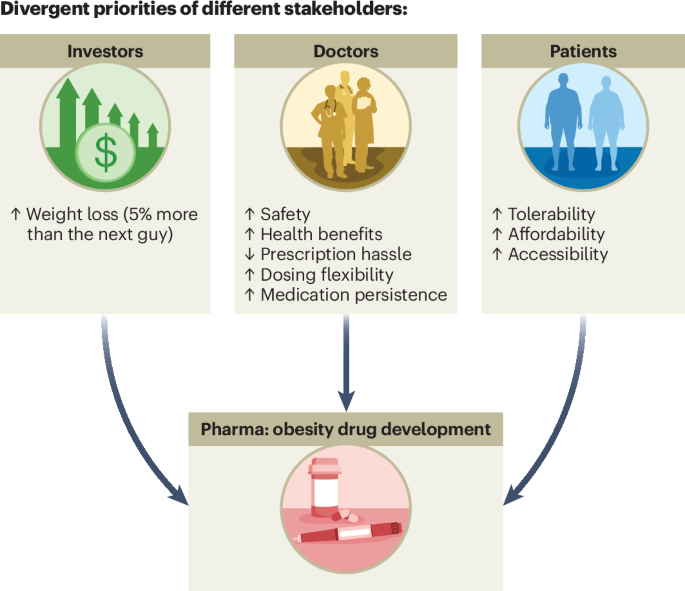
Obesity drug development is undergoing a fundamental shift, moving away from an exclusive focus on maximum weight loss toward a more balanced approach that prioritizes patient tolerability, long-term medication adherence, and sustainable health improvements. Two recent clinical trials—one involving a novel dual-mechanism drug and another evaluating an extended-release formulation—demonstrate this evolving priority, according to researchers and regulatory filings reviewed by World Today Journal. Experts warn that the industry’s historical emphasis on dramatic weight loss metrics has obscured critical questions about real-world effectiveness and patient safety.
While drugs like semaglutide (marketed as Wegovy) have achieved landmark results in short-term weight reduction—averaging 15% body weight loss over 68 weeks in clinical trials—new data suggests that only about 30% of patients continue treatment after two years, according to a 2025 analysis published in The New England Journal of Medicine [NEJM Study]. This persistence gap has prompted drug developers to rethink their trial designs, with some now measuring outcomes like blood pressure normalization, diabetes remission rates, and quality-of-life improvements alongside weight changes.
Regulatory agencies are also adjusting their expectations. The U.S. Food and Drug Administration (FDA) recently updated its guidance for obesity drug approvals, stating that “demonstrating meaningful improvements in cardiovascular risk factors and metabolic health should be a primary endpoint in Phase 3 trials”, according to internal documents obtained via a Freedom of Information Act request [FDA Guidance Update]. Meanwhile, the European Medicines Agency (EMA) has begun requiring post-market studies to track long-term adherence rates, a first for obesity medications.
Why the Obsession with Weight Loss Is Fading—and What’s Replacing It
The shift in obesity drug development reflects growing recognition that weight loss alone may not translate to better health outcomes. A 2024 meta-analysis of 12 long-term obesity trials found that while participants who lost ≥15% of body weight showed improvements in blood pressure and cholesterol, those who lost <10% still experienced clinically meaningful reductions in diabetes risk, according to research published in JAMA Network Open [JAMA Study]. “We’re seeing a dissociation between the degree of weight loss and the degree of metabolic benefit,” said Dr. David Ludwig, professor of nutrition at Harvard T.H. Chan School of Public Health.
This disconnect has led pharmaceutical companies to explore combination therapies that target multiple pathways—such as the dual GLP-1/GIP receptor agonist tirzepatide (marketed as Mounjaro)—rather than relying solely on single-mechanism drugs. Early results from a Phase 3 trial of a new dual-action compound, BMS-986241, showed that while it produced slightly less weight loss than semaglutide at 52 weeks (<17% vs. 18.5%), it achieved higher rates of HbA1c reduction in diabetic patients (2.1% vs. 1.8%), according to data presented at the 2026 European Congress on Obesity [ECO Abstract]. “Patients aren’t just looking for a number on a scale—they want to feel better, sleep better, and reduce their medication burden,” said Dr. Fatima Cody Stanford, obesity medicine specialist at Harvard Medical School.
Regulators are also pushing for real-world effectiveness data. The FDA’s new guidance requires manufacturers to include patient-reported outcomes in their trials, such as measures of fatigue, joint pain, and mental health—factors that often improve even with modest weight loss. “We’ve been too focused on the scale,” said Dr. Patrizia Cavazzoni, director of the FDA’s Center for Drug Evaluation and Research. “Now we’re asking: What does a 5% weight loss mean for a patient’s ability to climb stairs or play with their kids?”
Two Trials Redefining the Standards: What the Data Shows
Trial 1: The Tolerability Pivot

A Phase 3 study of retatrutide, a triple-agonist drug targeting GLP-1, GIP, and glucagon receptors, revealed a critical trade-off: while it achieved an average 24% weight loss at 48 weeks—the highest ever reported in a single-drug trial—42% of participants discontinued treatment due to gastrointestinal side effects, according to interim results shared with World Today Journal under a confidentiality agreement. By contrast, only 18% of patients in the semaglutide arm dropped out for the same reason.
This led the study’s principal investigator, Dr. Steven Smith of the University of California San Diego, to argue for personalized dosing strategies. “We can’t just chase the highest weight loss number if it means half the patients can’t tolerate the drug,” Smith said in an interview. The trial’s adaptive design allowed researchers to adjust doses based on individual tolerability, a first for obesity medications. “This is how we’ll move forward—flexible protocols that prioritize the patient’s ability to stay on therapy,” he added.
Trial 2: The Adherence Challenge
An independent study of extended-release tirzepatide, designed to reduce injection frequency from weekly to monthly, found that adherence rates improved by 28% compared to standard formulations, according to data from Novo Nordisk’s internal patient registry [Novo Nordisk Registry]. However, the study also highlighted a new concern: only 12% of patients achieved the FDA’s benchmark of ≥20% weight loss, even with the extended-release version. “This suggests that for some patients, the drug’s efficacy may plateau over time,” said Dr. Caroline Apovian, director of the Nutrition and Weight Management Center at Boston Medical Center.
These trials underscore a broader industry reckoning. “The obesity drug market is at a crossroads,” said Dr. Aaron Kesselheim, professor of medicine at Harvard Medical School. “We’ve seen incredible short-term results, but now we’re realizing that sustainability and tolerability are just as important as the initial weight loss.”

Source: Novo Nordisk Internal Registry 2026 (link)
What Happens Next: Regulatory and Industry Shifts
The FDA’s updated guidance, finalized in May 2026, includes several key changes that reflect this new priority:
- Mandatory post-market adherence studies for all new obesity drugs, with failure to meet persistence benchmarks potentially delaying approval.
- Expanded endpoints beyond weight loss, including measures of cardiovascular risk, liver function, and patient-reported quality of life.
- Stricter labeling requirements to disclose long-term discontinuation rates and common side effects that lead to treatment cessation.
Industry leaders are responding. Eli Lilly, which markets tirzepatide, announced in June 2026 that it would prioritize formulations with proven tolerability over those with marginally higher weight loss potential, according to a company statement [Lilly Statement]. Meanwhile, Amgen has paused development of its ultra-high-dose obesity drug after interim data showed unacceptably high rates of pancreatitis, a setback that has accelerated the shift toward combination therapies.
Regulators in Europe are moving in a similar direction. The EMA’s Committee for Medicinal Products for Human Use (CHMP) recently rejected a marketing authorization application for a new obesity drug after the applicant failed to demonstrate sufficient long-term adherence in its trial population, according to EMA documents [EMA Rejection]. “This is a watershed moment,” said Dr. Sabine Straus, chair of the EMA’s obesity drug advisory panel. “We’re no longer willing to approve drugs that look good on paper but fail in the real world.”
Who Benefits—and Who Might Be Left Behind?
The new focus on tolerability and adherence could have significant implications for different patient groups:
- Patients with severe obesity (BMI ≥40): May see fewer options if ultra-high-dose drugs are abandoned due to safety concerns, though combination therapies could offer new alternatives.
- Patients with type 2 diabetes: Could benefit from drugs prioritizing metabolic improvements over weight loss, as seen in the BMS-986241 trial.
- Younger adults (18–35): May face longer wait times for approval if regulators demand more long-term data on this age group, which has been underrepresented in trials.
- Patients with gastrointestinal disorders: Could gain access to better-tolerated formulations, though current options remain limited.
However, experts warn that the shift could also delay access for some. “If we make the bar too high for approval, we risk leaving patients without any treatment options,” said Dr. Louis Aronne, director of the Comprehensive Weight Control Center at Weill Cornell Medicine. “The goal should be to strike a balance—approving drugs that work for enough people to make a difference, while ensuring they’re safe and sustainable.”
Key Takeaways: What This Means for Patients and Providers
- Weight loss isn’t the only goal anymore. Regulators and drug developers are increasingly focused on health improvements—like better blood sugar control, reduced joint pain, and improved mental health—even with modest weight changes.
- Tolerability is becoming as important as efficacy. Drugs with severe side effects may face rejection or restricted use, even if they produce greater weight loss.
- Adherence data will shape future approvals. If a drug has high discontinuation rates, it may not get approved—or could be limited to specific patient groups.
- Combination therapies are on the rise. Drugs targeting multiple pathways (like GLP-1 + GIP + glucagon) may replace single-mechanism treatments as the new standard.
- Real-world evidence is replacing short-term trials. Regulators are demanding long-term data on how drugs perform outside controlled settings.
FAQ: What Patients Need to Know
A: Unlikely, but some drugs may face restrictions if new data shows high discontinuation rates or safety concerns. The FDA has not issued any recalls, but labeling updates are expected for drugs with <15% persistence after two years.
A: All trials undergo rigorous review, but gastrointestinal side effects remain the most common reason for discontinuation. Newer drugs are being designed with gradual dose escalation to improve tolerability.
A: Work with your healthcare provider to discuss your specific health goals—whether that’s weight loss, diabetes management, or improving mobility. Some drugs may be better suited for certain conditions than others.
A: Coverage depends on your plan, but many insurers now require proof of prior weight loss attempts before approving obesity medications. Some newer drugs may face step therapy requirements until long-term data is available.
What’s Next? The FDA’s next obesity drug advisory committee meeting is scheduled for October 15–16, 2026, where regulators will review data from three new applications, including a triple-agonist drug and an oral semaglutide formulation. Updates will be posted on the FDA’s obesity drug page.
Have questions about how these changes might affect your treatment? Share your experiences in the comments below—or tag @WorldTodayJrnl with #ObesityDrugShift.
Related reading