
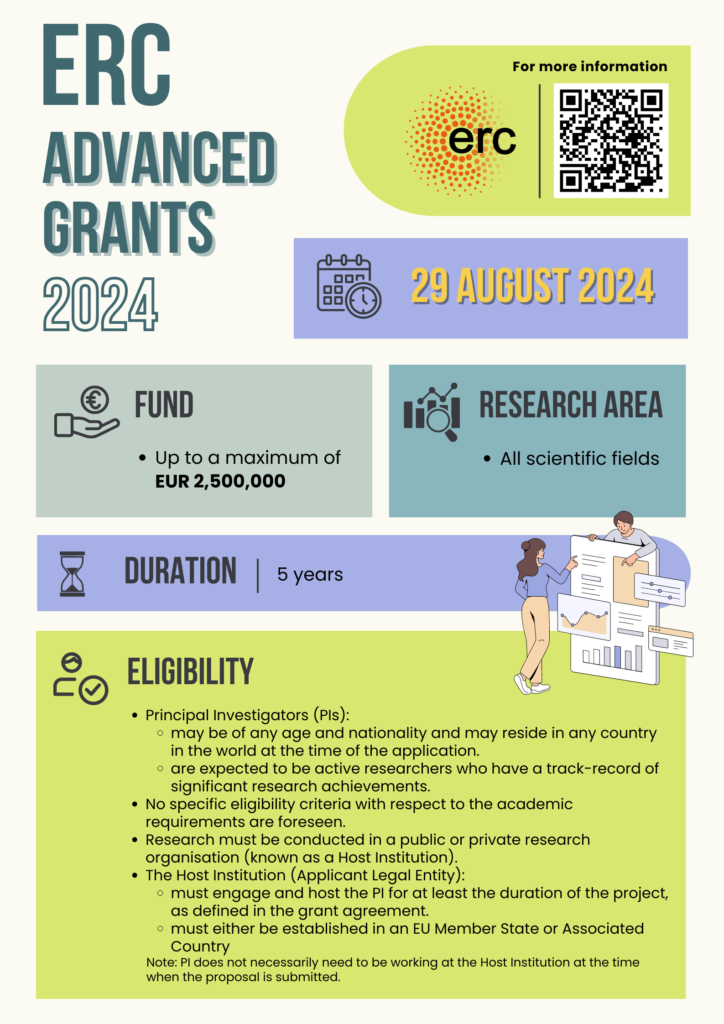
Professor Alessandro Lenci of the University of Pisa has been awarded €2.5 million by the European Research Council (ERC) to study how children and adults learn language, with the goal of creating AI models that replicate human-like linguistic development. The five-year project, announced in June 2024, marks one of the largest ERC Advanced Grants ever awarded to a linguist, and could fundamentally alter how artificial intelligence understands and generates human speech.
The funding will support Lenci’s team in developing computational models that simulate the cognitive processes behind language acquisition, from early childhood to adulthood. Unlike current AI systems, which rely on massive datasets to predict language patterns, the project aims to build models that learn language as humans do—through exposure, interaction, and gradual refinement.
“This is not just about improving AI’s ability to mimic human speech,” Lenci said in a statement. “It’s about understanding the fundamental mechanisms that allow us to communicate at all.” The research could have implications for fields ranging from education and psychology to the development of more intuitive AI assistants and translation tools.
Lenci’s work builds on decades of research in cognitive science and computational linguistics. His team will collaborate with neuroscientists, psychologists, and AI engineers to create hybrid models that blend linguistic theory with machine learning. The project is one of several recent initiatives exploring how AI can better replicate human cognitive processes, including efforts at MIT and the Max Planck Institute for Psycholinguistics.
While the ERC grant is substantial, it is part of a broader €1.5 billion investment by the European Commission into AI research over the next decade. The European Union has positioned itself as a leader in ethical AI development, with strict regulations like the AI Act already in place to govern how such technologies are deployed.
Why This Project Matters—and What It Could Change
Current AI language models, such as those powering chatbots and virtual assistants, rely on statistical patterns learned from vast amounts of text data. These models excel at generating coherent responses but often lack the depth and adaptability of human language use. Lenci’s project seeks to bridge this gap by focusing on how humans acquire language in the first place.

Key questions the research aims to address include:
- How do children transition from babbling to structured speech?
- What cognitive and social factors influence language development?
- Can AI models be designed to learn language more efficiently, with fewer data requirements?
If successful, the findings could lead to AI systems that:
- Understand context and nuance better, reducing errors in translation and communication.
- Adapt more naturally to new languages and dialects, improving accessibility for non-native speakers.
- Provide deeper insights into human cognition, potentially aiding research in developmental disorders like autism and dyslexia.
The project also aligns with growing concerns about the ethical implications of AI. By grounding language models in biological and psychological principles, researchers hope to mitigate biases and improve transparency in how AI systems process information.
Who Is Leading the Research—and How?
Professor Alessandro Lenci, a leading figure in computational linguistics, will oversee the project at the University of Pisa’s Department of Computer Science. His team includes:
- Dr. Elena Barausse, an expert in child language development.
- Dr. Marco Baroni, a specialist in natural language processing.
- Collaborators from the University of Amsterdam and the University of Edinburgh.
The research will combine experimental psychology, computational modeling, and large-scale data analysis. Lenci’s lab has previously developed tools to simulate how children learn grammar, and the new grant will expand this work to include:
- Neurolinguistic studies to map brain activity during language acquisition.
- Cross-linguistic comparisons to identify universal and culture-specific patterns.
- Interactive AI environments where models “learn” language through simulated social interactions.
“This is not about replicating human brains,” Lenci clarified in an interview with Nature. “It’s about capturing the essential principles that make human language so uniquely flexible and creative.”
How Does This Compare to Other AI Language Research?
The ERC-funded project stands out from other AI language initiatives in its focus on developmental processes rather than purely statistical performance. For comparison:
| Project | Focus | Funding Source | Key Innovation |
|---|---|---|---|
| Lenci’s ERC Grant (2024) | Human language acquisition | European Research Council (€2.5M) | AI models that learn like children |
| Google’s PaLM 2 (2023) | Scalable language models | Google DeepMind | 1.6T parameter model for general AI |
| Meta’s LLaMA (2023) | Open-source AI training | Meta AI | 65B parameter model for research |
| MIT’s CogNIAC Project | Neuromorphic AI | NSF, DARPA | Brain-inspired language processing |
While Google and Meta prioritize scaling up model size for broader applications, Lenci’s work targets the mechanisms behind language learning. This could lead to more efficient, smaller AI models that perform better in specialized tasks—such as medical or legal translation—without requiring massive computational resources.
What Happens Next—and How Can the Public Follow?
The project is set to begin in September 2024, with preliminary findings expected within two years. Key milestones include:
- Phase 1 (2024–2025): Development of initial computational models based on child language data.
- Phase 2 (2026–2027): Integration of neurolinguistic and psychological research.
- Phase 3 (2028–2029): Testing of adaptive AI systems in real-world scenarios.
Updates will be shared through the University of Pisa’s official communications and Lenci’s lab website. The ERC also requires grantees to publish open-access research, ensuring transparency in findings.
For those interested in contributing or collaborating, Lenci’s team is accepting applications for postdoctoral researchers with expertise in:
- Computational linguistics
- Developmental psychology
- Neurolinguistics
Applications should be submitted to [email protected] with a CV and research proposal.
Key Takeaways
- Funding: €2.5 million from the ERC for a five-year project.
- Goal: Create AI models that learn language like humans.
- Impact: Potential advances in AI efficiency, education, and cognitive science.
- Collaborators: Universities in Italy, the Netherlands, and the UK.
- Timeline: Research begins September 2024; first results in 2026.
- Ethical Focus: Addresses biases and transparency in AI language systems.
The project underscores Europe’s commitment to leading in ethical and biologically grounded AI research. As Lenci notes, “The next generation of AI should not just mimic language—it should understand it.”
For further reading, explore the European Research Council’s guidelines on AI funding or the EU AI Act, which governs the ethical deployment of such technologies.
Have questions about how this research could impact AI development? Share your thoughts in the comments below—or tag @WorldTodayJrnl to join the discussion.
Worth a look