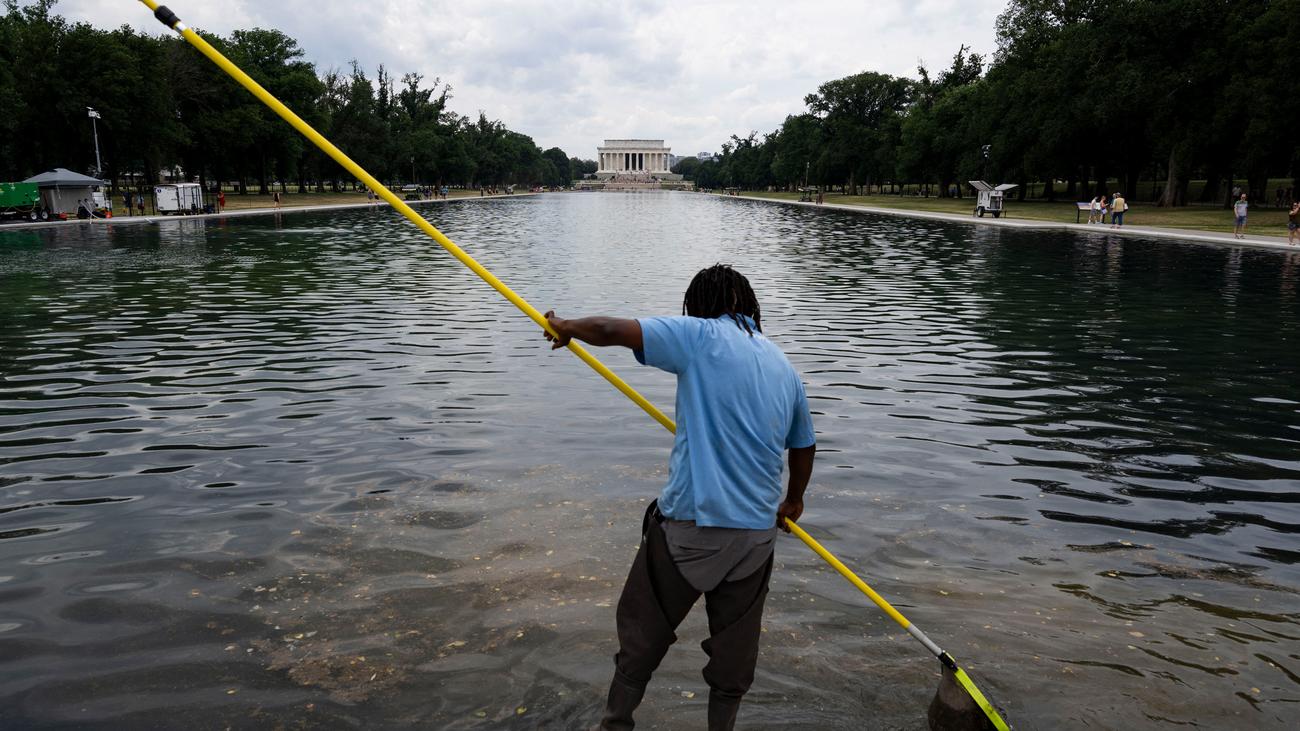
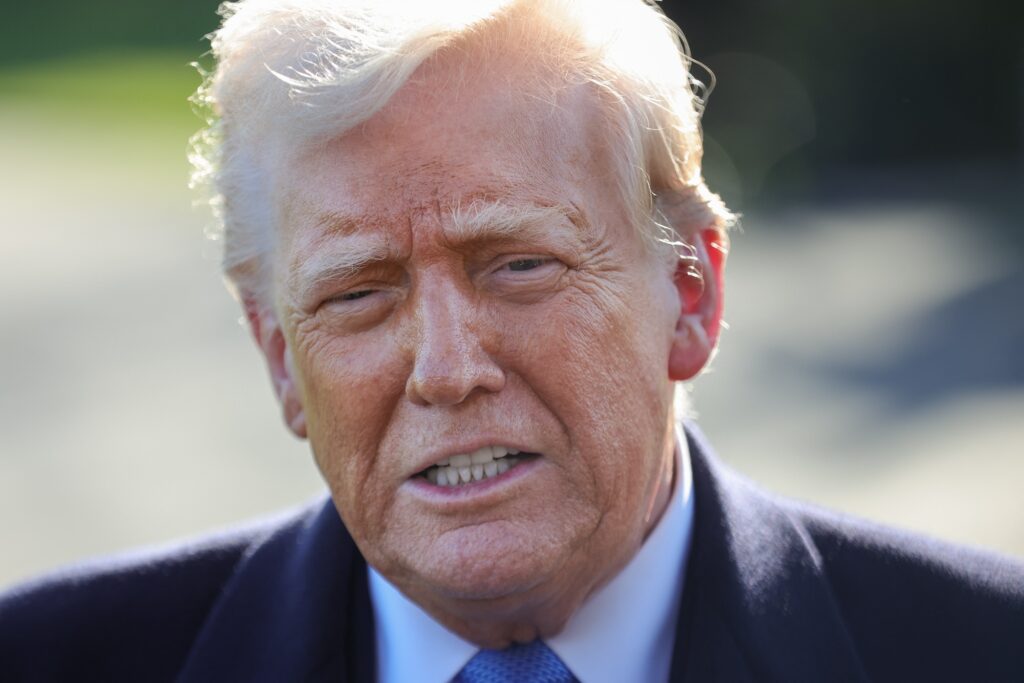
Washington, D.C. — Former U.S. President Donald Trump has threatened legal consequences, including potential prison sentences, for individuals responsible for damaging the Lincoln Memorial Reflecting Pool, where algae has repeatedly turned the water green despite recent renovations. His remarks, made during a rally in Virginia, escalate a long-standing debate over environmental maintenance and public access at one of the nation’s most iconic landmarks.
Trump’s comments come amid ongoing discussions about the pool’s condition, which officials say is primarily caused by natural algae growth rather than deliberate vandalism. The National Park Service (NPS) has confirmed that the pool undergoes regular cleaning and treatment, but persistent green discoloration has drawn criticism from both visitors and lawmakers. Trump, however, framed the issue as a deliberate act of destruction, suggesting that activists or protesters may have targeted the site.
“They’re destroying our monuments, our pools, our parks—it’s all part of the same thing,” Trump said during a speech in Fairfax, Virginia, on June 10, 2024. “And if they don’t stop, we’re going to start putting people in jail for this kind of vandalism.” His remarks were met with mixed reactions, with some supporters praising his stance on preserving national landmarks, while critics argued that the algae issue is an environmental challenge rather than an act of malice.
Why the Lincoln Memorial Reflecting Pool Turns Green—and What Officials Say
The Lincoln Memorial Reflecting Pool, a 20-acre reservoir stretching from the Lincoln Memorial to the Washington Monument, is a frequent target of public scrutiny due to its recurrent green tint. According to the NPS, the algae growth is a natural phenomenon exacerbated by warm temperatures, limited water circulation, and the pool’s depth—up to 12 feet in some areas. The agency has implemented measures such as copper sulfate treatments and increased filtration, but the problem persists.
“The algae is a seasonal issue, particularly in the summer months,” said a spokesperson for the National Park Service, confirming that no evidence of deliberate contamination has been found. “We treat the water regularly, but the pool’s size and design make it challenging to eliminate the algae entirely.” Despite these efforts, the green hue has become a defining—and often controversial—feature of the landmark.
NPS records indicate that the pool was last renovated in 2017, with additional cleaning initiatives in 2022. However, visitors and local media have continued to report discoloration, leading to calls for more aggressive solutions, including partial draining or even covering the pool during peak algae seasons.
Trump’s Legal Threats: Context and Backlash
Trump’s threat of legal action is not his first public comment on the issue. In 2022, he criticized the pool’s condition on social media, writing, “The Reflecting Pool at the Lincoln Memorial is a disgrace—totally green with algae. Nobody takes care of our beautiful monuments anymore!” His latest remarks, however, go further by suggesting criminal penalties for those he alleges are responsible.

Legal experts consulted by The Washington Post noted that prosecuting algae-related incidents would be unprecedented. “There’s no federal law against algae in a public pool,” said Jonathan Turley, a constitutional law professor at George Washington University. “If Trump were to pursue charges, it would likely require proving intent to damage—a high bar given the NPS’s own statements on the issue.”

Critics, including environmental advocates, argue that Trump’s framing ignores the root cause. “This is an environmental issue, not a criminal one,” said Sarah Chasis, executive director of the nonprofit Friends of the National Parks. “Blaming activists distracts from the real problem: underfunded maintenance and climate change’s impact on our waterways.”
Meanwhile, local politicians have weighed in. Virginia Senator Tim Kaine, a Democrat, tweeted, “The Reflecting Pool is a cherished part of our nation’s capital, and we should focus on solutions—not scare tactics.” His office declined to comment further on Trump’s legal threats.
What Happens Next? Legal, Environmental, and Political Ramifications
If Trump follows through on his threat, legal scholars suggest several potential paths:
- Federal Prosecution: The Department of Justice would need to identify individuals with clear intent to damage the pool. Given the NPS’s stance, this would likely require evidence beyond algae presence.
- Civil Penalties: A more plausible route would be fines under the National Park Service Organic Act, which prohibits willful damage to federal property. However, such cases are rare and typically involve physical destruction, not environmental changes.
- Funding Debates: The issue may reignite discussions about federal funding for park maintenance. The NPS’s 2024 budget request includes $3.5 billion for operations, but critics argue that algae control requires specialized, long-term solutions.
The NPS has not responded to requests for comment on Trump’s threats but reaffirmed its commitment to addressing the algae issue. “We take visitor concerns seriously and are exploring all options to improve water quality,” the agency stated in a prepared response.
Broader Implications: Vandalism vs. Environmental Challenges
Trump’s remarks reflect a broader national conversation about how to balance preservation with environmental realities. Similar debates have emerged at other landmarks, such as the Yosemite Valley, where algae and invasive species have also drawn scrutiny. In those cases, officials have emphasized education and adaptive management rather than punitive measures.
Environmental groups point to climate change as a key factor. “Warmer temperatures and heavier rainfall are worsening algae blooms nationwide,” said Dr. Jane Lubchenco, a marine ecologist and former NOAA administrator. “Solutions require investment in science and infrastructure—not legal threats.”
Politically, the issue underscores divisions over how to address public spaces. While Trump’s base views the pool’s condition as a sign of neglect, environmentalists and Democrats argue that the problem is systemic. A 2023 Pew Research survey found that 68% of Americans support increased federal spending on environmental protection, though partisan views on solutions remain starkly divided.
Visitor Reactions: A Landmark Divided
Tourists and locals offer conflicting perspectives. Some visitors, like Maria Rodriguez of New York, expressed frustration. “It’s disappointing to see such an iconic place look like this,” she said during a recent visit. “But I don’t think people are intentionally ruining it.”
Others, however, have embraced the green hue as a quirky part of the experience. “It’s become a conversation starter,” said Jake Chen, a student from California. “People take photos of the ‘green pool’—it’s almost a meme now.”
The NPS has encouraged visitors to report concerns through its online feedback system, though no major policy changes have resulted from past complaints. For now, the pool remains a focal point of debate—both as a symbol of national pride and a case study in environmental stewardship.
Key Takeaways
- The Lincoln Memorial Reflecting Pool’s green algae is primarily a natural, seasonal issue, not deliberate vandalism, according to the National Park Service.
- Donald Trump has threatened legal action, including prison sentences, for those he alleges are responsible, though legal experts call such measures unprecedented.
- Solutions under discussion include increased funding for maintenance, environmental treatments, and potential structural changes to the pool’s design.
- The issue highlights broader tensions between preservation efforts, climate change impacts, and political narratives about national landmarks.
- Visitors remain divided, with some advocating for stronger action and others viewing the algae as an accepted part of the site’s character.
Next Steps: The NPS has not announced further actions, but Trump’s remarks may prompt renewed legislative discussions. The next official update is expected by July 15, 2024, when the agency’s annual report on park conditions is due. In the meantime, visitors are encouraged to share feedback via the NPS contact form.
What do you think—should the government prioritize legal action or environmental solutions? Share your perspective in the comments below.
Related reading