
Enterprises transitioning artificial intelligence workloads from experimental pilots to production-scale environments frequently encounter critical failures in data delivery, as point-to-point architectures struggle to maintain stability under sustained, concurrent traffic. While direct connections between storage and compute nodes perform adequately in controlled demonstration settings, these configurations often collapse when subjected to the unpredictable demands of real-world production, leading to stalled inference pipelines, inefficient GPU utilization, and significant service-level agreement (SLA) violations.
According to Hunter Smit, senior manager of product marketing at F5, the shift from pilot to production represents a fundamental change in operational requirements. Organizations achieve success only when their infrastructure is engineered to anticipate and mitigate real-world failures rather than assuming a perfect, static environment. This transition highlights a growing divide between the idealized performance of lab-based AI models and the reality of enterprise-grade deployment, where infrastructure resilience directly dictates business outcomes.
The Fragility of Point-to-Point AI Architectures
The primary architectural challenge lies in how data reaches compute resources. In many current setups, AI clients connect directly to S3-compatible storage. Paul Pindell, a principal solutions architect for technology alliances at F5, notes that these point-to-point connections lack inherent resilience. When a single storage node encounters a failure or a traffic spike, the direct connection has no mechanism to reroute or buffer the request, causing the entire pipeline to stall as retries and timeouts cascade throughout the system.
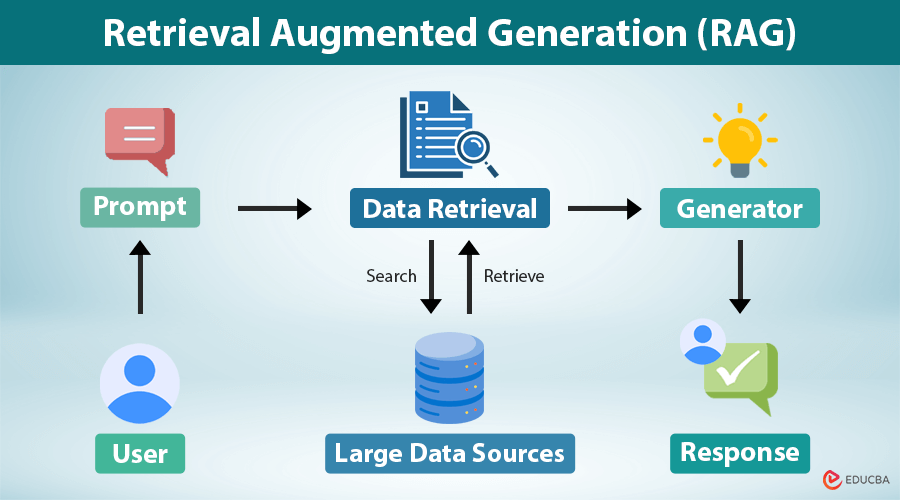
This vulnerability is exacerbated by the way modern AI workflows, such as Retrieval-Augmented Generation (RAG) and agentic systems, treat storage. These applications increasingly rely on S3 storage as a primary component of the AI cluster. However, the existing network connectivity between storage and compute was often designed for lower throughput and lower concurrency. When this infrastructure is tasked with the high-throughput, uninterrupted data movement required to keep modern GPUs running optimally, it quickly reaches its limits.
The business impact of these failures is measurable. When inference pipelines experience delays or stalls, the quality of the AI output—and the resulting user experience—degrades. In RAG-based systems, these delays prevent models from accessing timely or relevant context, which can lead to hallucinations or outdated responses, creating significant compliance and reputational risks for the enterprise.
Infrastructure as a Determinant of AI Performance
Tanu Mutreja, senior director of product management at F5, emphasizes that AI infrastructure is no longer a “back-end concern” that can be ignored by leadership. Unlike traditional deterministic workloads, AI systems are deeply influenced by the underlying data delivery layer at every interaction. Infrastructure choices directly shape the cost, quality, and resilience of every transaction, making the data delivery layer a critical component of the AI stack.
One of the most common symptoms of an inadequate data path is GPU underutilization. When infrastructure inefficiencies prevent data from reaching the compute layer fast enough, expensive GPU resources remain idle. This creates a cycle where infrastructure limitations inflate costs while simultaneously restricting the scalability and responsiveness of the entire AI initiative. The central challenge for enterprise leaders, according to Mutreja, is ensuring the end-to-end infrastructure supports reliable, governed AI experiences at sustainable unit economics.
Building Resilience Through Programmable Data Delivery
To move beyond perpetual pilots, organizations are increasingly treating data delivery as a first-class infrastructure layer. This approach moves away from the assumption that the network will simply function and instead builds three core properties into the data path: observability, programmability, and failure-awareness. Observability provides real-time visibility into metrics like latency and throughput, while programmability allows for policy-driven control, such as dynamic routing and automated failover.
Failure-awareness is the final piece of the puzzle, designed to maintain system stability during network degradation or storage throttling. In a reference architecture developed for Dell ObjectScale, F5 utilizes its BIG-IP platform as a programmable control point between storage and AI compute. By placing this controller at the storage edge, organizations can apply quality-of-service (QoS) policies, rate limits, and connection limits to protect storage infrastructure from being overwhelmed—even if the AI compute layer misconfigures and inadvertently floods the storage cluster with requests.
Testing validated by SecureIQLab has indicated that implementing this protective layer does not necessarily come at the expense of throughput. Pindell explains that preserving performance while adding resilience and security is essential for production-grade AI. This capability allows teams to maintain the high-speed data movement required by GPUs while simultaneously gaining the control needed to prevent system-wide outages.
Operationalizing AI in Hybrid and Multicloud Environments
The complexity of data delivery increases significantly in hybrid and multicloud environments, where data must traverse heterogeneous systems with inconsistent policies, security controls, and governance requirements. In these fragmented landscapes, observability and programmable traffic management work in tandem to provide a unified view of health across different environments. This closed-loop system allows for real-time, intelligent routing and balancing, ensuring that AI applications remain performant regardless of where the data or the user resides.

The distinction between companies that successfully deploy AI and those stuck in a cycle of perpetual pilot programs often comes down to engineering discipline. Organizations that reach production-ready status design their systems with the assumption that latency, congestion, and partial outages are inevitable. By building a data path that is explicitly designed to absorb these failures, they create systems capable of sustaining real-world traffic. As teams continue to refine their AI infrastructure, the focus remains on ensuring the data delivery layer is engineered with the same level of rigor applied to the compute and model layers.
For further updates on enterprise AI infrastructure and performance standards, industry professionals should look to upcoming technical documentation from infrastructure vendors and independent testing labs. Please share your experiences with scaling AI workloads in the comments below.
Worth a look