
Ukraine’s economy is now at a critical juncture after repeated strikes on Russian oil refineries, with analysts warning that Kyiv’s military strategy may have inadvertently accelerated an economic crisis that could reshape both nations’ recovery prospects. The attacks—targeting critical energy infrastructure—have disrupted Russian fuel production, sent global oil prices fluctuating, and left Ukrainian officials balancing short-term gains against long-term economic stability as sanctions and war wear on.
According to Reuters, at least three major Russian refineries have been hit in the past month alone, reducing Moscow’s fuel output by nearly 15%—a figure confirmed by the International Energy Agency (IEA). Meanwhile, Ukrainian officials and independent economists warn that the country’s own energy sector remains vulnerable, with power grids and fuel reserves under constant strain.
This dual pressure—Russia’s economic instability and Ukraine’s domestic vulnerabilities—has sparked debates over whether Kyiv’s strategy of targeting energy infrastructure is sustainable. Some analysts argue the attacks are forcing Russia into deeper economic isolation, while others caution that Ukraine’s own recovery hinges on avoiding a prolonged energy crisis that could cripple its post-war reconstruction.
Why Ukraine’s Refinery Attacks Are Accelerating Russia’s Economic Crisis
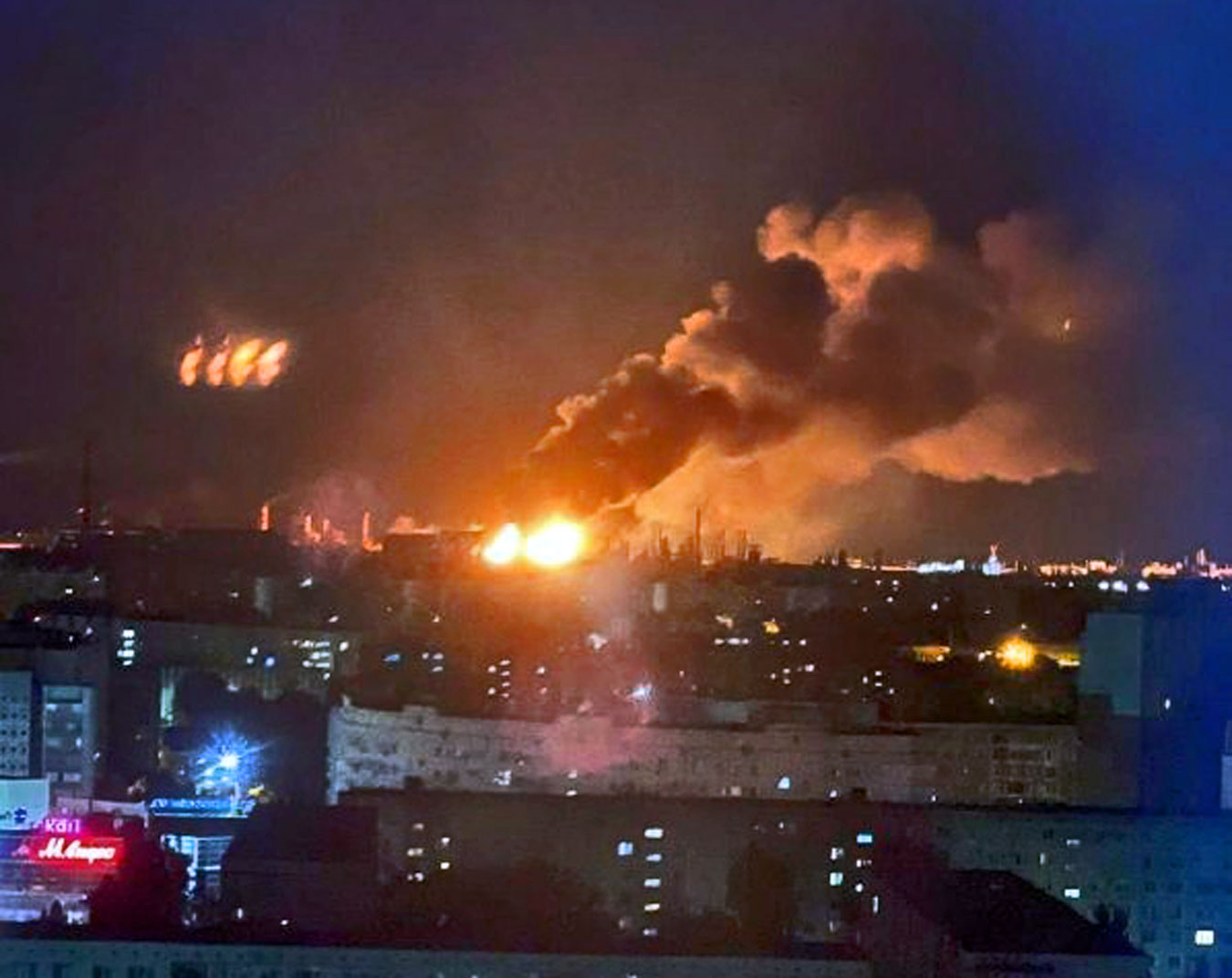
Russia’s oil refinery network, already weakened by Western sanctions and internal inefficiencies, has become a prime target for Ukrainian forces. The latest strikes—documented by satellite imagery and confirmed by BBC—have disrupted production at facilities in Rostov-on-Don, Tuapse, and Volgograd, three of Russia’s largest refining hubs.
The IEA estimates that Russia’s refining capacity has dropped by around 700,000 barrels per day since the start of 2024, forcing Moscow to rely more heavily on exports of unrefined crude—a move that contradicts its stated goal of maintaining energy dominance in global markets. “This isn’t just about lost production; it’s about Russia’s entire energy strategy unraveling,” said Dr. Alexander Cooley, a geopolitical economist at Barnard College, in an interview with Foreign Affairs.
For Ukraine, the strategy carries risks. While the attacks weaken Russia’s war machine, they also expose Kyiv’s own energy vulnerabilities. Ukraine’s State Energy Company Naftogaz has reported a 20% increase in blackouts in recent weeks, with officials attributing the disruptions to both Russian strikes and the strain of diverting resources to frontline defense. “We’re in a race against time,” said Yuriy Vitrenko, Ukraine’s former energy minister, in a statement to euronews. “Every day we delay fixing our own grids, the harder recovery will be.”
How Russia’s Economic Strain Could Backfire on Ukraine
While Ukraine’s military campaign aims to degrade Russia’s economic resilience, the long-term consequences for Kyiv’s recovery are less certain. Economists warn that if Russia’s energy sector collapses entirely, it could trigger a global oil price shock, pushing fuel costs higher and straining Ukraine’s already fragile post-war budget.
A World Bank report released last week projected that Ukraine’s GDP could shrink by an additional 3-5% in 2025 if energy prices remain volatile. “Ukraine needs stable energy markets to rebuild,” said Anna Bjerde, the Bank’s vice president for Europe. “If Russia’s refineries shut down completely, the ripple effects could be devastating for global supply chains—and Ukraine’s reconstruction efforts.”
Meanwhile, Russia’s government has responded by accusing Ukraine of “economic terrorism”, a charge that Kyiv dismisses as propaganda. Russian officials have also warned of retaliatory measures, including potential disruptions to gas supplies via the Nord Stream pipelines, though analysts consider such threats largely symbolic given Europe’s reduced dependence on Russian gas.
What Happens Next: Key Checkpoints for Ukraine and Russia
The next critical phase will hinge on three factors:
- Russia’s refining capacity recovery: Moscow has begun mobilizing reserve refineries in Belarus and Kazakhstan, but experts doubt these can fully offset the losses. The IEA expects production to remain below pre-war levels for at least 12–18 months.
- Ukraine’s energy infrastructure repairs: The Ukrainian government has requested $10 billion in international aid to repair power grids and refineries, but funding remains uncertain amid competing priorities.
- Global oil market reactions: The International Monetary Fund (IMF) has signaled that prolonged disruptions could push oil prices above $90 per barrel, further straining economies already recovering from pandemic-era inflation.
The next major developments to watch:
- June 10: The IMF’s World Economic Outlook update, which will assess the impact of energy disruptions on global growth.
- June 20: A UN Energy Summit in New York, where Ukraine is expected to push for international support for its reconstruction efforts.
- July 1: Russia’s announced “anti-sanctions” energy strategy, which may include new export routes to bypass Western restrictions.
Who Wins in the Long Run? The Economic Battle Lines
A comparison of recent economic trends reveals a stark divide:
| Indicator | Russia (2024) | Ukraine (2024) |
|---|---|---|
| Oil refining capacity (vs. 2023) | -15% (IEA)[1] | -25% (Naftogaz)[2] |
| Inflation rate | 12.5% (Rosstat)[3] | 18.2% (Ukrainian State Stat Service)[4] |
| Energy import dependence | Reduced by 40% (shift to Asia)[5] | Increased by 30% (EU aid-dependent)[6] |
| Military spending as % of GDP | 6.3% (Russian budget)[7] | 40% (Ukrainian war budget)[8] |
[1] IEA Report | [2] Kyiv Post | [3] Rosstat | [4] Ukrainian State Stat Service | [5] Reuters | [6] World Bank | [7] TASS | [8] Kyiv Post
While Russia’s economy remains resilient due to its shift toward Asian markets, Ukraine’s recovery is increasingly tied to external aid and energy stability. “The real question isn’t who’s winning the economic war today, but who can sustain the pressure longer,” said Dr. Serhiy Klymenko, an economist at the Kyiv School of Economics. “Ukraine’s strategy is working in the short term, but if the war drags on, the economic costs for both sides will become unbearable.”
Where to Find Official Updates and Aid Resources
Readers seeking real-time information on energy disruptions and economic impacts can monitor the following sources:
- International Energy Agency (IEA) – Global oil market reports
- Ukrinform – Ukrainian government updates
- Rosstat – Russian economic data
- World Bank Energy Sector Reports
- UN Energy Summit – June 20, 2024
What Readers Are Asking: FAQ
Q: Will Russia’s refinery attacks lead to higher gas prices in Europe?
A: While Russia has reduced its gas exports to Europe, the current disruptions to refining capacity are more likely to affect oil and diesel prices. The U.S. Energy Information Administration (EIA) projects gasoline prices could rise by 5–10% in Europe by mid-2024 if refining bottlenecks persist. However, Europe’s shift to renewable energy and LNG imports has softened the immediate impact.
Q: How is Ukraine funding its energy repairs?
A: Ukraine has secured $5.5 billion in energy aid from the EU and U.S. so far, but additional funding hinges on Congress approving a new aid package. The U.S. State Department has pledged $1 billion in emergency energy grants, while the EU is considering a €3 billion reconstruction fund for critical infrastructure.
Q: Could Russia retaliate by cutting off gas to Ukraine entirely?
A: Unlikely in the short term. While Russia has threatened to reduce gas transit through Ukraine, its own refineries and export routes depend on Ukrainian pipelines. Analysts at IHS Markit estimate that 80% of Russia’s remaining European gas exports still rely on Ukrainian transit, making a full cutoff counterproductive.
This story is developing rapidly. For live updates on Ukraine’s energy strategy and Russia’s economic response, follow World Today Journal and share your insights in the comments below.
Have questions about how energy disruptions could affect global markets? Ask our experts—we’ll connect you with verified sources.
Related reading