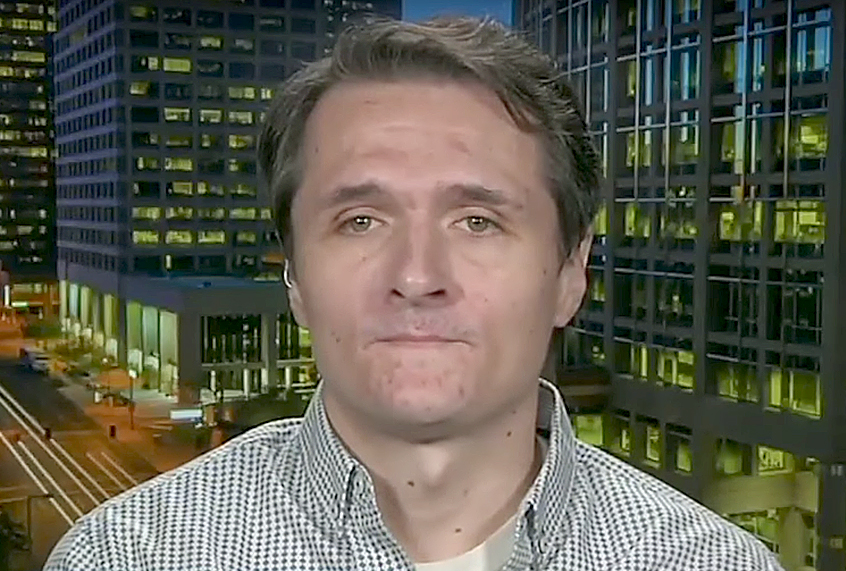
Paul Horner, a prolific writer known for creating widely circulated fabricated news stories, was found dead in his bed in Laveen, Arizona, on September 18, 2017. He was 38 years old. Local law enforcement officials, including the Maricopa County Sheriff’s Office, reported that there were no signs of foul play and that a drug overdose was suspected as the cause of death, pending the results of a toxicology report.
For several years, Horner operated a network of websites—most notably abcnews.com.co—that mimicked the appearance of legitimate news outlets to disseminate false reports. His work gained significant traction on social media platforms, often influencing public discourse during the 2016 United States presidential election. Horner’s death marks the end of a career defined by the intersection of digital misinformation, viral internet culture, and the financial incentives of the attention economy.
The Mechanics of Digital Misinformation
Horner’s strategy relied on the creation of deceptive content that prioritized emotional engagement over factual accuracy. By utilizing domain names that closely resembled established media organizations and mimicking their web design, he lowered the barrier for readers to mistake his fabrications for credible reporting. According to reports from CBS News, the content produced by his sites was frequently shared by high-profile figures and mainstream media outlets that failed to verify the claims before amplification.

Among his most widely shared fabrications were claims that anti-Donald Trump protesters were paid to attend rallies and that former President Barack Obama was a radical Muslim. These stories were not merely fringe curiosities; they were frequently cited by supporters and associates of the 2016 Trump campaign. Horner himself acknowledged the impact of his work in a 2016 interview with the Washington Post, where he stated that his fabricated articles contributed to the electoral outcome by exploiting a lack of fact-checking among certain segments of the electorate.
Financial Incentives and the Attention Economy
The proliferation of fake news during this period was driven in part by the profitability of viral content. Horner reported to the Washington Post that he earned approximately $10,000 per month through advertising revenue generated by his websites. This business model relied on the algorithmic prioritization of sensational headlines, which encouraged users to share content without verifying the source.
While Horner often framed his activities as a form of “satire” or a social experiment designed to expose the credulity of the American public, the financial data suggests a more pragmatic motivation. By capturing the attention of audiences already predisposed to believe specific narratives, he was able to monetize political polarization. This approach was not unique; rather, it functioned as an aggressive iteration of a long-standing tradition of partisan media, modernized for the age of social media algorithms.
The Broader Context of Media Distrust
Media historians and analysts have frequently noted that the phenomenon of fake news is not a modern invention but a persistent element of political communication. As noted by Salon in their reporting on Horner’s death, the proliferation of conspiracy-driven websites belongs to a historical lineage of conservative misinformation that predates the internet by centuries. Kurt Andersen, author of Fantasyland: How America Went Haywire, has argued that the current era of misinformation is the result of a 500-year trend toward the erosion of shared objective reality.
The success of Horner’s sites highlighted a growing disconnect between traditional journalistic standards and the consumption habits of the digital public. By the time of his death, the term “fake news” had become a polarized political label, used both to describe intentional fabrications like those produced by Horner and as a rhetorical tool to dismiss inconvenient factual reporting from mainstream organizations. Horner’s career serves as a case study in how quickly misinformation can travel when it aligns with pre-existing ideological biases.
What Happens Next
Following the discovery of his body, the Maricopa County Office of the Medical Examiner took jurisdiction over the case to conduct an autopsy and toxicology screening to determine the specific cause of death. As of the time of his passing, no further criminal investigation into his online activities was pending. The websites associated with Horner have faced varying levels of downtime and scrutiny, though the structural issues surrounding the distribution of misinformation on social media platforms remain a subject of ongoing debate among lawmakers and technology policy experts.
The death of Paul Horner serves as a final, somber chapter in the history of the 2016 election cycle’s influence on the American media landscape. His legacy remains a point of contention, characterized by some as a cautionary tale about the dangers of digital deception and by others as a symptom of a deeper, systemic crisis in how information is verified and valued in the 21st century.