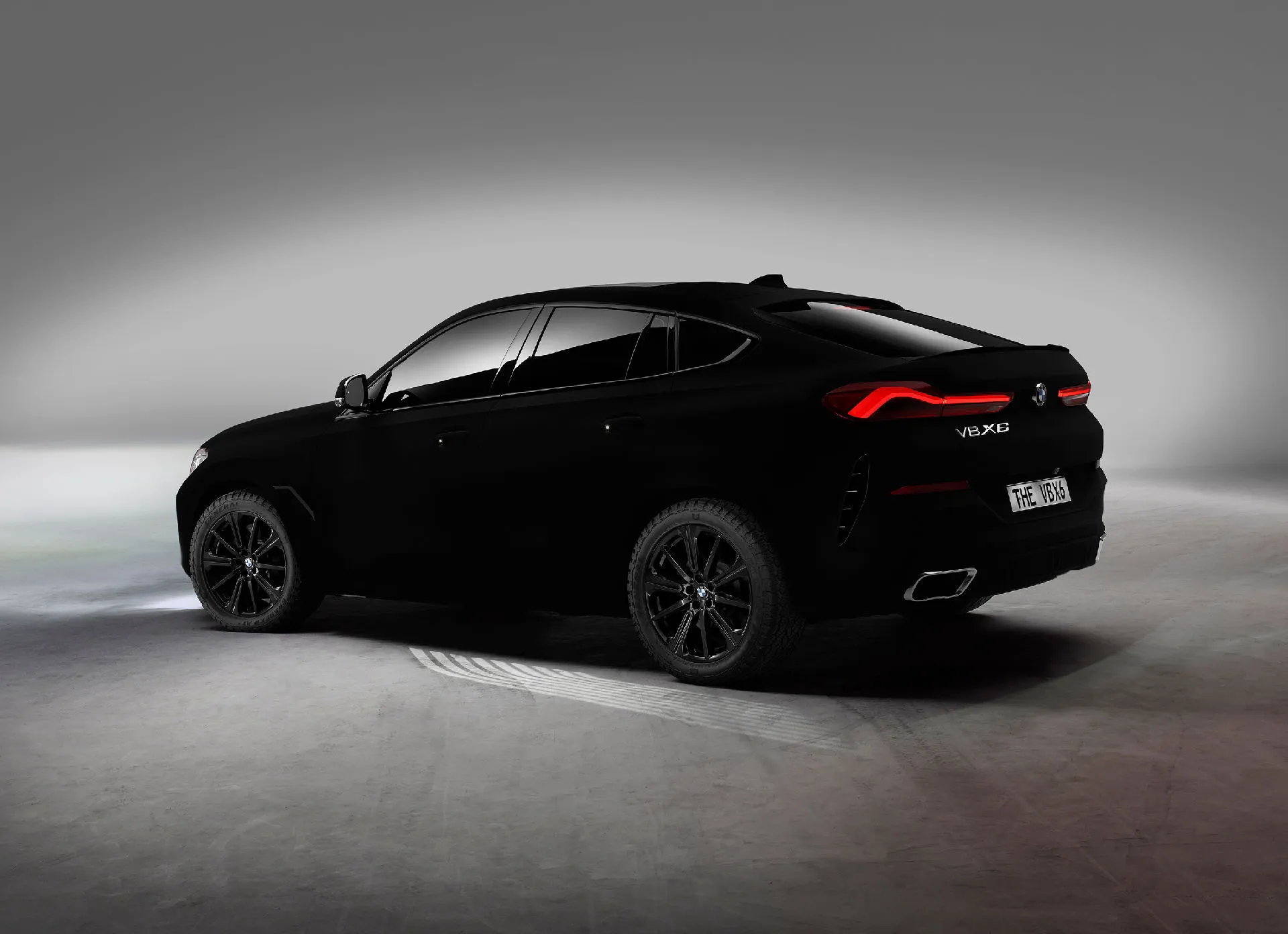
Researchers in China have developed a new generation of ultra-black material that offers enhanced durability and lower production costs compared to existing light-absorbing coatings, potentially opening the door for widespread adoption in the automotive industry. This advancement focuses on a synthetic structural design that traps light more efficiently than traditional carbon nanotube-based coatings, which have historically been limited by high manufacturing complexity and mechanical fragility.
The development of this “world’s darkest” material addresses the primary barrier to commercializing super-black surfaces: the trade-off between optical performance and physical resilience. According to research published in journals tracking material science, these new coatings utilize engineered nanostructures that achieve light absorption rates exceeding 99%, while maintaining the surface hardness required for exposure to external environments, such as vehicle exteriors or precision optical sensors.
Engineering the Next Generation of Light-Absorbing Surfaces
At the core of this innovation is a shift in how researchers approach light-trapping geometry. Traditional super-black materials, such as Vantablack, rely on vertically aligned carbon nanotube arrays (VACNTs). While effective at absorbing up to 99.96% of visible light, these structures are notoriously delicate; physical contact can permanently damage the alignment of the nanotubes, destroying their light-absorbing properties. The new Chinese-developed process utilizes a more robust chemical vapor deposition technique that creates a denser, more cohesive matrix.
By refining the growth parameters of these nanostructures, the research team has created a surface that is not only darker but significantly more resistant to abrasion and environmental wear. For industries like automotive design, where aesthetic finishes must withstand high-speed debris, weather, and cleaning, this durability is essential. The National Natural Science Foundation of China has supported various studies into high-performance optical materials, emphasizing the need for scalable manufacturing processes that do not require the extreme vacuum conditions previously necessary for high-end optical coatings.
Applications Beyond Aesthetics in the Automotive Sector
The interest from the automotive sector extends beyond the “cool factor” of a car that absorbs almost all light. Engineers are exploring the use of these materials to eliminate internal glare and improve the accuracy of advanced driver-assistance systems (ADAS). By applying ultra-black coatings to the interior housings of camera sensors and LiDAR units, manufacturers can minimize stray light reflections that might otherwise cause sensor noise or false positives in computer vision systems.

Furthermore, the reduction in production costs—achieved by optimizing the precursor gases and temperature profiles during synthesis—makes the material viable for mass-market vehicle components rather than just limited-edition luxury models. According to industry reports from the International Energy Agency regarding automotive supply chain innovations, the integration of specialized materials into vehicle manufacturing is accelerating as automakers seek to differentiate their technological capabilities.
Comparing Current Light-Absorbing Technologies
To understand the significance of this development, it is helpful to look at how different light-trapping methods compare in terms of practical application:
| Technology | Absorption Rate | Durability | Commercial Scalability |
|---|---|---|---|
| Traditional VACNTs | 99.9% + | Low (Fragile) | Low |
| New Chinese Nanostructure | 99.0% – 99.5% | High (Resilient) | High |
| Standard Matte Paints | 90% – 95% | High | High |
As noted in the table above, the trade-off remains the absolute peak of light absorption versus real-world utility. While the new material may fall slightly short of the record-breaking, lab-only percentages of the most fragile nanotubes, its ability to survive a car wash or road debris makes it a far more functional solution for the automotive market.
What Happens Next for Industrial Adoption
The next phase for this technology involves scaling the deposition process to accommodate larger automotive panels. Current laboratory setups are often limited by the size of the reaction chambers used for chemical vapor deposition. Researchers are now collaborating with industrial partners to pilot “roll-to-roll” manufacturing processes or large-scale spray-on applications that could mimic the performance of the lab-grown nanostructures.
Regulatory bodies, including the National Highway Traffic Safety Administration (NHTSA), will eventually need to evaluate the safety implications of such high-absorbency coatings on vehicles, particularly regarding visibility and heat absorption. Because these materials absorb almost all incident light, they also convert that energy into heat, meaning thermal management for vehicle bodies coated in these materials will be a primary focus of upcoming field tests.
Updates on the transition from laboratory prototypes to industrial pilot lines are expected to be presented at upcoming materials science conferences later this year. Readers interested in the intersection of nanotechnology and automotive engineering are encouraged to monitor technical journals for peer-reviewed performance data on these larger-scale applications. Please share your thoughts in the comments section below on whether you would consider a vehicle finished in a high-durability ultra-black coating.