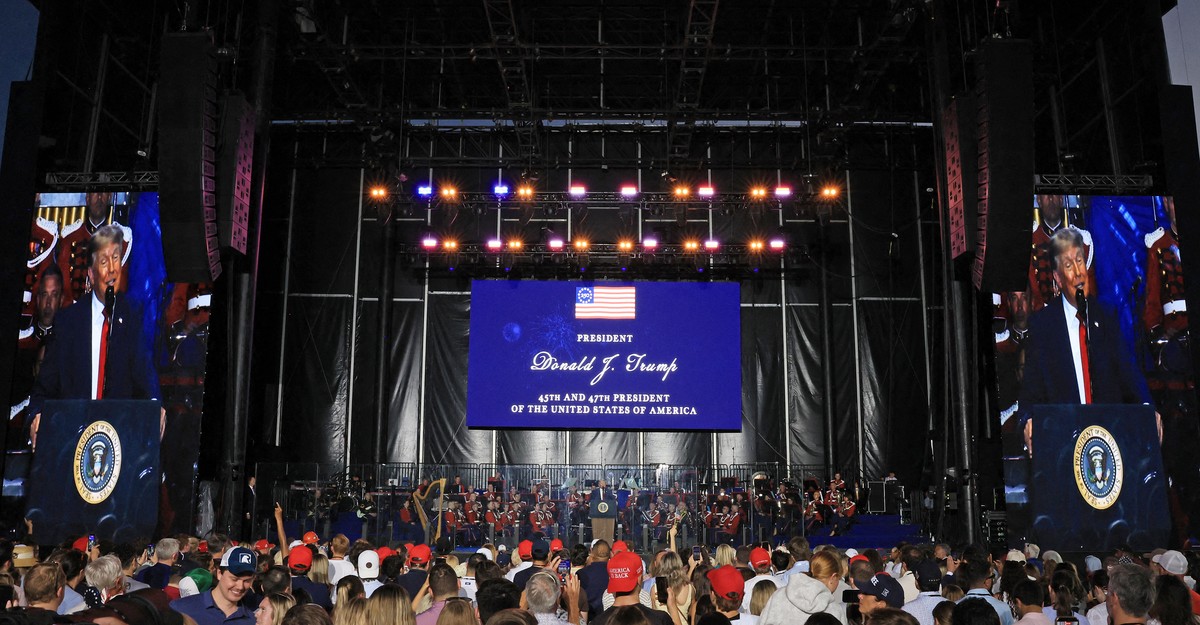
President Donald Trump’s appearance at the Great American State Fair in Washington, D.C., drew significant scrutiny as the event, intended to commemorate the 250th anniversary of the United States, shifted into a partisan rally. While the celebration was framed as a national milestone, the tone of the president’s remarks and the subsequent political commentary highlighted a growing debate over the nature of American patriotism and the role of the executive in civic commemorations.
The event, held in the nation’s capital, featured a speech by the president that centered on themes of economic nationalism, criticisms of political predecessors, and specific policy agendas. According to reports from the Associated Press, the programming faced logistical challenges as several entertainers withdrew from the scheduled lineup prior to the event’s commencement. The ceremony proceeded with musical performances from U.S. military units and a planned aerial demonstration, as noted by official event schedules.
Nationalism and the Presidential Rhetoric
During his address, President Trump utilized the platform to emphasize a “greatness” narrative, contrasting the current state of the nation with previous administrations. The president asserted that the United States had experienced a significant economic and geopolitical recovery under his tenure, frequently citing his administration’s focus on domestic manufacturing and trade protections. These remarks align with the broader “America First” policy framework, which prioritizes national sovereignty and bilateral agreements over traditional multilateral alliances, a stance documented in official White House policy briefings from the current term.
Political analysts have noted a distinct shift in how the president defines patriotism compared to more traditional, bipartisan approaches to national holidays. While historical presidential addresses on the Fourth of July typically emphasize unity and the endurance of democratic institutions, the president’s speech focused heavily on political grievances and electoral successes. The contrast in framing has prompted discussions among historians regarding the evolution of presidential rhetoric in the 21st century, particularly regarding the use of national platforms to address specific partisan issues such as education policy and cultural debates.
Logistics and Public Reception
The decision by various artists to cancel their appearances underscored a broader trend of political polarization affecting public events. While the White House maintained that the celebration remained a non-partisan tribute to American history, the inclusion of campaign-style rhetoric led to criticism from various advocacy groups. Data from the National Park Service, which manages the permit process for events on the National Mall, indicates that the planning for the 250th anniversary involved complex coordination between federal agencies and private stakeholders, reflecting the high stakes of such a historic milestone.
The inclusion of military assets, including a B-2 Spirit bomber, was a focal point of the event’s pageantry. Such displays have become a hallmark of recent Washington-based celebrations under this administration, drawing both praise from supporters who view them as essential displays of national strength and criticism from those who argue they militarize civic holidays. The Department of Defense confirmed the participation of these assets in a statement released earlier that day, clarifying that the flyovers were part of a broader “salute to the nation” program.
The Evolution of Presidential Commemorations
As the United States approaches the official 250th anniversary of the signing of the Declaration of Independence, the role of the president in shaping the national narrative remains a subject of intense public interest. Historical precedent, as seen in the Bicentennial celebrations of 1976, often leaned toward broad, inclusive messaging intended to bridge partisan divides. Current political discourse, however, suggests a move toward more individualized, leader-centric celebrations.
For those tracking the upcoming national semi-quincentennial, the official planning body, the U.S. Semiquincentennial Commission, continues to coordinate nationwide events. Public updates, including meeting minutes and planning documents for the 2026 celebrations, are available through the official government portal at America250.org. These documents outline the intended scope of the multi-year commemoration, which seeks to engage all 50 states in a narrative of American history that spans from the revolutionary era to the present day.
As this event concludes, the focus shifts to the next major federal address, which is typically scheduled for the State of the Union or subsequent national holidays. Interested citizens can monitor the official White House schedule for further public appearances and policy announcements. We encourage our readers to participate in the conversation below regarding the balance between partisan messaging and civic unity in national commemorations.
Related reading