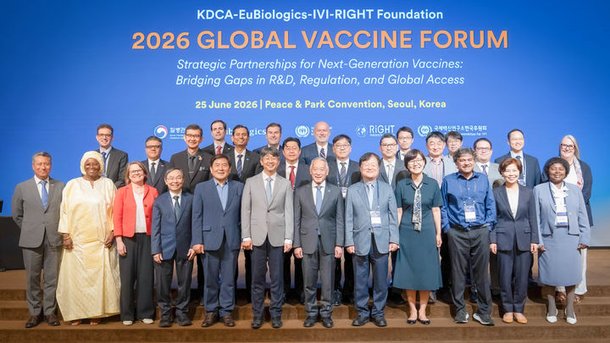
The South Korea Disease Control and Prevention Agency (KDCA) convened a global forum in Seoul this week to accelerate the development of next-generation vaccines, focusing on international cooperation to address emerging infectious disease threats. The event, held at the Peace & Park Convention in Yongsan, brought together representatives from the International Vaccine Institute (IVI) and the Research Investment for Global Health Technology (RIGHT) Foundation to discuss strategies for collaborative research and platform innovation.
As the international community navigates the post-pandemic landscape, the shift toward next-generation vaccine technologies—such as mRNA platforms and thermostable formulations—has become a priority for public health policy. According to the Korea Disease Control and Prevention Agency, this forum serves as a strategic platform to align domestic manufacturing capabilities with global health security goals, ensuring that equitable access remains central to new medical advancements.
Strengthening International Vaccine Research Frameworks
The partnership between the KDCA, the IVI, and the RIGHT Foundation underscores a broader commitment to multilateral cooperation in medical R&D. The International Vaccine Institute, headquartered in Seoul, has long served as a bridge between developed and developing nations in the pursuit of affordable immunization solutions. By integrating the funding expertise of the RIGHT Foundation with the technical oversight of government health authorities, stakeholders aim to streamline the transition from laboratory discovery to large-scale clinical application.
This collaborative approach addresses a critical gap in global health: the “valley of death” between initial vaccine research and commercial production. During the forum, experts highlighted that the ability to rapidly adapt to viral mutations depends on the decentralization of manufacturing hubs and the sharing of proprietary technology. The KDCA noted that these discussions are essential for maintaining a resilient supply chain that can withstand future pandemics without relying solely on a small number of international manufacturers.
Why Next-Generation Platforms Matter
The technical focus of the forum centers on “next-generation vaccines,” a term encompassing technologies that go beyond traditional inactivated or attenuated virus methods. These include mRNA, viral vectors, and protein subunit vaccines, which allow for faster updates in response to genetic shifts in pathogens. For public health officials like those at the World Health Organization, these platforms are vital for rapid response, yet they require significant infrastructure and specialized expertise to implement effectively.
The dialogue in Seoul also touched upon the practical challenges of vaccine distribution, specifically cold-chain logistics. By investing in research that produces more stable vaccine formulations, the participating organizations hope to reduce the reliance on ultra-cold storage, which has historically hindered immunization efforts in low-resource settings. This goal aligns with the broader mandate of the RIGHT Foundation to leverage South Korean biotechnology to improve global health outcomes.
Future Steps in Global Health Security
Following the forum, the KDCA intends to formalize the research pathways identified during the sessions. The agency has emphasized that these international partnerships are not merely academic but are intended to create tangible, policy-driven results that can be integrated into the national health strategy. Future updates regarding specific research grants or collaborative clinical trials are expected to be published through the agency’s official communication channels.
For those interested in the ongoing progress of these initiatives, the KDCA official portal provides documentation on current research projects and public health advisories. As these next-generation vaccine initiatives move into the development phase, the integration of global regulatory standards will be the next major checkpoint for the involved partners. We invite our readers to share their thoughts on the importance of international vaccine cooperation in the comments section below.
Keep reading