
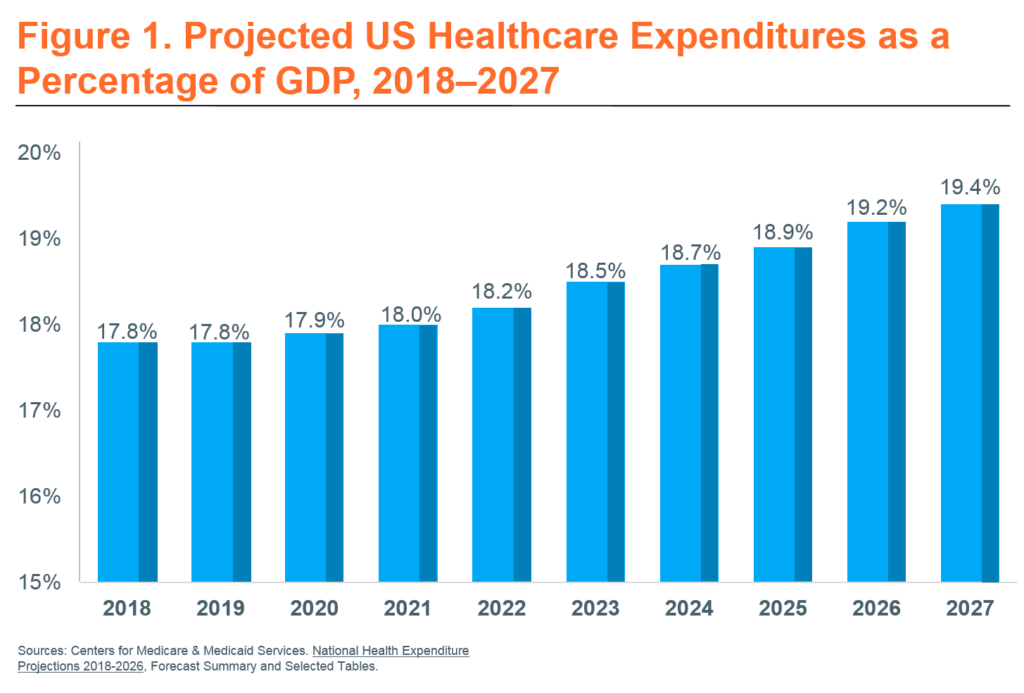
National healthcare spending in the U.S. is projected to reach nearly $9 trillion by 2034, according to the latest long-term projections from the Centers for Medicare & Medicaid Services (CMS). This anticipated growth would see healthcare expenditures rise to account for 20.6% of the national gross domestic product (GDP), a significant increase from the $5.3 trillion spent in 2024, which currently represents 18% of the economy. These figures, published in the journal Health Affairs on June 24, 2024, reflect a decade of expected shifts in utilization, medical technology, and legislative policy.
As a physician, I view these projections as a critical signal for healthcare policy and economic planning. The data suggests that the trajectory of medical costs is not merely a result of rising prices, but a reflection of an aging population and the evolving landscape of federal coverage mandates. Understanding the scale of this nearly $9 trillion forecast requires looking closely at how Medicaid, the Affordable Care Act (ACA), and demographic shifts interact to shape the American medical economy.
Drivers of Healthcare Spending Growth
The CMS analysis identifies several core drivers that are expected to push total healthcare spending higher over the next decade. A primary factor is the continued elevation of healthcare utilization as the “baby boomer” generation moves further into their retirement years. According to the Office of the Actuary at CMS, the aging population is a consistent engine for increased demand in both hospital services and long-term care, which naturally elevates the volume of medical transactions across the system.

Legislative changes also play a pivotal role in these estimates. The report highlights the impact of provisions within the Affordable Care Act, particularly the expansion of marketplace coverage and the ongoing influence of the Medicaid program. As federal and state policies evolve to maintain or expand eligibility, the baseline for public healthcare spending shifts upward. The projections published in Health Affairs note that these policy decisions essentially codify a higher level of participation in the healthcare market, which in turn impacts the total national health expenditure.
Economic Impact and GDP Share
The shift from 18% of GDP in 2024 to 20.6% by 2034 is a metric that economists monitor closely. This percentage represents the “healthcare footprint” on the broader U.S. economy. When healthcare costs grow faster than the general economy, it forces a reallocation of resources that can affect wages, business growth, and government budget priorities.

The CMS Office of the Actuary emphasizes that these estimates are based on current law. This means that if future Congresses enact significant changes to how Medicare or Medicaid is administered, these numbers would necessarily be adjusted. However, under the current legislative framework, the trend line points toward a steady increase in the share of the national budget dedicated to health.
What This Means for Patients and Providers
For the average patient, these projections underscore the importance of understanding the sustainability of their coverage. As spending rises, the conversation in Washington often turns to “value-based care”—a model aimed at shifting the focus from the volume of services provided to the quality of patient outcomes. The goal of such policies is to mitigate the growth of the $9 trillion figure by reducing waste and improving preventive health.
Providers, meanwhile, are operating in an environment where administrative complexity is likely to remain high. The Centers for Medicare & Medicaid Services continues to push for digital integration and transparency, which are intended to provide better data to manage these costs. Whether these structural changes can successfully offset the upward pressure of an aging population and rising medical costs remains the central question for the next decade of healthcare management.
Future Updates and Oversight
These projections are not static; they are updated annually as new data on medical inflation, employment trends, and legislative activity become available. The Health Affairs publication serves as a primary resource for policymakers to gauge the long-term health of the U.S. fiscal state. The next cycle of projections is expected to be released by the CMS Office of the Actuary in 2025.
As we monitor these developments, it is essential for the public to remain engaged with how health policy is crafted at the federal level. The intersection of economic reality and patient care requires ongoing analysis and robust public discourse. I encourage our readers to keep a close eye on the upcoming federal budget hearings and official CMS updates, which will provide the next set of verified data points in this ongoing narrative. Please share your thoughts or questions in the comments section below.
Keep reading
- Embryo Culture Media in IVF: Which Solution Gives the Best Live Birth Rates?
- Avoid These 3 Common Risk Factors to Gain 12 Dementia-Free Years, Study Finds
- Spotify AI Persona Badge: AI Artists Lose Algorithmic Reach (archynewsy.com)
- The Future of Health Insurance Coverage and Healthcare Standards (world-today-news.com)