
The Dutch labor market for independent contractors, known as zzp’ers, is undergoing a significant transition as the government moves to replace the long-standing Wet DBA with new, more stringent enforcement mechanisms. While the goal remains the reduction of disguised employment, the current legislative environment has created uncertainty for both freelancers and their clients, prompting calls for a clearer “Zelfstandigenwet” or Independent Contractors Act to define the boundaries of entrepreneurship.
According to the Dutch government, the ultimate objective of these policy shifts is to ensure that those working as freelancers are truly independent, while protecting those who are in practice, if not in name, employees. The current legal framework, the Wet deregulering beoordeling arbeidsrelaties (Wet DBA), has faced persistent criticism since its implementation in 2016 for failing to provide the legal certainty necessary for businesses to hire contractors without the risk of retroactive tax assessments or social security claims.
The Evolution of Enforcement: From Wet DBA to New Legislation
The Wet DBA was intended to replace the previous VAR (Verklaring Arbeidsrelatie) system, but it quickly became a source of anxiety for the self-employed. Because the law places the burden of proof on the parties to demonstrate that no employment relationship exists, many companies have become hesitant to engage freelancers, fearing the financial consequences of misclassification. The Dutch Tax and Customs Administration (Belastingdienst) has signaled that it will end its “handhavingsmoratorium,” or enforcement moratorium, starting January 1, 2025, meaning that active inspections regarding disguised employment will ramp up significantly.
In response to these pressures, the Dutch government has pursued the “Wet verduidelijking beoordeling arbeidsrelaties en rechtsvermoeden,” which introduces a legal presumption of an employment contract for those earning below a specific hourly threshold. As noted by the Ministry of Social Affairs and Employment, this threshold is currently set at €33 per hour. If a freelancer works for this rate or less, it is legally presumed that they are an employee, effectively shifting the burden of proof back onto the client to prove otherwise.
Defining Entrepreneurship: The Debate Over a New Law
Industry associations, including ZZP Nederland, have expressed support for a more fundamental overhaul, advocating for a “Zelfstandigenwet” that prioritizes a “positive” definition of entrepreneurship. The core argument from these groups is that current policy focuses too heavily on “not an employee, unless,” which creates a defensive posture for freelancers. Instead, they propose a framework that centers on the characteristics of business ownership—such as investment risk, multiple clients, and market presence—as the primary indicators of an independent contractor.
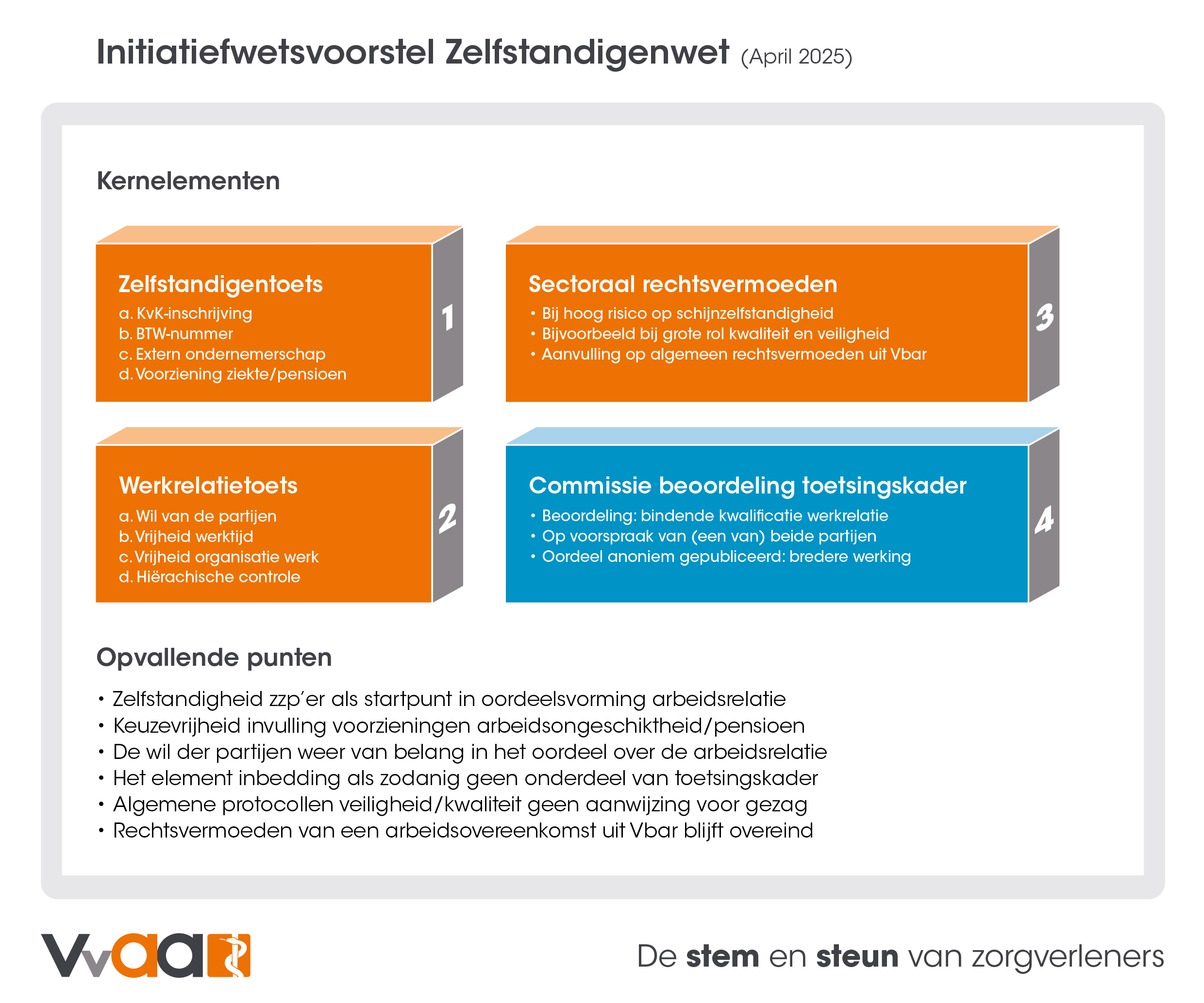
The Vereniging Zelfstandigen Nederland (VZN) has been a vocal proponent of this approach, arguing that without legislative clarity, the self-employed sector faces a “chilling effect” where businesses simply stop hiring freelancers to mitigate risk. This tension between the need for flexible labor and the requirement to prevent the exploitation of workers remains the primary driver of the ongoing legislative debates in The Hague.
What This Means for Daily Operations
For the individual freelancer, the changing landscape requires a proactive approach to contracts and client relationships. The shift toward the enforcement of the legal presumption of employment means that documentation is more critical than ever. According to guidance from the Kamer van Koophandel (Chamber of Commerce), contractors should ensure their working methods align with their status as independent entities, including maintaining their own equipment, setting their own hours, and working for a diverse range of clients rather than a single primary source of income.
Businesses, meanwhile, are encouraged to audit their current contractor rosters. Those who rely heavily on long-term freelancers who function essentially as staff members are at the highest risk once the enforcement moratorium concludes. The government has published a web module designed to help parties assess the nature of their working relationship, though its results are not legally binding in a court of law.
Looking Ahead: The Path to January 2025
The next major checkpoint for the Dutch labor market is January 1, 2025, the date the tax authorities have committed to fully resuming enforcement actions. Between now and then, the Ministry of Social Affairs and Employment is expected to provide further clarification on how the legal presumption of an employment contract will be applied in practice.

While the legislative process continues, freelancers and clients alike are advised to monitor official updates from the Dutch central government regarding the final implementation details of the new regulations. As the regulatory climate tightens, maintaining clear, written agreements that reflect actual working conditions remains the most effective defense against future administrative disputes.
Have you adjusted your contracting practices in light of these upcoming changes? Share your experiences or questions in the comments below as we continue to track this evolving story.
Worth a look