Recent research indicates that the brain treats fructose and glucose very differently. A new study found that while both sugars are chemically similar, glucose strongly reduced activity in hunger-promoting brain cells, while fructose had a much weaker effect. The findings suggest that the type of sugar—not just the calories—can influence appetite and food preferences.
I frequently see patients struggle with dietary choices that seem nutritionally identical on paper. Understanding how specific sugars interact with the brain could provide a clearer picture of how dietary intake influences health. This research, while primarily conducted in animal models, highlights that the type of sugar matters when considering appetite regulation.
How the Brain Distinguishes Between Sugar Types
The core of this investigation lies in how the brain senses energy intake. Researchers utilized imaging to observe how specific neurons in the mouse brain responded to the introduction of different sugars. The study demonstrated that glucose strongly reduced activity in hunger-promoting brain cells. Conversely, fructose had a much weaker effect, meaning the brain did not receive the same signal despite the intake of calories.
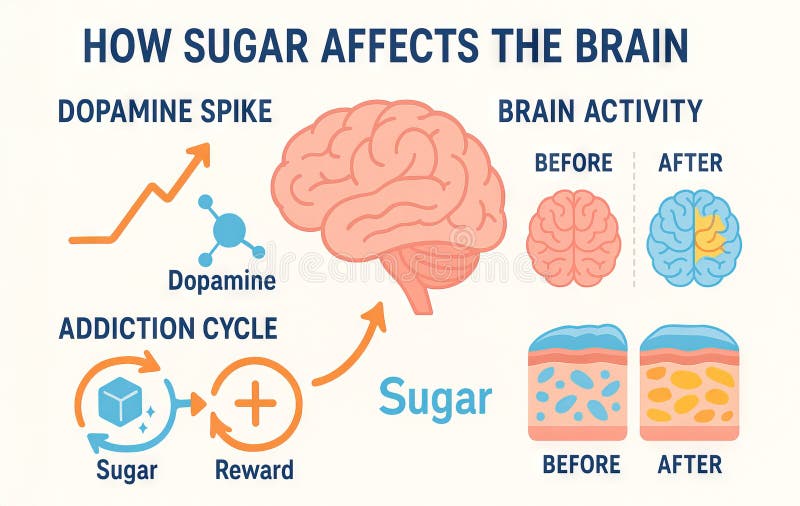
This neurological discrepancy suggests that the brain’s hunger-control centers are attuned to specific molecular structures. When glucose is consumed, the brain’s hunger-promoting activity is reduced. Fructose does not trigger the same response. Consequently, the brain may remain in a state of “hunger,” even after fructose consumption.
The study provides a look at these neural circuits. The team identified that the brain’s ability to “taste” sugar internally is distinct from the sweet sensation experienced on the tongue. By isolating these pathways, the researchers confirmed that the brain monitors nutrient content, creating a system that responds differently to glucose and fructose.
The Impact of High-Fructose Corn Syrup and Dietary Preferences
Beyond basic physiological responses, the research examined how these differences influence food preferences. In experiments where subjects were provided a choice between various sweetener solutions, they consistently demonstrated a preference for high-fructose corn syrup, which triggered a stronger response in the animals. This behavior suggests that the brain’s reward system may be more strongly stimulated by high-fructose corn syrup, potentially overriding natural satiety cues.
This preference has implications for food labeling. Currently, many nutrition labels group all sugars under a single “total sugars” line item, which can mask the specific composition of sweeteners used in processed foods.
The divergence in how these sugars are processed explains why ultra-processed foods, which often contain high levels of added fructose, are associated with overconsumption. If the brain is not receiving the correct signal that energy stores are sufficient, individuals may find it more difficult to regulate their caloric intake.
What This Means for Metabolic Health
The new neurological findings add a layer of complexity by suggesting that the “hunger-driving” effect of fructose could contribute to weight gain by making it harder to reach a state of satiety. When we consume foods high in fructose, we are essentially bypassing the brain’s “stop” signal, which can lead to a cycle of increased food intake. This is particularly relevant in the context of beverages and snacks that utilize high-fructose corn syrup as a primary ingredient.
Understanding these mechanisms is a step forward in medical research, but it is important to note that these studies are currently based on animal models. Translating these findings to human behavior requires further clinical trials to account for the complexities of human dietary habits and long-term metabolic adaptation. As we continue to investigate these neural pathways, it is clear that the nutritional quality of our diet—not just the quantity—is fundamental to how our brains manage our appetite.
Future Directions in Nutrition Research
The next phase of this research will likely involve human imaging studies to determine if the same neural pathways are activated in the human hypothalamus. Scientists are currently working to map these circuits more precisely, which could eventually lead to new strategies for managing obesity and metabolic syndrome. By targeting the specific neurons that respond to glucose, researchers hope to develop better tools for individuals struggling with persistent hunger or cravings.
There are no immediate regulatory changes expected based on these findings, as the research is in its preliminary stages. However, the academic community continues to prioritize studies that examine the long-term impact of specific sugar profiles on brain chemistry. For the general public, the best approach remains a focus on whole, unprocessed foods, which naturally contain a balance of nutrients that the brain is equipped to recognize and process effectively.
If you have questions about your own dietary health, it is essential to consult with a registered dietitian or a physician who can provide personalized guidance based on your medical history. We will continue to track developments in this field as more data becomes available from clinical studies.
What are your thoughts on how sugar labeling influences your shopping habits? Join the conversation in the comments section below and share this article with those interested in the latest developments in nutritional science.
Worth a look
- Hamburg Police Crack Down on Water Traffic: Overcrowded Ferry and Drunk Canoeist Caught on Alster and Elbe
- Mammal Ancestors Gave Birth to Live Young 236 Million Years Ago
- Dawn of War 4 Release Date Delayed: What to Expect from the Refining Process – Warhammer 40k Strategy Game Update” “Dawn of War 4 Launch Delayed: How the Game’s Delay Will Affect Fans – Warhammer 40k Strategy Game News” “Warhammer 40k Strategy Game Dawn of War 4 Delayed to Refine Experience Ahead of Release – Gaming News Update” “Dawn of War 4 Delayed: What the Delay Means for the Upcoming Warhammer 40k Game – Strategy Game Release News (archyworldys.com)