
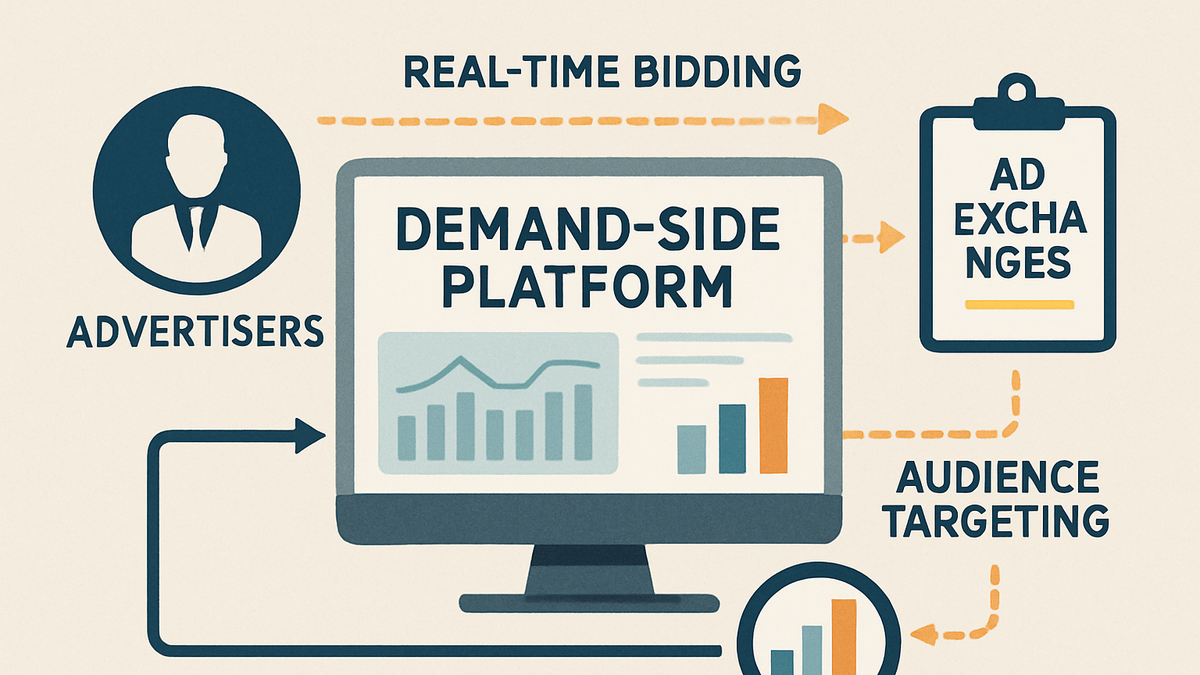
A Demand Side Platform (DSP) functions as a centralized software tool that allows advertisers to purchase digital advertising space through automated, real-time auctions. By connecting to various ad exchanges, these platforms enable brands to manage multiple campaigns, set precise audience targeting parameters, and optimize bidding strategies from a single interface. This technology has largely replaced the manual negotiation processes that previously defined media buying, shifting the industry toward programmatic advertising.
The core mechanism of a DSP involves the use of high-speed algorithms to execute ad purchases in milliseconds. When a user visits a website or opens a mobile application, the publisher sends a request to an ad exchange. The DSP evaluates this opportunity in real time, bidding on behalf of the advertiser if the placement aligns with their defined goals, such as reaching a specific demographic or interest group. According to the Interactive Advertising Bureau (IAB), programmatic advertising utilizes automated systems to streamline the transaction of digital inventory, significantly increasing efficiency compared to traditional insertion orders.
How Programmatic Bidding Simplifies Media Buying
Before the widespread adoption of programmatic platforms, media buyers often spent hours manually negotiating deals with individual publishers. A DSP simplifies this by automating the “engine” of the digital ad ecosystem. Instead of human intervention for every placement, computers process millions of bid requests per second. This automation allows advertisers to scale their reach across thousands of websites, apps, and video platforms simultaneously without the overhead of individual contract management.
Real-time optimization is a significant benefit of this shift. Because the system continuously monitors performance data, it can automatically shift budget allocations toward the highest-performing channels. For instance, if video ads on a specific streaming service are generating more conversions than banner ads on a news site, the DSP can reallocate funds to the video channel instantly. This dynamic adjustment minimizes wasted spend and ensures that advertising budgets are consistently focused on the most effective touchpoints.
Essential Features of Modern Demand Side Platforms
Selecting the right platform requires an understanding of the specific inventory and technical capabilities offered. An effective DSP should provide access to a diverse array of channels, including the Open Web, Connected TV (CTV), and Digital Out-of-Home (DOOH) screens. By centralizing these disparate channels, a business can maintain a consistent brand message across various devices, which is critical for building trust with consumers throughout the customer journey.
AI-powered targeting is another standard feature in contemporary platforms. Unlike legacy systems that relied primarily on basic demographic segments, modern AI analyzes vast datasets to identify behavioral patterns and purchase intent. By evaluating online activity and search signals, these systems can identify users who are actively interested in a product, rather than simply matching a broad demographic profile. This shift from demographic-based targeting to intent-based targeting is widely recognized in industry reports as a method to improve return on ad spend (ROAS).
The Importance of Unified Analytics
Managing campaigns across multiple, siloed platforms often leads to data fragmentation, where an advertiser cannot easily see how different channels interact. This creates a “headache” for marketing teams, as they may inadvertently show the same ad to a single user multiple times across different devices, leading to ad fatigue and wasted budget. A unified analytics dashboard serves as a central hub where all performance metrics—such as Cost Per Acquisition (CPA), viewability, and completion rates—can be monitored in real time.
Consolidating data into a single view allows for faster optimization. When a brand can compare the performance of a social media push alongside a CTV campaign in one interface, they can identify overlaps and gaps in their strategy. This transparency is crucial for ensuring that every dollar spent contributes to business value rather than vanity metrics, such as raw impression counts that do not result in sales or registrations.
Evaluating Platform Needs: Self-Service vs. Managed Support
When choosing a DSP, businesses must assess their internal technical bandwidth. A self-service DSP provides maximum transparency and granular control, making it ideal for teams with existing digital advertising expertise. Conversely, managed support options are often preferred by organizations that are new to programmatic advertising or lack the staff to manage complex bidding strategies. In a managed service model, a dedicated team handles the setup, optimization, and daily monitoring of campaigns.
Budgetary requirements also play a significant role in platform selection. While some enterprise-level DSPs require substantial minimum monthly spends, others are designed to be more accessible for smaller businesses. Before committing to a platform, advertisers should define their primary objectives—whether that is brand awareness, lead generation, or direct sales—and ensure the platform’s cost structure aligns with their overall marketing budget and expected ROAS.
Frequently Asked Questions
What is the primary function of a Demand Side Platform?
A DSP acts as a control center for automated ad buying. It links advertisers to ad exchanges, allowing them to manage bids, define target audiences, and monitor performance across multiple digital channels from a single dashboard.
Can small businesses utilize programmatic advertising?
Yes. While programmatic technology was once exclusive to large corporations with significant budgets, many modern platforms now offer solutions with lower minimum spend requirements, making enterprise-level ad tech accessible to smaller agencies and businesses.
How does AI improve media buying efficiency?
AI analyzes large datasets to identify trends and user intent. It automates repetitive tasks—such as bid adjustments and budget redistribution—allowing media buyers to focus on high-level strategy rather than manual spreadsheet management.
Why is a unified analytics dashboard important?
A unified dashboard eliminates data silos. By seeing performance metrics from all channels in one place, advertisers can prevent overlapping campaigns, track true conversion rates, and ensure their messaging remains consistent across all customer touchpoints.
What is the difference between self-service and managed support?
Self-service provides the advertiser with full control and transparency, requiring internal expertise. Managed support involves a team of specialists who manage the campaign setup and optimization on behalf of the advertiser.
Worth a look