
Google has announced a major restructuring of its service fees for developers using the Google Play Store in the United States, United Kingdom, and the European Economic Area (EEA). Starting June 30, 2026, developers will be permitted to route digital transactions through alternative payment gateways or direct users to external web domains, effectively decoupling billing services from the core app distribution platform. This shift represents a significant move toward regulatory compliance and provides developers with greater autonomy over their revenue streams.
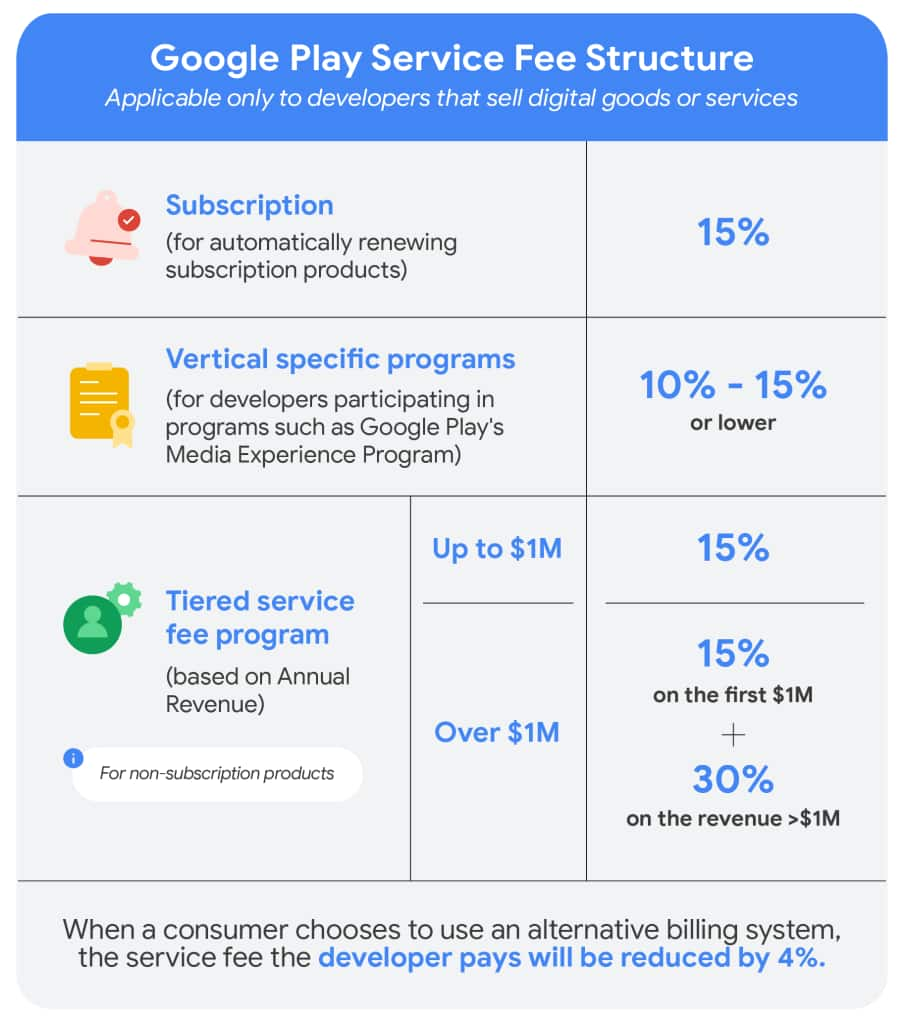
The policy update aims to address long-standing scrutiny from global regulators regarding the mandatory use of Google’s proprietary billing system. By allowing developers to integrate their own payment processors, Google is modifying the fee structure to distinguish between the costs associated with app distribution and those related to payment processing. Developers opting to use alternative billing methods will see a reduction in the service fee charged by Google, as the company will no longer be providing the payment transaction service for those specific purchases.
How the New Fee Structure Works
Under the revised guidelines, Google will split its service fees into two distinct components: a distribution fee and a billing fee. According to the official Android Developers Blog, this separation is designed to provide transparency for developers who choose to implement their own payment solutions. When a developer utilizes an alternative billing system, they will be exempt from the portion of the fee typically allocated to payment processing services.
This change is particularly relevant for developers operating within the European Economic Area, where the Digital Markets Act (DMA) has imposed strict requirements on gatekeepers regarding interoperability and payment choice. The European Commission has been monitoring compliance among major tech platforms to ensure that third-party developers are not unfairly restricted by platform-imposed billing mandates. For developers, this means the ability to retain more revenue per transaction, provided they manage the complexities of security, fraud prevention, and tax compliance associated with external payment gateways.
Implementing Custom Choice Screens
A key feature of the upcoming policy change is the introduction of custom choice screens. Developers will be allowed to build their own user interface elements that present payment options to consumers, provided these screens conform to platform user experience guidelines. The objective is to ensure that users are clearly informed about the payment method they are selecting while maintaining a consistent and secure experience on the Android platform.
These choice screens must meet specific design requirements to ensure they are not deceptive or confusing to the end user. Google has indicated that it will provide updated developer documentation to help teams integrate these screens without violating safety or accessibility standards. By placing the choice directly in the hands of the consumer, the policy aims to balance developer flexibility with the high security standards expected by Android users globally.
Regulatory Pressure and Global Impact
The decision to split billing fees follows years of legal and regulatory challenges in multiple jurisdictions. In the United States, the legal battle involving Epic Games and Google resulted in a court-ordered injunction requiring the company to open its ecosystem to alternative billing methods. As noted in the In re: Google Play Store Antitrust Litigation, the court mandated that Google allow developers to offer alternative in-app payment options for a period of time. This move by Google is seen as a strategic alignment with these legal developments.
In the UK and the EEA, the regulatory environment is similarly focused on preventing anti-competitive behavior. The Competition and Markets Authority (CMA) in the UK has been active in investigating app store practices, often aligning with the broader European approach to digital market fairness. By implementing these changes across all three regions simultaneously, Google is establishing a standardized framework that allows it to remain compliant with divergent but overlapping regulatory requirements.
Looking Ahead to the June 2026 Deadline
The June 30, 2026, deadline serves as the definitive date for these changes to take full effect across the specified regions. Developers are encouraged to review the updated Google Play Developer Policy Center for technical requirements and compliance timelines as they approach the implementation phase. During the interim, Google is expected to release further technical specifications and guidance on how to report transactions that utilize alternative billing systems.
For many developers, the next 18 months will involve significant engineering work to integrate third-party payment providers and design compliant choice screens. As the industry prepares for this transition, stakeholders will be watching to see how this shift impacts total revenue, user retention, and the overall competitive landscape of the mobile app economy. We will continue to track updates from Google and regulatory bodies as more information becomes available. Readers are invited to share their thoughts or experiences regarding these changes in the comments section below.
Keep reading