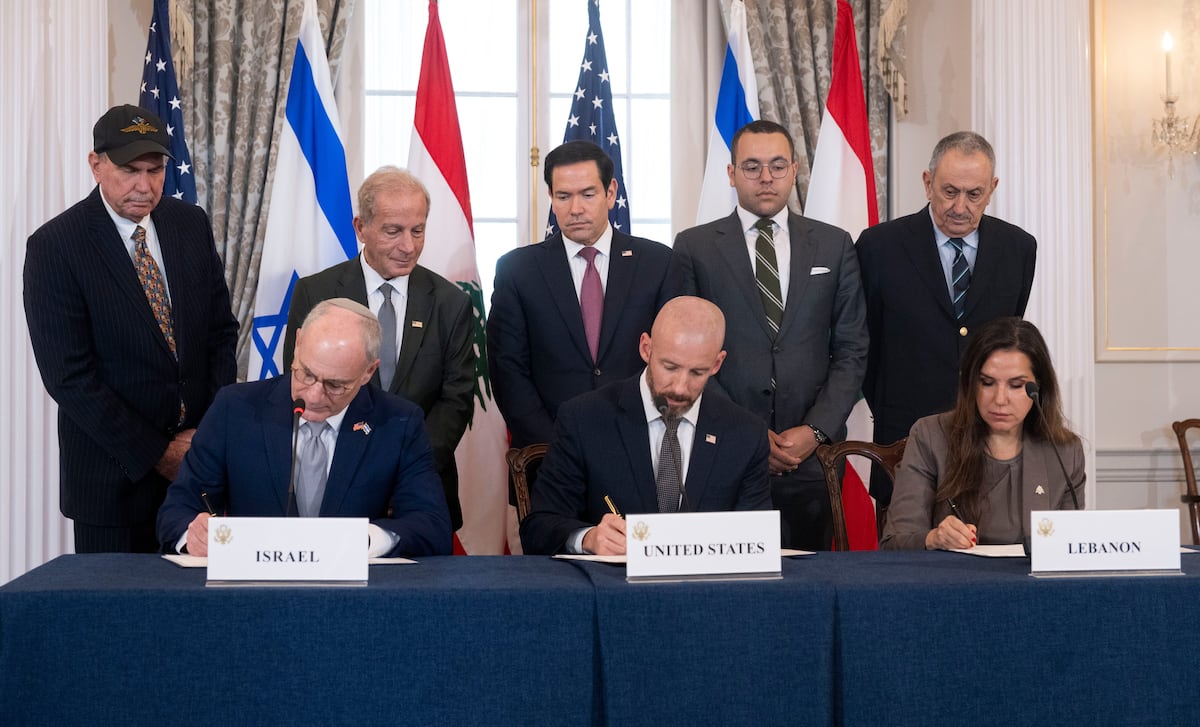
The framework agreement, reached following four days of negotiations in the U.S. capital, establishes a pathway for the withdrawal of Israel from southern Lebanon.
The deal was mediated by the United States and France. The agreement aims to allow thousands of displaced civilians on both sides of the border to return to their homes.
The Terms of the Ceasefire Framework
Under the terms of the agreement, Israel has committed to a phased withdrawal of its troops from southern Lebanon. During this timeframe, the Lebanese military will deploy to the south, supported by an international monitoring committee led by the United States. This mechanism is designed to ensure that Hezbollah does not re-establish a military presence in the area south of the Litani River.
The agreement also preserves Israel’s right to take military action if it detects a credible threat from Hezbollah, a provision that remains a point of contention and a critical component of the security arrangement. The Lebanese government has agreed to enforce the disarmament of non-state groups in the southern sector.
Geopolitical Implications for the Region
The cessation of fighting represents a diplomatic breakthrough in the Israel-Lebanon theater. For the Lebanese government, the agreement is seen as a necessary step toward restoring state sovereignty and addressing the country’s severe economic crisis, which has been exacerbated by the conflict. The peacekeeping mission will continue to coordinate closely with the Lebanese Armed Forces to monitor the implementation of the ceasefire and facilitate the stabilization of the border region.
For Israel, the primary objective remains the security of its northern residents. The government has characterized the agreement as a strategic necessity to neutralize immediate threats, though domestic political opposition remains vocal regarding the long-term effectiveness of the monitoring committee. While many residents of northern communities have expressed relief, there is continued skepticism regarding whether the diplomatic framework will prevent future escalations.
What Happens Next
The immediate focus for both nations shifts to the transition period. During this time, the U.S.-led monitoring committee—which includes representatives from several regional and international stakeholders—will oversee the movement of forces and the reporting of any violations. The success of the agreement hinges on the ability of the Lebanese military to assert control in the south without precipitating internal friction with Hezbollah’s political base.
The next major checkpoint for the parties involved will be the assessment of the withdrawal timeline, where the monitoring committee is expected to release a status report on the redeployment of the Lebanese Armed Forces. Observers note that the stability of this arrangement will likely remain fragile until the full withdrawal is completed and the international monitoring mechanism is fully operational. Readers are encouraged to monitor official updates from the U.S. State Department and the United Nations for further developments regarding the implementation of the peace framework.
We welcome your perspectives on this developing situation. Please share your thoughts or questions in the comments section below to contribute to our ongoing coverage of global security affairs.