
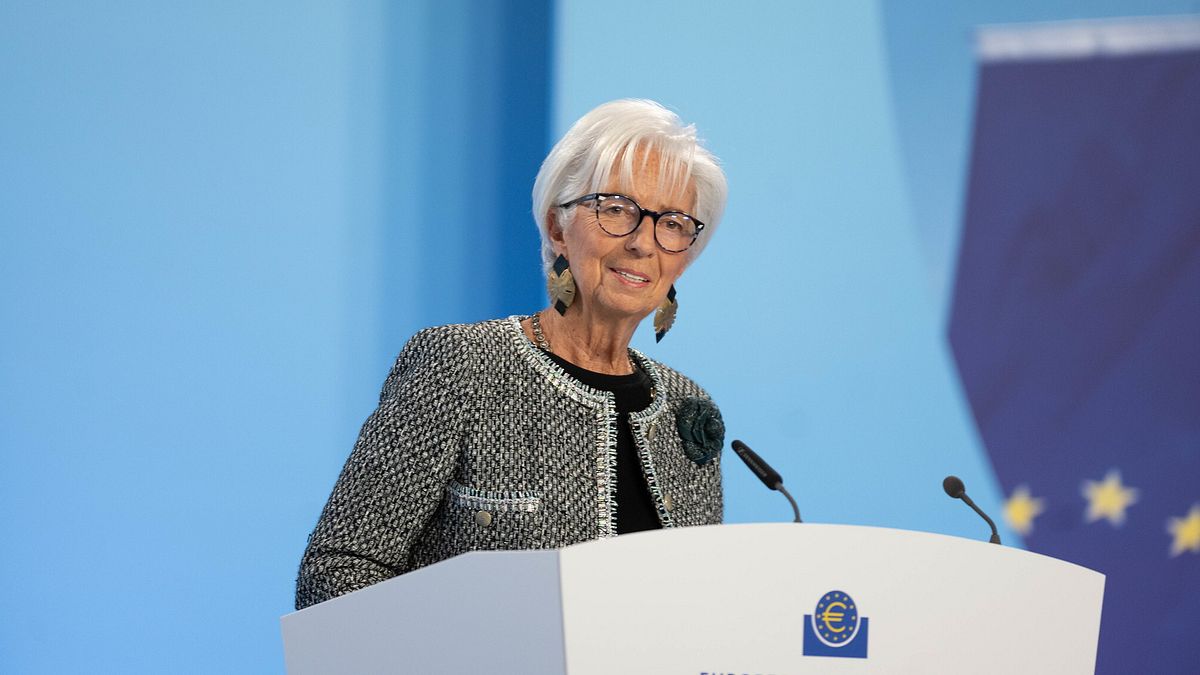
European Central Bank (ECB) President Christine Lagarde has signaled that the eurozone’s improved ability to withstand economic shocks leaves room for further action on interest rates, including potential hikes, as inflation remains a key concern. Speaking in a recent address, Lagarde emphasized that while the ECB has ended its era of extraordinary measures, its primary mandate—price stability—remains the guiding principle for future policy decisions.
According to Lagarde, Europe’s economic resilience today is stronger than in past crises, allowing the ECB to respond more decisively to inflationary pressures without triggering widespread instability. The comments come as markets and economists weigh whether the ECB will continue tightening policy amid mixed signals on growth and price pressures.
Lagarde’s remarks reflect a shift in tone from the ECB’s earlier focus on emergency pandemic-era support programs, now that core inflation in the eurozone remains above the bank’s 2% target. While she stopped short of committing to specific rate moves, her language suggested a willingness to act if data warrants further tightening.
Why Europe’s Resilience Matters for ECB Policy
The ECB’s decision to phase out emergency bond purchases earlier this year marked a turning point in its post-pandemic strategy. With inflation persisting—at elevated levels in May 2024, according to Eurostat—Lagarde’s emphasis on data dependency underscores the bank’s commitment to avoiding both premature loosening and over-tightening.

Economic resilience in Europe is not uniform. While core inflation remains elevated, peripheral economies like Italy and Spain have shown stronger-than-expected growth, reducing fears of a hard landing. However, labor markets in some regions still face tightness, and wage growth could pose further upside risks to inflation, according to International Monetary Fund (IMF) projections.
Lagarde’s comments align with recent ECB staff forecasts, which project inflation to remain above target through 2025. The bank’s Governing Council is scheduled to meet again on June 6, 2024, where further guidance on rate adjustments may emerge. Investors are closely watching for signals on whether the ECB will pause, hike, or cut rates next.
What Lagarde’s Shift Means for Markets
Lagarde’s warning against pre-committing to rate cuts or hikes—“data will decide”—has sent mixed signals to financial markets. Eurozone bond yields have fluctuated as traders debate whether the ECB will prioritize growth support or inflation control in the coming quarters.

Economists at Bloomberg Economics note that while the ECB has reduced its balance sheet, further rate hikes could strain household budgets already burdened by energy costs. Meanwhile, the European Commission’s latest economic forecast, released in May, projects GDP growth—down from earlier projections—but still above recession levels.
Lagarde’s focus on “guardianship of prices” also signals a return to the ECB’s traditional mandate, moving away from the extraordinary measures taken during the pandemic and the 2022 energy crisis. This shift could influence how the bank responds to future shocks, such as geopolitical tensions or supply chain disruptions.
How Europe’s Economic Outlook Compares to Past Crises
Europe’s ability to absorb economic shocks today contrasts sharply with the financial crisis of 2008–2009 and the pandemic-era downturn. During those periods, the ECB deployed massive stimulus packages, including quantitative easing and negative interest rates. Lagarde’s remarks suggest that such tools are no longer on the table unless faced with an unprecedented crisis.
Comparison of ECB Responses to Key Crises:
| Crisis | ECB Response | Current Approach |
|---|---|---|
| 2008 Financial Crisis | Massive bond purchases (2015–2018) | Ended emergency bond buys in 2022; balance sheet reduction ongoing |
| COVID-19 Pandemic (2020–2021) | Pandemic Emergency Purchase Programme (PEPP) | PEPP fully unwound; focus on gradual normalization |
| 2022 Energy Shock | Targeted support measures | No new targeted tools; reliance on traditional instruments |
| Current Inflation Pressures (2023–2024) | Rate hikes (deposit rate at elevated levels as of May 2024) | Data-dependent stance; no pre-announced cuts or hikes |
While the ECB’s current approach avoids the extreme measures of past crises, it also reflects a more cautious stance. Unlike the U.S. Federal Reserve, which has signaled potential rate cuts later this year, the ECB remains focused on ensuring inflation expectations do not become unanchored.
What Happens Next: Key Dates and Policy Watch
The ECB’s next policy meeting is scheduled for June 6, 2024, where officials will release updated economic projections and potentially signal further rate adjustments. Markets are particularly watching for:

- A repeat of Lagarde’s data-dependent language, or hints of a potential rate hike.
- Clarification on whether the ECB will pause rate increases if inflation cools further.
- Guidance on the timeline for balance sheet reduction, which could impact liquidity conditions.
For investors and policymakers, Lagarde’s emphasis on resilience suggests that while the ECB is prepared to act, it will do so gradually—avoiding the aggressive moves of the past decade. The eurozone’s ability to navigate inflation without triggering a recession remains the ultimate test of its economic strength.
FAQ: What Investors Need to Know
Q: Will the ECB raise rates at the June meeting?
A: Lagarde has not ruled out further hikes, but the decision will depend on inflation data and economic growth. Most economists expect a hold, with potential hikes delayed until late 2024 if needed.
Q: How does Europe’s resilience compare to the U.S.?
A: The U.S. Federal Reserve has already signaled rate cuts, while the ECB remains cautious due to persistent core inflation. Europe’s growth is slower but more stable, reducing the need for aggressive stimulus.
Q: Could the ECB cut rates later this year?
A: Only if inflation falls sustainably below 2%. Current projections suggest cuts are unlikely before 2025, according to ECB staff forecasts.
Q: What risks does Lagarde see for Europe’s economy?
A: She has cited wage growth, geopolitical tensions, and supply chain disruptions as potential upside risks to inflation. Downside risks include slower growth in Germany and Italy.
For the latest updates, monitor the ECB’s official communications and economic data releases from Eurostat.
What do you think about the ECB’s approach? Share your views in the comments below.