
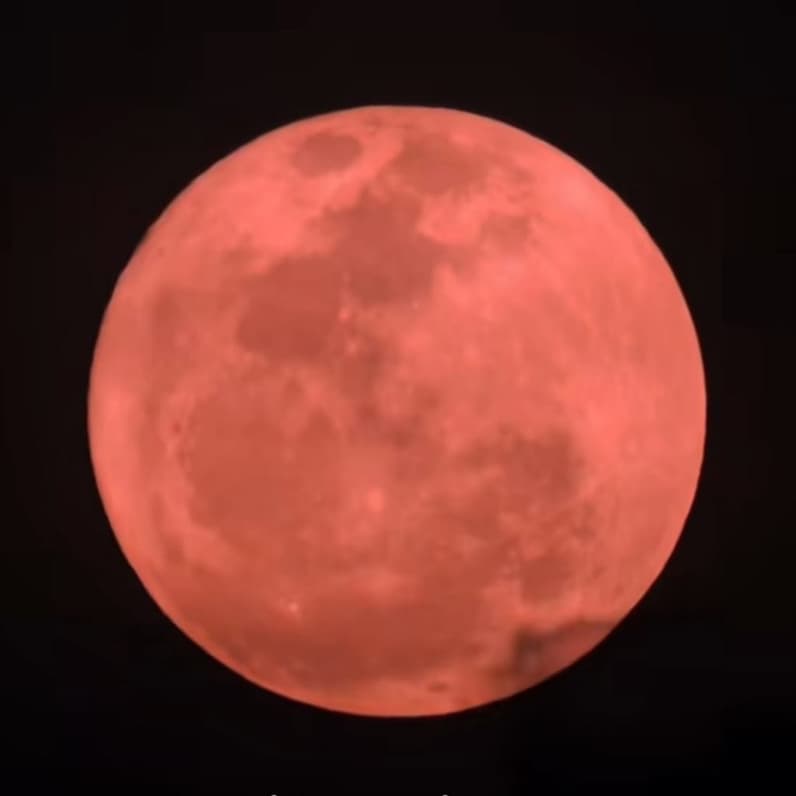
The Strawberry Moon, the first full moon of summer in the Northern Hemisphere, will reach peak illumination tonight, June 22, 2024, at 01:08 UTC (08:08 WIB). According to the Indonesian Meteorological, Climatological, and Geophysical Agency (BMKG), the celestial event will be visible to the naked eye across Indonesia, weather permitting, with optimal viewing conditions in rural areas away from light pollution.
Unlike its name suggests, the Strawberry Moon won’t appear red or strawberry-colored—a misconception stemming from Algonquian tribes who associated June’s full moon with the ripening of wild strawberries. Instead, the moon will exhibit its usual golden hue during sunset and rise, with a slight orange tint near the horizon due to atmospheric scattering, as explained by NASA astronomers.
BMKG confirmed the moon’s visibility without telescopes, though binoculars or a telescope will enhance details like lunar craters and mare regions. The agency advised Indonesians to check local weather forecasts, as cloud cover in regions like Java and Sumatra may obstruct views. For those in Bali, where the moon often holds cultural significance, traditional ceremonies may coincide with the event, though no official restrictions have been announced.
This year’s Strawberry Moon aligns with the summer solstice in the Northern Hemisphere, occurring just 15 hours after the solstice on June 20. The proximity to the solstice means the moon will appear slightly larger—a phenomenon known as a “supermoon,” though astronomers classify it as a near-supermoon due to its distance from Earth.
Why Is It Called the Strawberry Moon?
The name “Strawberry Moon” originates from Native American traditions, particularly the Algonquian tribes of northeastern North America. According to the Old Farmer’s Almanac, the full moon in June marked the peak of the short season for wild strawberry harvesting. Other cultural names for this moon include the “Rose Moon” (Europe) and “Honey Moon” (Mediterranean), reflecting regional agricultural cycles.

Astronomically, the Strawberry Moon is the fourth full moon of 2024, following the Wolf Moon (January), Snow Moon (February), and Worm Moon (March). Its occurrence aligns with the June solstice, the longest day of the year in the Northern Hemisphere, creating longer twilight periods that enhance lunar visibility.
When and Where to Watch the Strawberry Moon in Indonesia
BMKG’s regional offices have provided the following visibility predictions for major Indonesian cities:

- Jakarta: Moonrise at 17:32 WIB, peak at 01:08 UTC (08:08 WIB), moonrise at 05:30 WIB. Best viewing between 19:00 and 22:00 WIB.
- Surabaya: Moonrise at 17:30 WIB, peak at 01:08 UTC (08:08 WIB), moonrise at 05:25 WIB. Optimal conditions in coastal areas.
- Medan: Moonrise at 17:25 WIB, peak at 01:08 UTC (08:08 WIB), moonrise at 05:10 WIB. Rural areas like North Sumatra’s Toba Lake offer minimal light pollution.
- Bali: Moonrise at 17:28 WIB, peak at 01:08 UTC (08:08 WIB), moonrise at 05:20 WIB. Traditional ceremonies may coincide with the event, though no official restrictions have been reported.
For those in urban centers, BMKG recommends using apps like Time and Date to track moonrise and moonset times. The agency also cautioned that smoke haze from recent forest fires in Kalimantan and Sumatra may reduce visibility in eastern Indonesia.
How to Photograph the Strawberry Moon
Capturing the Strawberry Moon requires minimal equipment but adherence to key techniques. According to National Geographic, these steps maximize results:
- Use a tripod: Even a basic smartphone tripod stabilizes shots to avoid blur.
- Set ISO low (100–400): Higher ISO introduces graininess; prioritize sharpness over brightness.
- Zoom in moderately: Digital zoom degrades quality; use optical zoom if available.
- Shoot in RAW: Preserves detail for post-processing adjustments.
- Include foreground elements: Trees, buildings, or landscapes add scale and context.
For DSLR users, NASA recommends using a 200mm lens or longer with a fast shutter speed (1/250s or faster) to avoid overexposure. The moon’s brightness requires careful exposure balancing—underexposing slightly yields better detail than blowing out highlights.
Cultural Significance of the Strawberry Moon
Beyond its astronomical appeal, the Strawberry Moon holds cultural importance in various traditions:
- Indigenous North America: Tribes like the Cherokee and Ojibwe viewed the June full moon as a time for planting and celebrating the earth’s bounty.
- Europe: Medieval Europeans called it the “Rose Moon” due to roses blooming in June.
- Asia: In Japan, the moon’s proximity to the solstice is linked to the festival of Natsu Matsuri, celebrating summer’s arrival.
- Indonesia: While not a traditional lunar event, the moon’s visibility coincides with Purnama celebrations in Javanese and Balinese cultures, often marked by offerings and prayers.
In Bali, where tourism intersects with local beliefs, some hotels and resorts may organize moon-viewing events. However, the Bali Tourism Board has not issued specific advisories for the Strawberry Moon, unlike past events such as the Super Blue Moon in 2023, which saw temporary closures of certain beaches for cultural ceremonies.
What Happens Next: Upcoming Lunar Events
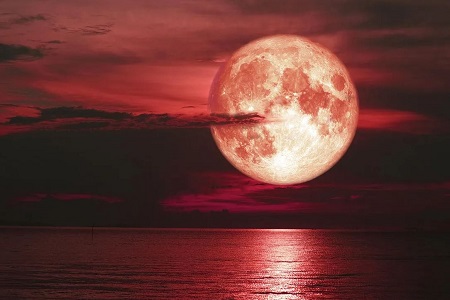
The next full moon after the Strawberry Moon will be the Buck Moon on July 21, 2024, named for male deer (“bucks”) shedding their antlers. According to NASA’s 2024 Moon Phase Calendar, subsequent lunar events include:
- July 21, 2024: Buck Moon (peak at 10:17 UTC)
- August 19, 2024: Sturgeon Moon (peak at 18:26 UTC)
- September 17, 2024: Harvest Moon (peak at 10:34 UTC)
For real-time updates on lunar events, BMKG’s official website and NASA’s Moon Portal provide verified astronomical data.
Key Takeaways
- The Strawberry Moon peaks on June 22, 2024, at 01:08 UTC, visible worldwide without aids.
- BMKG confirms naked-eye visibility in Indonesia, with optimal conditions in rural areas.
- The name originates from Native American traditions, not the moon’s color.
- Photography tips: Use a tripod, low ISO, and include foreground elements for scale.
- Cultural significance varies globally, from planting rituals to tourism events.
Share your Strawberry Moon photos with #StrawberryMoon2024 or tag @NASAJPL and @BMKG. For further reading, explore NASA’s Moon Guide or BMKG’s astronomical forecasts.