
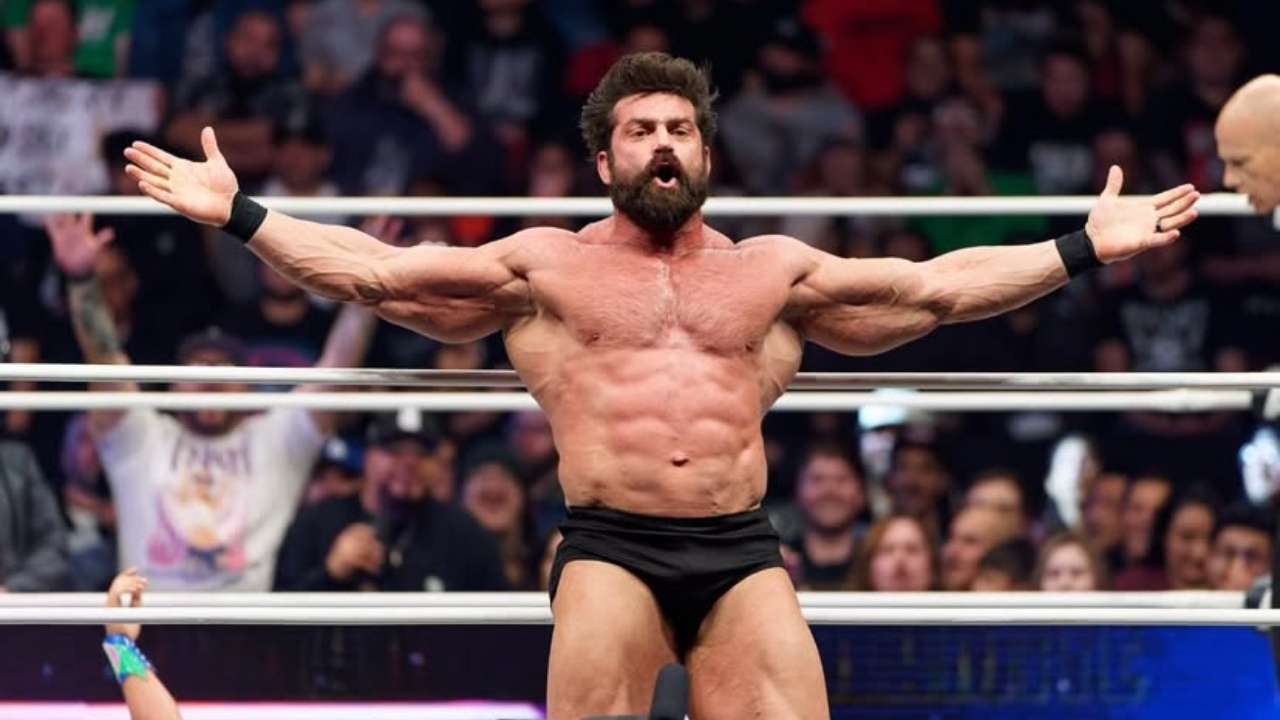
Professional wrestler Brian Cage has addressed the persistent skepticism directed toward “powerhouse” performers in the industry, noting that his combination of a heavily muscular physique and high-flying agility often leads to unfair scrutiny from segments of the fanbase. In a recent interview on the Insight with Chris Van Vliet podcast, Cage explained that his aesthetic—characterized by significant muscle mass—frequently prompts critics to assume he lacks the technical proficiency or aerial capabilities that he demonstrates regularly in the ring.
The veteran performer, who has competed across major global promotions including AEW, Impact Wrestling, and AAA, highlighted the irony of being penalized for his physical condition. According to Cage, while fans often demand diverse wrestling styles, the visual impact of his power-based build creates a cognitive dissonance for some viewers who struggle to reconcile his appearance with his ability to execute complex, high-flying maneuvers.
The discussion provided a rare glimpse into the internal pressures faced by athletes whose bodies are often subjected to intense public analysis. Cage noted that the criticism is not merely a matter of personal preference but reflects broader, often contradictory expectations placed upon modern wrestlers. By maintaining a body type traditionally associated with a “static” or “grounded” style, Cage finds himself constantly working to prove that his athleticism is genuine rather than a byproduct of his size.
Mick Foley’s Perspective on Cage’s Athleticism
During the conversation, Cage shared a notable interaction with WWE Hall of Famer Mick Foley, which served as a significant validation of his work. Cage recounted that Foley, a legend known for his own unique style and deep understanding of wrestling psychology, offered him a compliment that directly addressed the disconnect between Cage’s physique and his in-ring performance. According to Cage, Foley expressed genuine appreciation for his agility, noting that seeing a wrestler of his stature perform such moves was a rarity in the history of the sport.

This validation from a peer of Foley’s caliber underscores a recurring theme in professional wrestling: the tension between “the look” and “the work.” Historically, the wrestling industry has often categorized performers into rigid archetypes. Wrestlers like Cage, who bridge the gap between the “powerhouse” and the “cruiserweight” styles, often face the challenge of being pigeonholed by audiences who are accustomed to seeing those roles kept separate.
Why the “Big Man” Archetype Faces Unique Scrutiny
The criticism Cage describes is part of a long-standing discourse regarding body image and performance expectations in professional wrestling. Throughout the history of the sport, the “big man” has traditionally been tasked with a slower, more deliberate pacing, while smaller athletes have been expected to provide the speed and aerial spectacle. When a performer defies these expectations, it can provoke a polarized reaction from the audience.
Industry analysts have frequently noted that the modern wrestling fan is more critical of performance mechanics than in previous decades. As access to behind-the-scenes content and training footage has increased, fans have become more vocal about what they perceive as “believable” or “impressive.” For performers like Cage, this means that every move—no matter how athletic—is viewed through a lens of skepticism, with some viewers questioning the effort required to maintain both size and speed simultaneously.
Cage’s comments suggest that he views this skepticism as a challenge to be overcome rather than a deterrent. By consistently delivering high-impact, agile performances, he aims to shift the narrative away from his physical appearance and toward his technical contributions. This approach aligns with a broader shift in the industry, where the lines between weight classes and styles have become increasingly blurred, allowing for more hybrid performers to emerge.
What Happens Next for Brian Cage
As of late 2024, Brian Cage remains an active and prominent figure in the professional wrestling landscape. His ongoing tenure with All Elite Wrestling (AEW) and his continued appearances in various independent circuits ensure that he remains in the public eye. Fans looking for the latest updates on his career, match scheduling, or official statements regarding his upcoming appearances can monitor the official All Elite Wrestling roster page for the most accurate information.

The debate surrounding physique and performance style is expected to continue as the industry evolves. For performers like Cage, the focus remains on the match itself. Future developments in his career will likely continue to test the boundaries of the “big man” archetype, providing further opportunities for him to address his critics in the most direct way possible: through his performance in the ring.
What are your thoughts on the expectations placed on modern wrestlers? Share your perspective in the comments below and join the conversation on our social media channels.