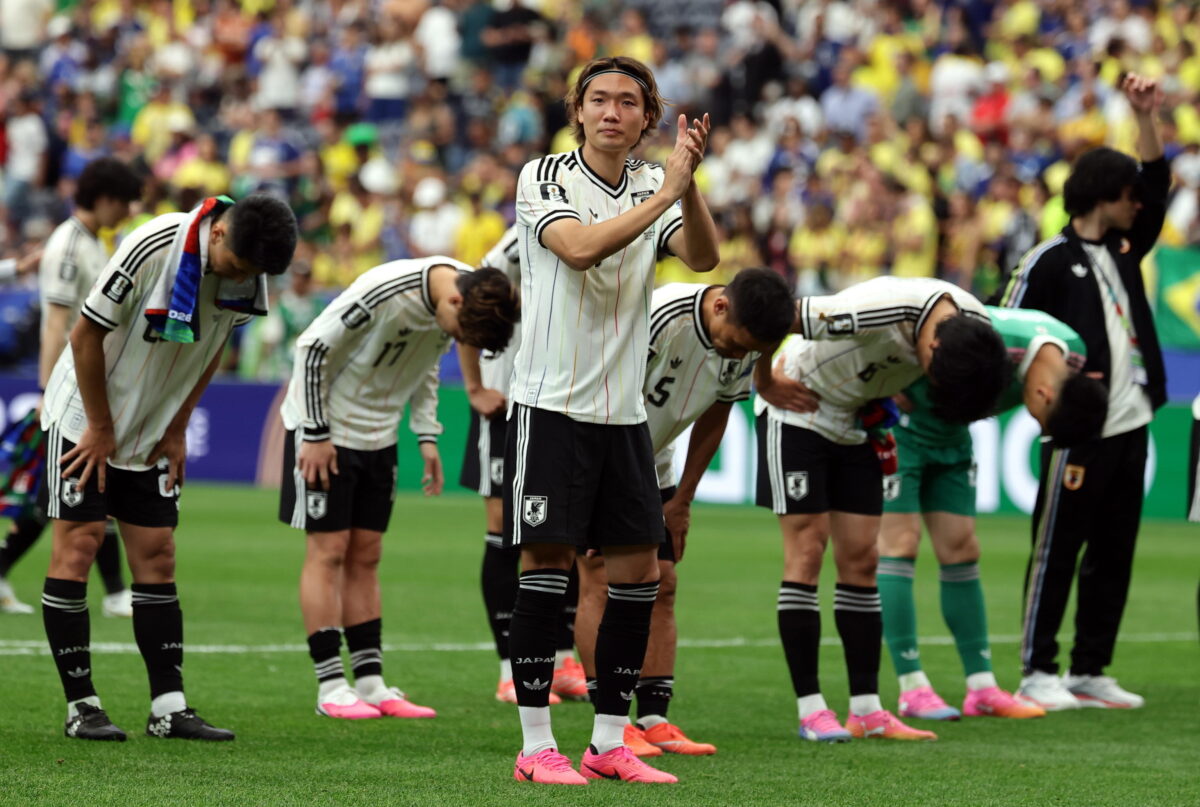
Gabriel Martinelli secured a dramatic 1-0 victory for Brazil against Japan in the 96th minute, ending a tense tactical stalemate at the 2026 FIFA World Cup. The Arsenal forward’s stoppage-time strike broke the defensive resolve of the “Samurai Blue,” who had successfully stifled the Brazilian attack for nearly the entire duration of the match in Houston.
The result confirms Brazil’s progression in the tournament, while Japan exits after a display characterized by defensive discipline and tactical cohesion. According to official FIFA match data, the contest highlighted the clash between Brazil’s individual flair and the collective, structured approach favored by the Japanese national team. For further details on the tournament progress, fans can visit the official FIFA World Cup 2026 portal.
A Clash of Tactical Philosophies
The match in Houston served as a definitive contrast in footballing ideologies. From the opening whistle, Brazil sought to utilize high-tempo transitions and individual creativity, while Japan relied on a compact low block and rapid counter-attacking opportunities. The Japanese defensive line, led by captain Wataru Endo, maintained strict positioning that frustrated Brazil’s forward line, which struggled to find space in the final third throughout the first 90 minutes.
Analysts noted that the “Samurai Blue” approach was designed to neutralize Brazil’s wingers by doubling up on the flanks. This strategy forced Brazil to recycle possession frequently, leading to a high volume of passes but limited clear-cut chances. The defensive rigidity displayed by Japan has been a hallmark of their recent international performances, as documented by Reuters Sports coverage of the tournament’s group stages.
The Decisive Moment
As the match entered the final stages of injury time, the momentum shifted decisively toward the South American side. Following a sustained period of pressure, a cross from the right flank bypassed the Japanese central defenders, finding Martinelli positioned at the back post. His composed finish into the bottom corner silenced the Japanese supporters and sparked celebrations among the Brazilian contingent.

The goal marked the first time the Japanese defensive structure had been breached in the match. While Japan attempted to push forward in the final seconds, they were unable to mount a meaningful response before the referee signaled the end of play. This late-game scenario underscored the thin margins that define knockout-stage football at the World Cup level, a sentiment echoed in recent BBC Sport match reports regarding the high intensity of the 2026 competition.
What Happens Next for Both Sides
With this victory, Brazil advances to the next round of the 2026 FIFA World Cup, where they will face the winner of the upcoming fixture between France and Morocco. The Brazilian squad faces a quick turnaround, with training sessions scheduled to resume at their base camp within 48 hours to prepare for the quarterfinals. The team’s medical staff is currently monitoring minor fatigue among the starting eleven, though no major injuries were reported following the physical encounter against Japan.

For Japan, the tournament concludes after a campaign that earned praise for their tactical evolution on the world stage. The Japanese Football Association is expected to hold a post-tournament debrief in the coming weeks to assess the team’s performance and plan for the next international cycle. Fans are encouraged to follow the Japan Football Association official website for statements regarding the team’s future direction and upcoming friendly matches.
This match served as a reminder of the unpredictability inherent in international football, where a single moment of brilliance can undo ninety minutes of meticulous planning. As the tournament progresses toward the final, spectators can keep track of the updated bracket and match schedules on the official tournament website. We welcome your thoughts on the match—share your analysis in the comments section below.