
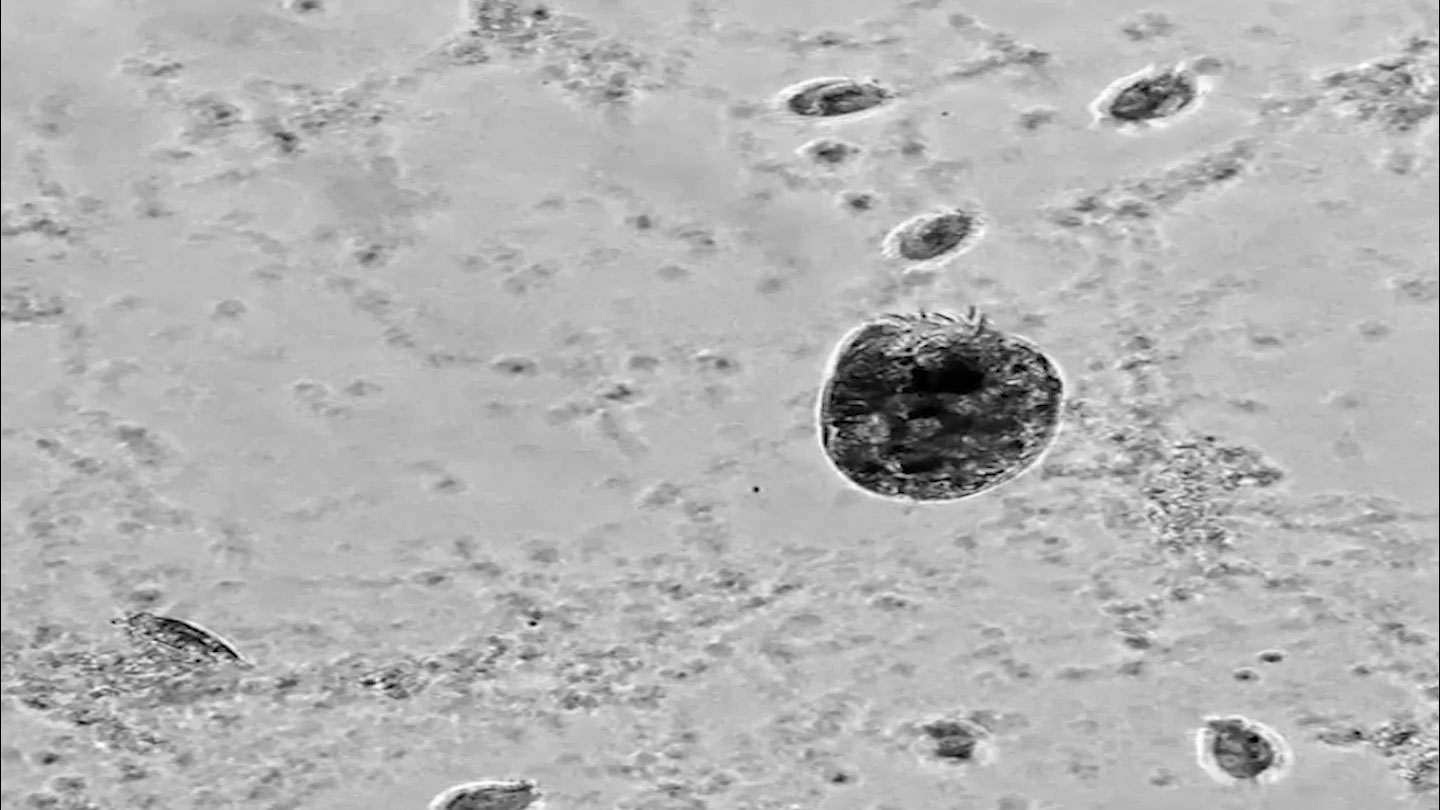
The single-celled organism Euplotes gigatrox has demonstrated a rare capacity for rapid morphological transformation, shifting its physical structure in response to environmental pressures and predatory threats. Recent observations of this ciliate, a member of the diverse Euplotes genus, indicate that its ability to alter its shape—sometimes referred to in biological literature as a “cannibalistic” or defensive reconfiguration—provides new insights into the evolutionary development of complex behaviors in microscopic life. According to research published in journals such as Nature and studies tracked by the National Center for Biotechnology Information, these organisms utilize sophisticated signaling pathways to undergo these structural changes, effectively “morphing” their cellular architecture to survive in volatile aquatic ecosystems.
As a physician and researcher, I find the mechanics of Euplotes especially compelling because they challenge long-held assumptions about the limitations of single-celled organisms. While many ciliates are known for their motile cilia and complex internal organelles, Euplotes gigatrox stands out for its extreme phenotypic plasticity. This trait allows the organism to adapt its size and internal organization, a process that researchers suggest may have been a foundational step in the evolution of multicellular coordination and specialized cell behavior. By studying these organisms, scientists are mapping the genetic and environmental triggers that allow a simple cell to execute such dramatic physical shifts.
The Mechanics of Shape-Shifting in Ciliates
The transformation process in Euplotes gigatrox is not merely a change in surface appearance but a fundamental reorganization of the cell’s cytoskeleton. When faced with environmental stress or the presence of predators, the organism can trigger a rapid expansion or contraction of its body. This structural adaptation is often linked to the organism’s consumption of its own kind, a phenomenon observed in specific laboratory settings where population density and resource scarcity dictate survival strategies. Data from the bioRxiv repository and peer-reviewed biological databases suggest that this “cannibalistic” state is a survival mechanism, allowing the organism to grow significantly larger and more resilient than its counterparts in resource-rich environments.

This biological flexibility relies on a complex network of protein interactions. The organism’s ability to “Hulk out”—to increase its physical footprint and predatory capacity—is governed by internal sensing mechanisms that detect chemical signals in the water. Once these signals are processed, the cell initiates a massive mobilization of proteins to reinforce its cell wall and reconfigure its organelles. This process is not instantaneous; it requires a precise coordination of energy resources, demonstrating that even at the microscopic level, life employs sophisticated risk-management strategies to ensure reproductive success.
Evolutionary Implications for Early Life
Understanding how Euplotes gigatrox achieves such complexity offers a window into the origins of cellular decision-making. Evolutionary biologists often look to ciliates as models for how early life forms might have transitioned from simple, independent cells to the complex, integrated systems found in multicellular organisms. According to reports by the Nature Portfolio, the genomic architecture of these organisms contains elements that allow for high levels of gene regulation, which is essential for executing such drastic physical changes without compromising cellular integrity.
The significance of this behavior lies in its predictability. The organism does not morph randomly; it responds to specific environmental cues. This suggests that the “programming” for complex behavior existed much earlier in the tree of life than previously estimated. By analyzing the pathways that govern these shifts, researchers are building a clearer picture of how natural selection favored organisms that could anticipate and adapt to their surroundings through rapid physical modification. This research is ongoing, with new genomic sequencing projects currently underway at major research institutions to identify the specific genes responsible for this phenotypic plasticity.
What Happens Next in Ciliate Research
The study of Euplotes gigatrox is far from complete. Current research efforts are focused on identifying the specific chemical triggers that force the organism to transition into its defensive or cannibalistic state. Scientists are utilizing high-resolution imaging and real-time genetic monitoring to track these changes as they occur under a microscope. These investigations are critical for understanding how microscopic life navigates competition for limited nutrients in aquatic environments.

Future inquiries will likely center on the long-term fitness costs of these transformations. While the “Hulk” state provides an immediate survival advantage, it likely requires a significant expenditure of energy, which may affect the organism’s ability to divide or reproduce. By quantifying these trade-offs, the scientific community hopes to gain a more comprehensive understanding of the evolutionary pressures that keep such extreme behaviors in the gene pool. For those interested in the latest findings, official updates are regularly published through the Cell Press and similar academic journals, which serve as the primary conduits for new peer-reviewed data on ciliate biology.
Ongoing longitudinal studies are scheduled to report findings throughout the next calendar year. As these datasets become available, they will likely refine our understanding of how cellular complexity evolves. We encourage readers to follow the World Today Journal for further updates on these developments as they are peer-reviewed and published by the scientific community. Please feel free to share your thoughts or questions in the comments section below.