
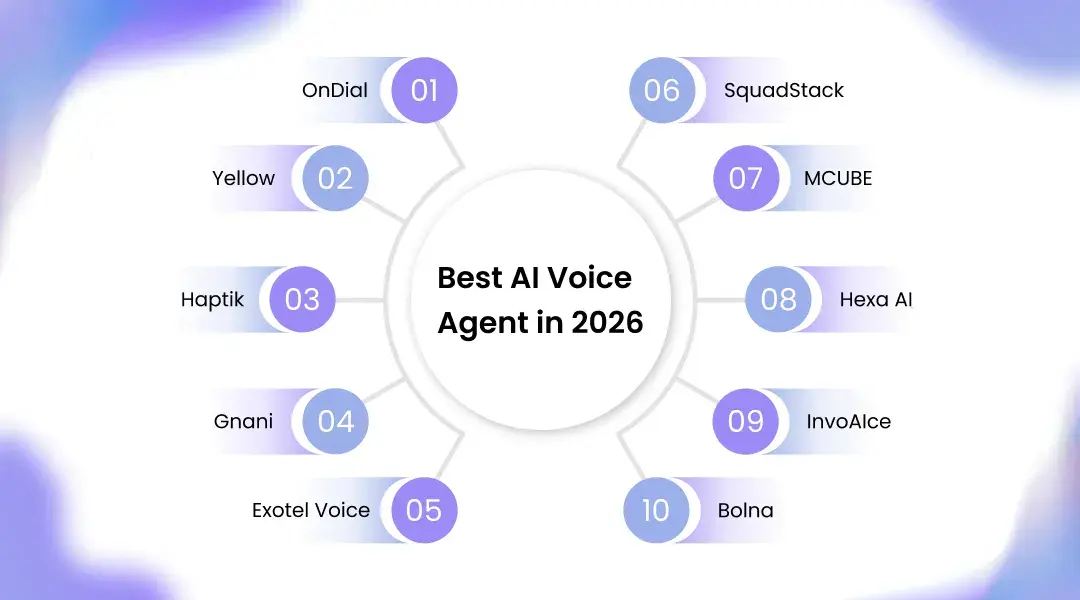
Choosing the best AI voice agent for business operations in 2026 requires a precise evaluation of specific organizational needs, as no single platform currently dominates every use case. Industry analysts note that selecting an agent depends on a company’s requirements for latency, integration depth, and the complexity of customer interactions. For businesses, the landscape has shifted from simple scripted bots to sophisticated, real-time conversational systems capable of autonomous task execution.
According to the Gartner Hype Cycle for Artificial Intelligence, enterprise-grade voice agents are now evaluated primarily on their ability to handle “human-in-the-loop” transitions and their capacity for multi-modal data processing. Unlike consumer-grade assistants, these business tools must adhere to strict data privacy standards, including compliance with the General Data Protection Regulation (GDPR) and regional frameworks like the California Consumer Privacy Act (CCPA). The effectiveness of these systems is measured by their “time-to-first-token” (the speed of response) and their ability to maintain context over long-duration calls.
Evaluating Technical Requirements for Enterprise Deployment
When selecting a voice agent, engineering teams often prioritize latency—the interval between a user finishing a sentence and the AI responding. High-performance models, such as those utilizing real-time multimodal processing, have set a benchmark of under 500 milliseconds for response times. For customer service environments, this speed is critical to preventing the “stilted” feeling associated with earlier generations of voice technology.

Integration capability remains the second most significant factor. An AI voice agent is only as effective as its ability to access internal databases via API endpoints. Enterprises typically look for platforms that support:
- Low-latency WebSockets: Essential for real-time audio streaming.
- Custom LLM Fine-tuning: Allowing the agent to learn industry-specific terminology and company-specific protocols.
- Security and Compliance: Support for SOC2 Type II reporting and HIPAA compliance for firms handling sensitive health or financial data.
The Role of Custom Agent Frameworks
In 2026, many organizations are moving away from “off-the-shelf” solutions in favor of frameworks that allow for custom orchestration. Using tools like LangChain or similar orchestration layers, developers can chain together multiple AI models: one for speech-to-text (STT), one for core logic (the LLM), and one for text-to-speech (TTS). This modular approach allows businesses to swap out components as better models are released, avoiding vendor lock-in.
Research from McKinsey & Company highlights that the most successful implementations are those where the AI agent is deeply integrated into the existing CRM, such as Salesforce or Zendesk. This allows the agent to pull customer history before the call begins, enabling a personalized interaction rather than a generic scripted response.
Future Outlook and Governance
The regulatory environment for voice AI is evolving rapidly. As of 2026, companies must ensure their voice agents are transparent about their AI status, following guidelines set by agencies like the Federal Trade Commission (FTC) regarding deceptive practices. Businesses should expect further legislative scrutiny regarding “voice cloning” and deepfake prevention, which may necessitate the use of authenticated, watermarked audio signatures for all automated outbound calls.

For IT decision-makers, the next major milestone is the upcoming industry summit on AI Safety and Standards, scheduled for late 2026, where new benchmarks for agent autonomy and safety are expected to be formalized. Organizations are encouraged to review their current vendor’s roadmap against these emerging standards to ensure long-term viability.
The choice of an AI voice agent is not a static decision but a continuous process of auditing, testing, and updating. As model performance improves, the focus will likely shift from “what can the AI say” to “what actions can the AI reliably complete.” Readers interested in the latest technical benchmarks or integration guides are encouraged to monitor the official World Today Journal tech archive for updates on enterprise software deployments and share their experiences in the comments section below.