
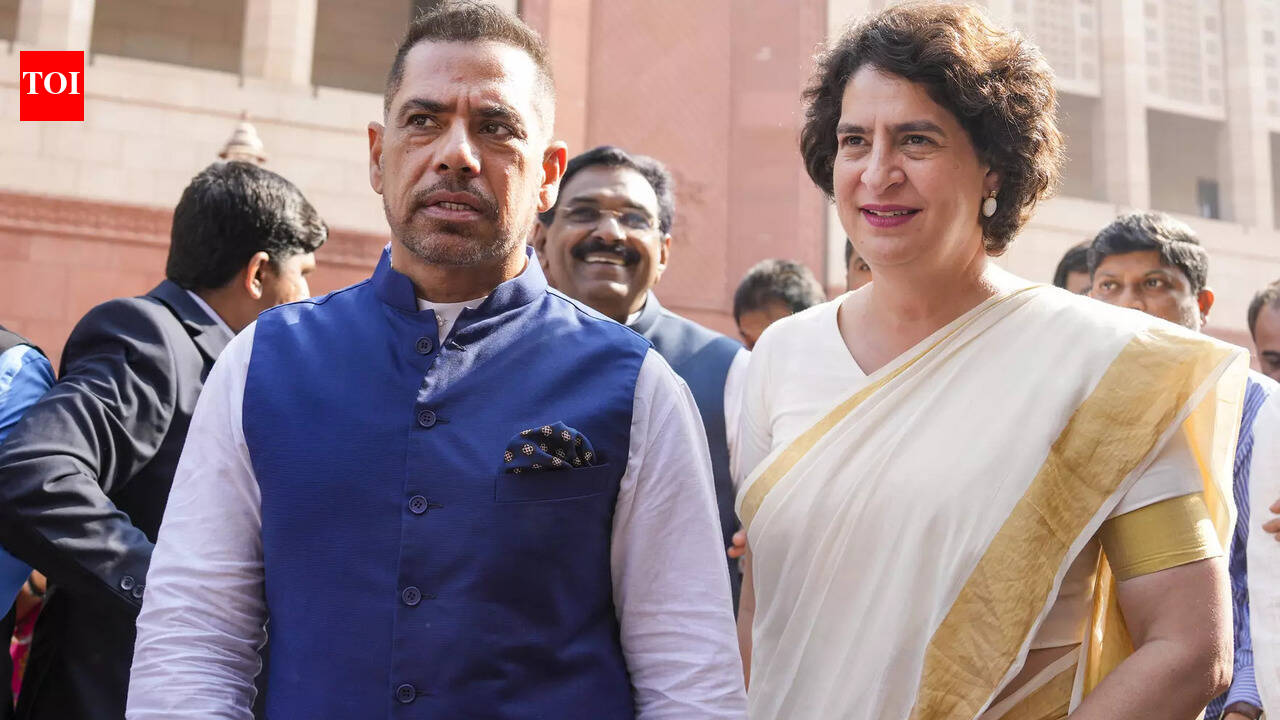
The Bharatiya Janata Party (BJP) has formally accused Congress leader Priyanka Gandhi Vadra and her husband, Robert Vadra, of orchestrating an alleged land-grab attempt in the state of Uttarakhand. According to BJP national spokesperson Pradeep Bhandari, the controversy centers on a four-acre property currently occupied by a 90-year-old resident named Nasreen Khan. The allegations suggest that Saira Vadra, identified by the party as a relative of Robert Vadra, is attempting to acquire the land through intimidation tactics involving local political figures.
This development has sparked a sharp political exchange as the BJP intensifies its scrutiny of the Gandhi family’s real estate interests. Bhandari characterized the incident as the “Gandhi-Vadra model of land-grabbing,” alleging that a Congress Member of the Legislative Assembly (MLA) and various supporters utilized coercive pressure to force the elderly occupant to vacate the premises after legal avenues for the land acquisition reportedly failed. The accusations highlight the ongoing friction between the ruling party and opposition leadership regarding property disputes and allegations of political influence.
The Allegations and the Property Dispute
At the center of the dispute is a four-acre plot of land that has become the focal point of a public confrontation. Pradeep Bhandari, speaking on behalf of the BJP, claimed that Saira Vadra sought to secure the property but encountered resistance from the long-term occupant, Nasreen Khan. The BJP alleges that when these efforts did not proceed through standard legal channels, the situation escalated into a direct intimidation campaign.
The BJP’s narrative asserts that the involvement of local Congress party officials was intended to circumvent established property laws. By pressuring an elderly resident to vacate her home, the party claims that the individuals involved demonstrated a disregard for due process. These allegations are part of a broader, long-standing campaign by the BJP to investigate the financial and property dealings of the Vadra family. While the BJP has leveled these claims, the individuals named in the allegations have not yet issued a comprehensive public rebuttal addressing the specific charges of intimidation or the nature of the property transaction.
Political Context and Party Reactions
The timing of these allegations aligns with a period of heightened political activity in Uttarakhand, a state where land ownership and development rights are frequently matters of intense debate. For the BJP, the focus on Priyanka Gandhi Vadra and Robert Vadra serves as a strategy to highlight what they describe as the misuse of political power by opposition leaders. The party has consistently framed such instances as evidence of institutional capture and the exertion of undue influence by the Gandhi-Vadra family.
The Congress party, for its part, has often dismissed such accusations as politically motivated attempts to distract from governance issues and to tarnish the reputation of its leadership. As of this report, there have been no official police filings or court-mandated investigations confirmed by local authorities regarding the specific allegations of intimidation at the four-acre site. The situation remains a matter of public political discourse rather than an active criminal proceeding.
What Happens Next for the Disputed Land
For observers of Indian politics, the next steps in this matter remain uncertain. Typically, disputes of this nature involve the verification of land titles through local revenue departments or civil courts. In Uttarakhand, the Land Revenue Act governs the resolution of such property ownership conflicts, and any party seeking to finalize a transfer must satisfy the requirements set by the state’s district administration.
Readers interested in the legal status of the property or official updates regarding the alleged intimidation claims may monitor the official Uttarakhand government portal for public notices or administrative filings. As the political rhetoric continues to build, the potential for formal legal action remains, though neither side has indicated that a petition has been filed in the local judiciary to resolve the ownership status of the four-acre plot. The case serves as a reminder of the complex intersection between land rights, political accountability, and the influence of high-profile political figures in regional property disputes.
This story is developing. We will continue to track official statements from the parties involved and any forthcoming administrative reports from Uttarakhand officials. We encourage our readers to share their perspectives on the role of political accountability in property disputes in the comments section below.