
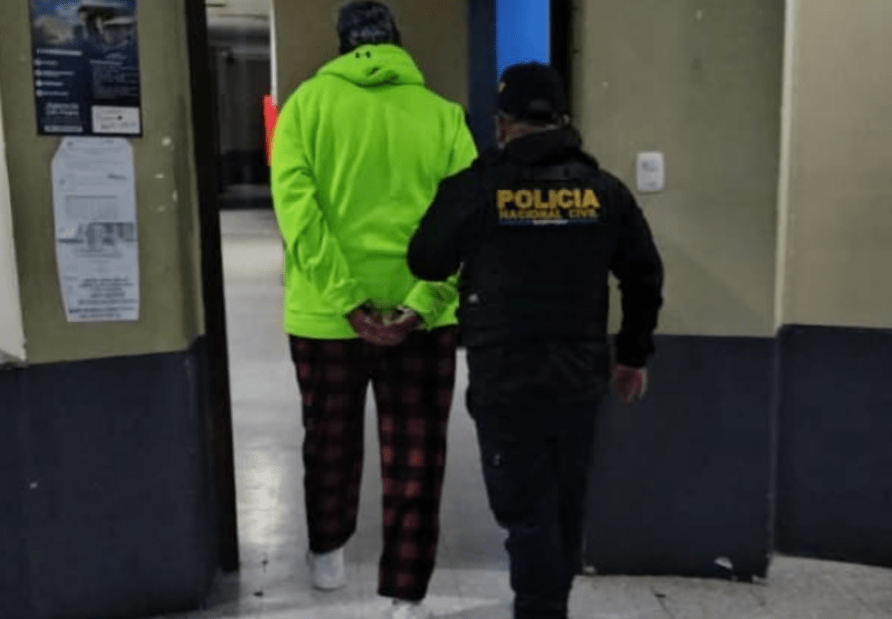
A Colombian national was detained in San Marcos, Guatemala, for allegedly operating a predatory “gota a gota” lending scheme and utilizing threats of violence to coerce payments from borrowers. The arrest was executed by the National Civil Police (PNC) following reports that the suspect demanded loan installments under intimidation.
The operation targeted an informal credit system known as “gota a gota” (drop by drop), a predatory lending model characterized by high interest rates and aggressive collection tactics. According to reports from the PNC, the suspect specifically targeted individuals in the San Marcos region, offering quick loans without the collateral requirements of traditional banks but imposing strict, often daily, repayment schedules.
This arrest reflects a broader regional trend where Colombian-style informal lending networks have expanded into Central America. These schemes typically exploit populations with limited access to formal financial services, trapping borrowers in cycles of debt through usurious rates and psychological or physical threats.
How the “Gota a Gota” Lending Model Operates
The “gota a gota” system functions as an unregulated credit market. Lenders provide small, immediate cash loans to borrowers—often street vendors, small business owners, or low-income workers—who cannot provide the documentation or guarantees required by commercial banks. The term “drop by drop” refers to the frequency of repayments, which are typically collected on a daily or weekly basis.
While the initial loan is easy to obtain, the interest rates are often exorbitant. In various Latin American markets, these rates can range from 20% to 40% per month, far exceeding legal usury limits. Because these loans are not registered with any financial regulator, borrowers have no legal protection against predatory terms.
When borrowers fail to meet the rigorous payment schedule, lenders shift from financial pressure to intimidation. This often includes threats against the borrower’s family, damage to property, or physical violence. The PNC in Guatemala has noted that these tactics are designed to ensure payment through fear rather than legal contract enforcement.
The Link Between Informal Loans and Organized Crime
Security analysts and law enforcement agencies have identified a strong correlation between “gota a gota” operations and organized crime. According to InSight Crime, these lending schemes are frequently used by criminal syndicates as a mechanism for money laundering, allowing illicit funds from drug trafficking or extortion to be integrated into the legal economy as “loan repayments.”

The presence of a Colombian national in the San Marcos arrest aligns with observed patterns of Colombian criminal networks exporting their operational models to Central America. These networks often establish “cells” in foreign cities to diversify their income streams and expand their influence over local informal economies.
Unlike traditional loan sharking, which may be a localized activity, the “gota a gota” model is often systematized. Lenders may employ “collectors” who handle the daily visits, distancing the primary financier from the direct acts of intimidation. This structure makes it more difficult for local police to dismantle the entire network through the arrest of a single operative.
Financial Vulnerability and the Inclusion Gap
The proliferation of predatory lending in San Marcos and similar regions is driven by a significant gap in financial inclusion. According to data from the World Bank, a substantial portion of the population in rural Guatemala remains unbanked, lacking the formal identification or steady payroll history required to open a bank account or secure a legal loan.
This systemic exclusion creates a vacuum that predatory lenders fill. For a small-scale entrepreneur in San Marcos, a “gota a gota” loan may be the only available option to purchase inventory or cover an emergency. However, the lack of regulatory oversight means these borrowers are exposed to extreme risk.
Financial experts argue that the only sustainable way to combat these schemes is to increase the availability of microfinance and low-barrier credit options. When legal alternatives exist, the demand for “gota a gota” loans typically decreases, removing the leverage that criminal lenders hold over the community.
Legal Consequences and Extortion Laws in Guatemala
In Guatemala, the actions attributed to the detained Colombian national fall under multiple legal categories, primarily extortion and usury. While lending money is not illegal, the use of threats to collect a debt transforms a civil financial dispute into a criminal offense.

The Guatemalan penal code provides strict penalties for extortion, which is defined as forcing another person to do, omit, or tolerate something through violence or intimidation. Because “gota a gota” operators often use threats of death or physical harm, they are frequently charged with aggravated extortion rather than simple financial fraud.
Furthermore, the PNC often coordinates with the Public Ministry to investigate whether these lenders are operating as part of a larger criminal association. If the funds used to provide the loans can be traced back to illegal activities, the suspects may also face charges of money laundering, which carries significantly heavier prison sentences.
What Happens Next in the Judicial Process
The suspect is currently in police custody and will be presented before a judge to determine the formal charges and the necessity of pretrial detention. The PNC is continuing to investigate whether the individual operated alone or as part of a larger network with other operatives in the San Marcos department.
Authorities have encouraged victims of “gota a gota” schemes to come forward and report threats. The PNC emphasizes that reporting these crimes is the only way to break the cycle of intimidation and provide the evidence necessary to secure convictions against predatory lenders.
The next confirmed checkpoint in this case will be the initial hearing to establish the formal charges and the legal status of the detained Colombian national. This proceeding will determine if the suspect remains in custody pending trial or is released under specific conditions.
World Today Journal will continue to monitor this case as it progresses through the Guatemalan legal system. Readers are encouraged to share their perspectives on regional financial security in the comments below.