
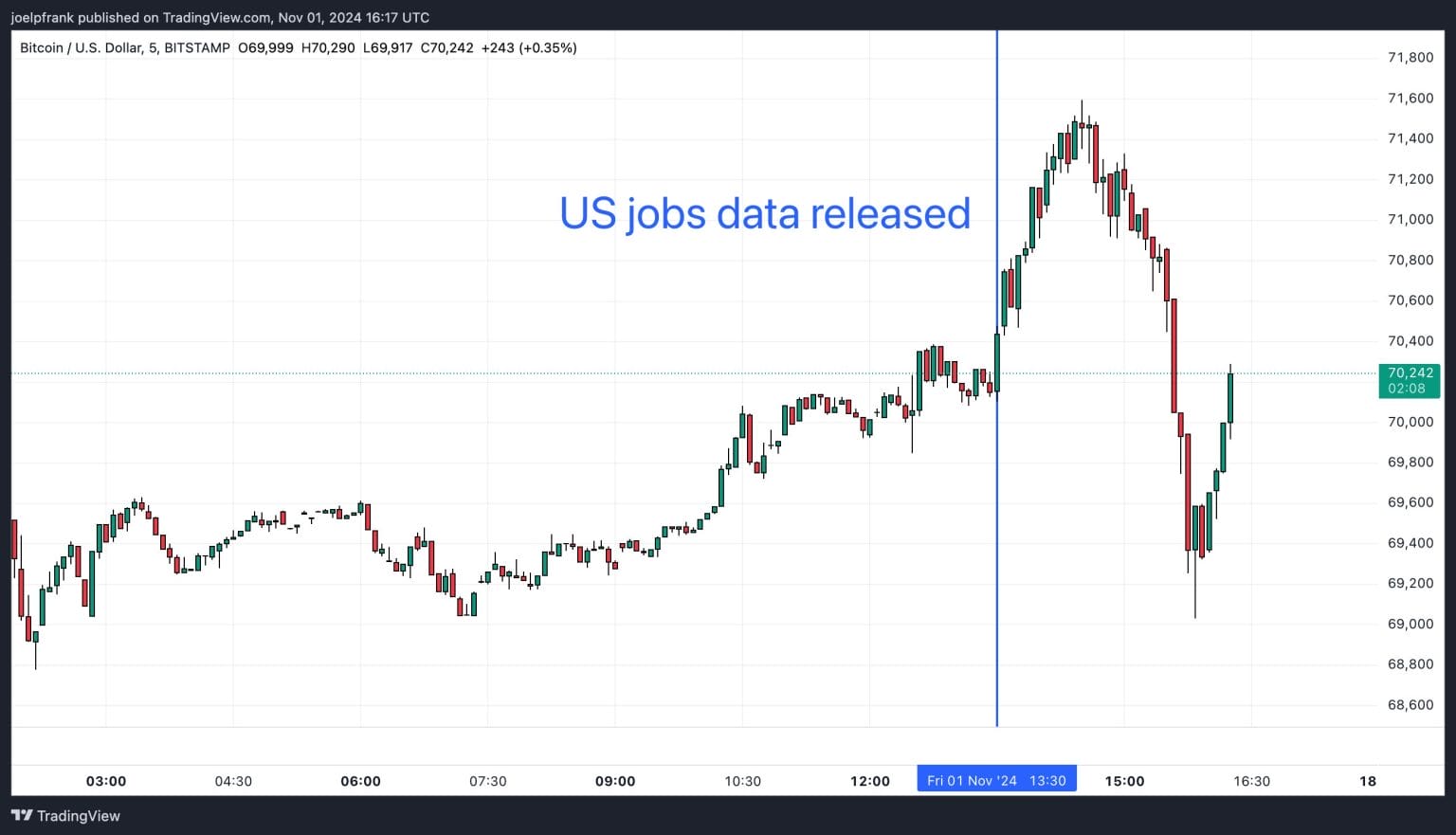
Bitcoin prices reclaimed the $61,000 threshold this week, buoyed by U.S. labor market data that suggested a cooling economy. According to data released by the U.S. Bureau of Labor Statistics, nonfarm payroll employment increased by 206,000 in June, a figure that fell short of some market expectations and reignited investor optimism regarding potential interest rate adjustments by the Federal Reserve. The Employment Situation Summary for June 2024 confirms this shift, providing the backdrop for the recent rally in digital asset valuations.
As a financial journalist, I have observed that cryptocurrency markets often react sharply to macroeconomic indicators. When employment growth slows, the market frequently prices in a higher probability of the Federal Reserve easing monetary policy, which tends to benefit risk-on assets like Bitcoin. The recent movement above $61,000 marks a notable recovery following a period of downward pressure that had pushed the asset toward the $60,000 support level.
Understanding the Link Between Employment and Bitcoin
The correlation between U.S. labor statistics and Bitcoin performance is rooted in the broader relationship between monetary policy and liquidity. When the labor market shows signs of cooling, as reflected in the Bureau of Labor Statistics report, investors often anticipate that the Federal Reserve will be less aggressive with interest rate hikes or may consider future cuts. Lower interest rates generally lower the cost of borrowing and can increase the supply of capital looking for higher yields in more speculative markets.
Market analysts monitor the “nonfarm payroll” figure closely because it is a primary indicator of economic health. A number that misses expectations, such as the 206,000 reported for June, suggests that the labor market is not overheating, which can lead to a more “dovish” stance from central bankers. For Bitcoin, this is often interpreted as a bullish signal, as crypto assets have historically been sensitive to the Federal Reserve’s “dot plot” and interest rate guidance.
Market Sentiment and Price Recovery
Bitcoin’s ability to stabilize above $61,000 reflects a shift in trader sentiment. After weeks of volatility, the market appears to be recalibrating based on the latest economic signals. Institutional and retail participants alike are now looking toward the next Federal Open Market Committee (FOMC) meeting to see if the cooling labor market translates into concrete policy shifts. According to the Federal Reserve’s official meeting calendar, the next policy decisions will be critical for determining the trajectory of both traditional and digital financial markets.
It is important to note that while macroeconomic data provides a catalyst, cryptocurrency remains highly volatile. Investors often look at technical support levels—such as the $60,000 floor—to determine the strength of a trend. The recovery to $61,000 indicates that demand remains present at lower price points, though sustained growth will likely require consistent economic data that supports a favorable interest rate environment.
What Investors Should Watch Next
The immediate focus for the market will be the release of subsequent inflation data, specifically the Consumer Price Index (CPI). Inflation reports, combined with ongoing labor market monitoring, form the dual mandate that drives Federal Reserve decision-making. Investors can track these developments through the Bureau of Labor Statistics website, which provides the official schedule for upcoming data releases.

As we head into the next quarter, the interplay between fiscal policy and asset prices will remain the central theme for global markets. For those following the Bitcoin sector, the focus is not just on the price action, but on the underlying economic conditions that allow for liquidity to flow into digital assets. Whether this recovery holds or faces further resistance will depend on how the Federal Reserve interprets the current state of the U.S. economy in their upcoming sessions.
What are your thoughts on the current market direction? Share your perspectives in the comments section below, and stay tuned for further updates as we continue to track the intersection of global economic policy and digital finance.